


Arthur Rosenfeld, hailed the “godfather of energy efficiency,” was yesterday named the winner of the second Tang Prize in sustainable development for his “lifelong and pioneering innovations in energy efficiency.”
A renowned US physicist, energy expert and former commissioner of the California Energy Commission, Rosenfeld’s promotion of energy efficiency technologies, standards and initiatives since the 1970s has made California a leader in energy conservation.
The Tang Prize is awarded to Rosenfeld “for his lifelong and pioneering innovations in energy efficiency resulting in immense reductions in energy consumption and greenhouse gas emissions around the world,” Nobel laureate Lee Yuan-tseh (李遠哲), who chairs the Tang Prize Selection Committee, read from the citation at a news conference in Taipei.
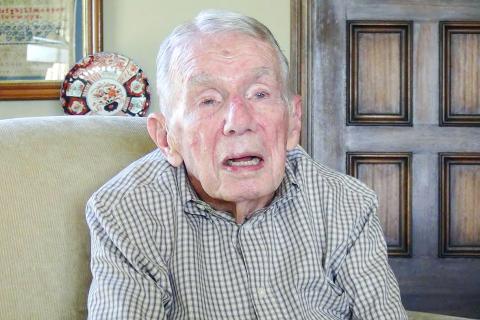
Photo: CNA
Rosenfeld, 90, is to receive a cash prize of NT$40 million (US$1.24 million) and a research grant of up to NT$10 million to be used within five years, as well as a medal and a certificate.
Lee said that Rosenfeld was named the winner with two others still in the running because he had the backing of more than half of the 24 judges.
“He received overwhelming support,” said Lee, a former head of Academia Sinica.
Lee said that more than 100 people from various disciplines were nominated for the award this year and the list was pared down to 20 by selection committee members for the 24-member jury to review.
When the candidates are narrowed down to the final three, it normally requires two more rounds of voting to determine a winner, Lee said, but with Rosenfeld such a clear-cut front-runner, there was no need for additional votes.
Lee said Rosenfeld is more than just a physicist as his ideas have influenced policies in the US and helped carry out carbon reduction measures.
Rosenfeld’s contributions to energy efficiency and conservation have seen two terms coined using his name.
The Rosenfeld effect describes how per-capita electricity use in California stayed relatively flat from the mid-1970s to the mid-2000s, while it rose 40 percent in the rest of the US over the same period.
The other term, known simply as the “Rosenfeld,” was proposed by a group of leading scientists in 2010 to represent electricity savings of 3 billion kilowatt-hours per year.
Rosenfeld received the National Medal of Technology and Innovation from US President Barack Obama in 2013 in honor of his “extraordinary leadership in the development of energy-efficient building technologies and related standards and policies.”
Born in Alabama in 1926, Rosenfeld began his career in experimental particle physics before changing his focus to energy after the oil crisis of the 1970s.
He formed the Center for Building Science at the Lawrence Berkeley National Laboratory and served as its director from 1986 to 1994.
The center developed groundbreaking energy efficiency technologies such as low emissivity “smart windows” and high-frequency electronic ballasts for compact fluorescent lighting.
Rosenfeld also developed computer programs to analyze a building’s energy use.
A US National Academy of Sciences study in 2001 showed that Rosenfeld’s initiatives and innovations will have prevented 7 billion tonnes of carbon dioxide emissions and saved US$1.8 trillion in energy costs by 2030.
Tang Prize Foundation CEO Chern Jenn-chuan (陳振川) said he hopes the prize will mobilize the government and the public to build a more sustainable future.
The Tang Prize was established in 2012 by entrepreneur Samuel Yin (尹衍樑) to complement the Nobel Prize and to honor top researchers and leaders in four fields: sustainable development, biopharmaceutical science, sinology and rule of law.
The first Tang Prize was awarded in 2014.
Tang Prize winners are selected based on the originality and effect of their achievements, irrespective of nationality or ethnicity.
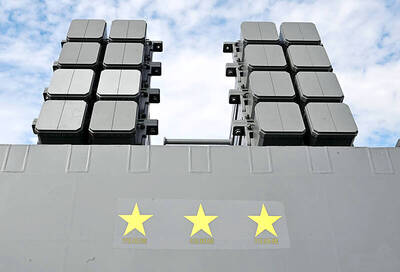
UPGRADE: The Kang Ding-class frigate is replacing its Chaparall missiles with Tien Chien II and Hua Yang VLS, which would provide it with long-range, 360° air defense Taiwan plans to produce 1,200 to 1,376 Hai Chien II missiles (海劍二, Sea Sword II) — also known as TC-2N — to serve as the standard air defense system of the navy’s surface combatant fleet, a source said yesterday. Last week, the Hai Chien II, the naval version of the Tien Kung II missile (天劍二, Sky Sword II), completed a live-fire test in waters off the National Chungshan Institute of Science and Technology’s Jiupeng facility (九鵬) in Pingtung County’s Manjhou Township (滿州). The MIM72 Chaparral and other dated air defense missiles that currently arm Taiwanese ships have inadequate range to combat Chinese

REASONS FOR TRAVEL: An assistant professor said that proposed amendments to penalize drivers if they used drugs overseas would not deter people from traveling People who operate a motor vehicle under the influence of marijuana would have their driver’s license revoked, even if they used the substance while overseas, the Ministry of Transportation and Communications said yesterday, citing proposed amendments to the Road Traffic Management and Penalty Act (道路交通管理處罰條例). The amendments would also authorize the government to revoke the licenses of people determined to have used Category 1 or Category 2 narcotics, even if they were not operating a vehicle while under the influence of drugs, as well as ban them from taking the license test for three years, the ministry said. People aged 18 or

HEAVY WEATHER: Typhoon Jangmi is due to crash straight into the Ryukyus as airlines look to shift flights to larger aircraft or cancel flights to Okinawa entirely Taiwan’s international air carriers announced flight adjustments over the weekend as Typhoon Jangmi is forecast to hit the Ryukyu Islands today and tomorrow. The Central Weather Administration (CWA) upgraded Jangmi from a tropical storm to a typhoon at 8am yesterday, with the eye located 580km south of Naha city. It was moving north at 19kph. Today, China Airlines’ CI-120, CI-121, CI-122 and CI-123 flights between Taoyuan and Naha, Okinawa, have been canceled as well as CI-132 and CI-133 between Kaohsiung and Naha. EVA Air’s BR-112, BR-113, BR-186 and BR-185 flights between Taoyuan and Naha are also canceled. Low-cost carrier Tigerair Taiwan canceled IT-230,
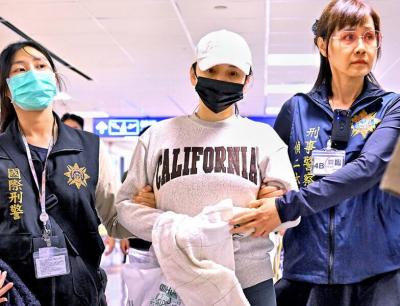
Johanne Liou (劉喬安), a Taiwanese woman who shot to unwanted fame during the Sunflower movement protests in 2014, returned to Taiwan last night after being deported from the US. She is to stand trial in Taiwan for charges involving embezzlement, fraud and drug crimes. The Criminal Investigation Bureau (CIB) said it took her into custody at Taiwan Taoyuan International Airport and would first question her before transferring her to the New Taipei District Prosecutors’ Office. She was arrested upon disembarking a flight from San Francisco that landed shortly before 7pm. Liou absconded to the US in 2019 after jumping bail


 RSS
RSS