


Tourists looking to “stretch [their] travel budget until it oozes contentment” are advised to visit Taiwan and eight other places next year, according to a Lonely Planet online article dated Oct. 20.
Lonely Planet, an independent travel service that promises to “tell it like it is, without fear or favor,” said Taiwan delivers great all-round value.
“Taipei is significantly cheaper than Hong Kong, Seoul or Tokyo and, while hotels are a bit expensive, dorm beds and homestays abound in Taiwan and camping is common in a lot of the [nation’s] national parks and forests,” it said.
The post highlighted inexpensive rail passes for travel on fast and modern rail lines, adding that admission to many attractions and temples is economical.
“Eating, perhaps the main attraction in Taiwan, is accessible to all, whether tucking into dumplings at a street stall or enjoying high-end fare at lower prices than comparable cities,” according to the travel guide’s Web site.
A large bottle of Taiwanese beer costs around NT$120 at a bar or restaurant, or much less if it is bought at a grocery store, Lonely Planet said.
The Web site’s “About” page said that there are many amazing sights, hotels, travel companies and gear manufacturers in the world, adding: “We want to tell you which ones we think are best.”
“[However] we never compromise our opinions for commercial gain. If you read something written by a Lonely Planet author, you can guarantee they’ve been there, had a look for themselves and are telling you what they really think,” it added.
In East Asia, the only other best-value destination recommended by Lonely Planet for next year was Shanghai.
Shanghai remains affordable for budget travelers, Lonely Planet said. It said basic dorms start at less than US$10, and the low prices continue through budget and mid-range hotels.
“It’s a similar story when eating out: ‘Characterful’ street-treats for a dollar and big portions in popular restaurants for little more. Best of all, walking the city’s safe and buzzing streets is the best way to take the pulse of this fast-changing metropolis.”
Other “best value” travel destinations listed for next year are Tunisia, South Africa, Samoa, Bali, Uruguay, Portugal and Romania.
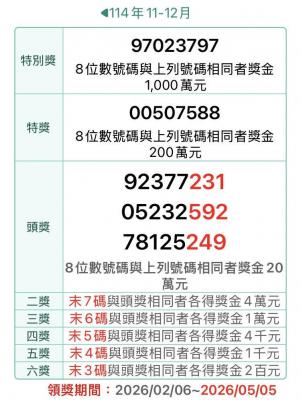
Seven of the 17 NT$10 million (US$311,604) winning receipts from the November-December uniform invoice lottery remain unclaimed as of today, the Ministry of Finance said, urging winners to redeem their prizes by May 5. The reminder comes ahead of the release of the winning numbers for the January-February lottery tomorrow. Among the unclaimed receipts was one for a NT$173 phone bill in Keelung, while others were for a NT$5,913 purchase at Costco in Taipei's Neihu District (內湖), a NT$49 purchase at a FamilyMart in New Taipei City's Tamsui District (淡水), and a NT$500 purchase at a tea shop in New Taipei City's
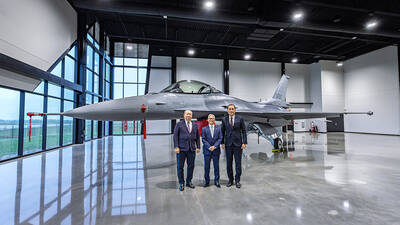
Taiwanese officials were shown the first of 66 F-16V fighter jets purchased by Taiwan from the United States, the Ministry of National Defense said yesterday, adding the aircraft has completed an initial flight test and is expected to be delivered later this year. A delegation led by Deputy Minister of National Defense Hsu Szu-chien (徐斯儉) visited Lockheed Martin’s F-16 C/D Block 70 (also known as F-16V) assembly line in South Carolina on March 16 to view the aircraft. The jet will undergo a final acceptance flight in the US before being delivered to Taiwan, the
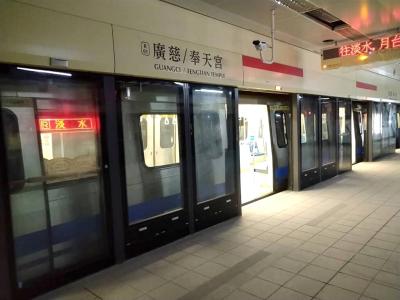
The New Taipei Metro's Sanyin Line and the eastern extension of the Taipei Metro's Tamsui-Xinyi Line (Red Line) are scheduled to begin operations in June, the National Development Council said today. The Red Line, which terminates at Xiangshan Station, would be connected by the 1.4km extension to a new eastern terminal, Guangci/Fengtian Temple Station, while the Sanyin Line would link New Taipei City's Tucheng and Yingge stations via Sanxia District (三峽). The council gave the updates at a council meeting reviewing progress on public construction projects for this year. Taiwan's annual public infrastructure budget would remain at NT$800 billion (US$25.08 billion), with NT$97.3
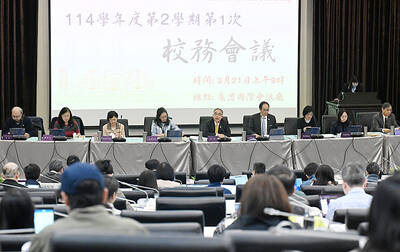
TALENT SCOUTING: The university is investing substantial funds in its future to bring in the kind of researchers that would keep the college internationally competitive National Taiwan University (NTU) plans to invest NT$2 billion (US$62.6 million) to launch two programs aimed at attracting and retaining top research talent, university president Chen Wen-chang (陳文章) said yesterday. The funding would support the “Palm Grove Scholars Project,” which targets academics aged 40 to 55. Up to 20 scholars would be selected, each receiving as much as NT$10 million annually, Chen said. The initiative is designed to attract leading researchers to Taiwan and strengthen NTU’s global competitiveness by fostering a more research-friendly environment and expanding international collaboration, he said. NTU is also introducing a “Hong Hu” chair grant, which would provide Palm


 RSS
RSS