


The Taiwan High Court yesterday upheld the death sentence given to a woman convicted of robbing and murdering a couple in a high-profile case.
Hsieh Yi-han (謝依涵), 29, was sentenced to death by Taipei’s Shilin District Court in October last year.
Yesterday’s ruling upheld the original court decision that found Hsieh guilty of killing Shih Chien University assistant professor Chang Tsui-ping (張翠萍), 58, and her husband, Chen Chin-fu (陳進福), 79. The district court originally concluded that Hsieh’s motive for the murders was to obtain Chang’s jewelry collection — estimated to be worth NT$40 million (US$1.3 million at the time)

Photo: Liu Hsin-de, Taipei Times
Hsieh managed a Mama Mouth Cafe (媽媽嘴) coffee shop on the Tamsui River (淡水河) in Bali District (八里) at the time of the crimes, which led to the incident becoming known as the “Mama Mouth Cafe” (媽媽嘴咖啡店) case.
Chang and Chen lived nearby and were regular customers, befriending Hsieh over time. Over several years, Chen, a wealthy businessman, became fond of Hsieh, and reportedly considered her as his god daughter or stepdaughter.
While his wife was teaching classes or traveling abroad, Chen visited the cafe daily, investigators said. He also began to give Hsieh gifts of cash and jewelry, they added.
A court statement said Hsieh sedated the couple with drugged drinks on Feb. 16 last year, then stabbed both with a fruit knife before throwing them into the Tamsui River.
After the murders, Hsieh stole NT$350,000 from Chen and tried, but failed, to withdraw more money from his wife’s bank account by disguising herself as the murdered woman.
The couple’s bodies were discovered among mangrove trees and sand bars along the river bank on Feb. 26 and March 2 last year.
After yesterday’s verdict, Chen’s sister said that Hsieh deserved the death penalty for what she called cold-blooded murder, “but whatever the punishment, the lost lives of our love ones cannot be returned.”
She added that many questions remain unresolved in the case and that the families of the deceased suspect Hsieh had help carrying out the murders, so they have asked prosecutors to bring the accomplices to justice.
The case can still be appealed to the Supreme Court.

The military has spotted two Chinese warships operating in waters near Penghu County in the Taiwan Strait and sent its own naval and air forces to monitor the vessels, the Ministry of National Defense (MND) said. Beijing sends warships and warplanes into the waters and skies around Taiwan on an almost daily basis, drawing condemnation from Taipei. While the ministry offers daily updates on the locations of Chinese military aircraft, it only rarely gives details of where Chinese warships are operating, generally only when it detects aircraft carriers, as happened last week. A Chinese destroyer and a frigate entered waters to the southwest

A magnitude 6.1 earthquake struck off the coast of Yilan County at 8:39pm tonight, the Central Weather Administration (CWA) said, with no immediate reports of damage or injuries. The epicenter was 38.7km east-northeast of Yilan County Hall at a focal depth of 98.3km, the CWA’s Seismological Center said. The quake’s maximum intensity, which gauges the actual physical effect of a seismic event, was a level 4 on Taiwan’s 7-tier intensity scale, the center said. That intensity level was recorded in Yilan County’s Nanao Township (南澳), Hsinchu County’s Guansi Township (關西), Nantou County’s Hehuanshan (合歡山) and Hualien County’s Yanliao (鹽寮). An intensity of 3 was

Japanese Prime Minister Sanae Takaichi’s comment last year on Tokyo’s potential reaction to a Taiwan-China conflict has forced Beijing to rewrite its invasion plans, a retired Japanese general said. Takaichi told the Diet on Nov. 7 last year that a Chinese naval blockade or military attack on Taiwan could constitute a “survival-threatening situation” for Japan, potentially allowing Tokyo to exercise its right to collective self-defense. Former Japan Ground Self-Defense Force general Kiyofumi Ogawa said in a recent speech that the remark has been interpreted as meaning Japan could intervene in the early stages of a Taiwan Strait conflict, undermining China’s previous assumptions
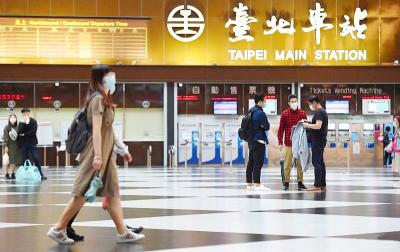
Taiwan Railways Corp (TRC) today announced that Shin Kong Mitsukoshi has been selected as the preferred bidder to operate the Taipei Railway Station shopping mall, replacing the current operator, Breeze Development Co Ltd. Among eight qualified firms that delivered presentations and were evaluated by a review committee, Shin Kong Mitsukoshi was ranked first, while Breeze was named the runner-up, the rail company said in a statement. Contract negotiations are to proceed in accordance with regulations, it said, adding that if negotiations with the top bidder fail, it could invite the second-ranked applicant to enter talks. Breeze in a statement today expressed doubts over


 RSS
RSS