


Taiwanese actor Joseph Cheng (鄭元暢) has weighed in on the nation’s ongoing anti-nuclear movement by releasing an eight-minute short film on Friday comparing the Fourth Nuclear Power Plant in New Taipei City’s (新北市) Gongliao District (貢寮) to blind affection that he said could fall into a crisis at any second.
The film, The Symptoms of Love (愛情的症狀), was premiered at the latest of a series of anti-nuclear events held by film directors under the banner of the “No Fourth Nuclear Plant, Five Six Movement” (不要核四、五六運動) at Liberty Square in Taipei. The Five Six Movement is an anti-nuclear campaign initiated on March 15 by several cultural heavyweights, including film director Ko I-chen (柯一正) and writer Hsiao Yeh (小野).
It brings together individuals who oppose nuclear energy every Friday night at Liberty Square to raise public awareness of the underlying dangers posed by the controversy-plagued power plant.
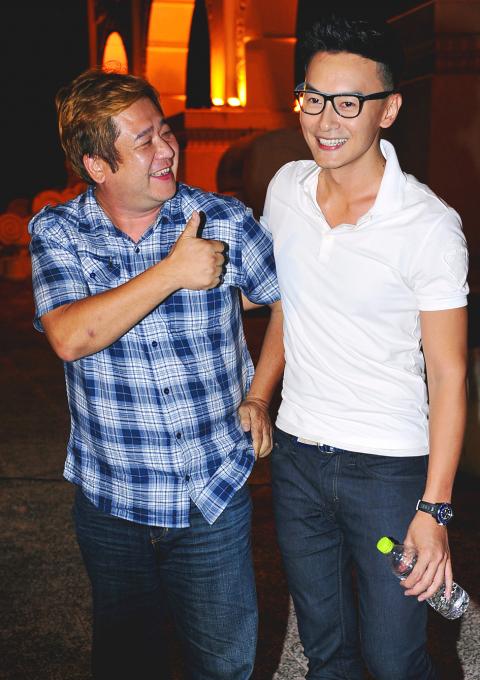
Photo: Pan Shao-tang, Taipei Times
Drawing an analogy between the power plant and love, Cheng said: “We all enjoy love and need love, but blind love is dangerous and could spark off a crisis at any time.”
Cheng said he had taken a neutral stance by neither supporting nor opposing nuclear power, until recently, the anti-nuclear efforts by Ko and film director Zero Chou (周美玲), along with the wide media coverage on the issue, prompted him to realize the need for a nuclear-free homeland.
“All of us need a safe homeland and hope ourselves and the next generations can live in a safe place. I disapprove of the idea of spending lots of money building a dangerous ticking time bomb,” Cheng said.
The film’s cast included actor Danny Liang (梁正群) and actress Serena Fang (房思瑜), Cheng said, adding that his acquaintance, actress Michelle Chen (陳妍希), helped narrate the short film.
Cheng added that although the film was only eight minutes long, it took him about a year to make.
The film met with applause from the event’s participants, including Cheng’s mentor, veteran director Arthur Chu (瞿友寧), who gave Cheng a thumbs-up as a gesture of support.
Cheng said on the sidelines of the event that the anti-nuclear movement was tantamount to a romantic relationship because both of them required time to heat up.
“I hope my identity as a public figure will not only help heat up the anti-nuclear movement, but also bring the issue to the attention of many other neutral people,” Cheng said.
Tokyo-based Taiwanese writer Liu Li-erh (劉黎兒) and her husband, professional chess player Wang Ming-wan (王銘琬), also attended the event.
“While the public focuses mainly on the Fourth Nuclear Power Plant, the conditions of the nation’s other three nuclear power plants have also reached an alarming stage and need to be abolished right away,” Wang said.
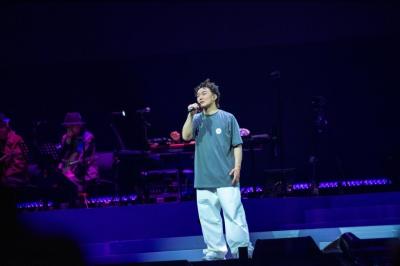
Hong Kong singer Eason Chan’s (陳奕迅) concerts in Kaohsiung this weekend have been postponed after he was diagnosed with Covid-19 this morning, the organizer said today. Chan’s “FEAR and DREAMS” concert which was scheduled to be held in the coming three days at the Kaohsiung Arena would be rescheduled to May 29, 30 and 31, while the three shows scheduled over the next weekend, from May 23 to 25, would be held as usual, Universal Music said in a statement. Ticket holders can apply for a full refund or attend the postponed concerts with the same seating, the organizer said. Refund arrangements would

Taiwanese indie band Sunset Rollercoaster and South Korean outfit Hyukoh collectively received the most nominations at this year’s Golden Melody Awards, earning a total of seven nods from the jury on Wednesday. The bands collaborated on their 2024 album AAA, which received nominations for best band, best album producer, best album design and best vocal album recording. “Young Man,” a single from the album, earned nominations for song of the year and best music video, while another track, “Antenna,” also received a best music video nomination. Late Hong Kong-American singer Khalil Fong (方大同) was named the jury award winner for his 2024 album
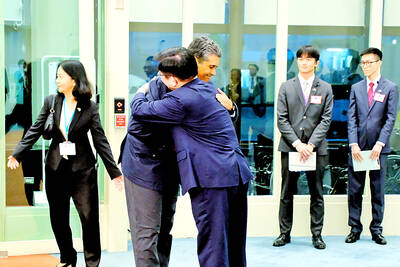
Palauan President Surangel Whipps Jr arrived in Taiwan last night to kick off his first visit to the country since beginning his second term earlier this year. After arriving at Taoyuan International Airport at around 6:30 pm, Whipps and his delegation were welcomed by Minister of Foreign Affairs Lin Chia-lung (林佳龍). Speaking to gathered media, the Palauan leader said he was excited and honored to be back in Taiwan on his first state visit to Taiwan since he was sworn in this January. Among those traveling with Whipps is Minister of State Gustav N. Aitaro, Public Infrastructure
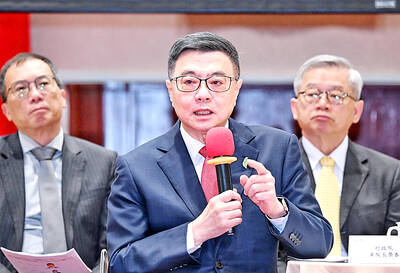
Premier Cho Jung-tai (卓榮泰) on Friday laid out the Cabinet’s updated policy agenda and recapped the government’s achievements ahead of the one-year anniversary of President William Lai’s (賴清德) inauguration. Cho said the government had made progress across a range of areas, including rebuilding Hualien, cracking down on fraud, improving pedestrian safety and promoting economic growth. “I hope the public will not have the impression that the Cabinet only asked the legislature to reconsider a bunch of legal amendments,” Cho said, calling the moves “necessary” to protect constitutional governance and the public’s interest. The Cabinet would work toward achieving its “1+7” plan, he said. The


 RSS
RSS