


Reform of the electoral system to increase both space and resources for minor political parties is required for the long-term development of Taiwan’s democracy, advocates said yesterday.
“Give them [smaller political parties] more opportunities and air to breathe,” People First Party (PFP) Legislator Chang Show-foong (張曉風) told a press conference organized by opposition party representatives.
“They will be able to bring a lot more positive feedback to society,” Chang said.
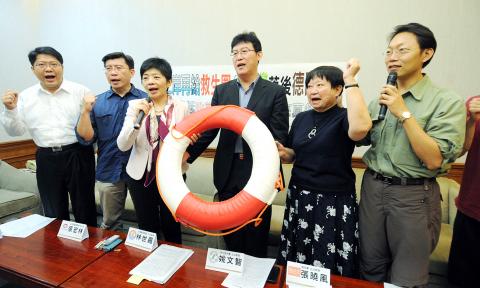
Photo: Lo Pei-der, Taipei Times
Democratic Progressive Party (DPP) Legislator Pasuya Yao (姚文智), Taiwan Solidarity Union (TSU) Legislator Lin Shih-chia (林世嘉) and Pan Han-sheng (潘翰聲), a member of the Green Party Taiwan, also took part in the event, which called for the threshold for government subsidies for political parties to be lowered.
Pan proposed lowering the threshold for government subsidies from a 5 percent share of the vote to 1 percent — or even 0.5 percent — as is the case in Germany.
Parties that receive more than 5 percent of the vote in a general election receive a NT$50 (US$1.7) subsidy for each vote from the government, with four parties receiving a total subsidy of NT$616 million.
Lowering the threshold would increase the subsidy by about NT$40 million, a relatively small amount for the major parties, but a boost for their smaller counterparts, Pan said.
The Central Election Commission and the Ministry of the Interior agreed in principle with the proposal during a meeting of the legislature’s Internal Affairs Committee yesterday afternoon.
At a separate press conference, former Tainan County commissioner Su Huan-chih (蘇煥智) also proposed overhauling the electoral system, adding that he would establish a non-partisan alliance to promote the legislation if he is elected DPP chairman.
Su proposed adopting an electoral system based on the one used in Germany — a mixed-member proportional representation system — to replace the current system, under which legislators are elected to districts with drastically different populations, leading to the “votes of unequal value” phenomenon.
In the Seventh Legislative Yuan, the Chinese Nationalist Party (KMT) won 61 seats with 53 percent of the vote, while the DPP won only 13 seats, despite it winning 38 percent of the vote.
The KMT controls 60 percent of the 73 regional seats with a 48 percent share of the vote, while the DPP only has 27 seats after receiving a 40 percent share of the vote, Su said.
Public opinion is therefore not appropriately represented in the legislature under the current system, which over time could have a negative impact on political stability and the check-and-balance mechanism, he said.
Su also proposed increasing the number of legislator-at-large seats from 34 to 79 and lowering the threshold for parties to receive the seats from 5 percent to 3 percent.
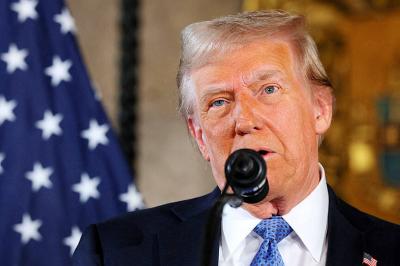
US President Donald Trump said "it’s up to" Chinese President Xi Jinping (習近平) what China does on Taiwan, but that he would be "very unhappy" with a change in the "status quo," the New York Times said in an interview published yesterday. Xi "considers it to be a part of China, and that’s up to him what he’s going to be doing," Trump told the newspaper on Wednesday. "But I’ve expressed to him that I would be very unhappy if he did that, and I don’t think he’ll do that," he added. "I hope he doesn’t do that." Trump made the comments in
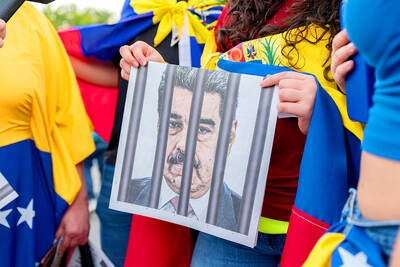
NOT AN OPENING: Trump’s violation of international law does not affect China’s consideration in attacking Taiwan; Beijing lacks capability, not precedent, an official said Taiwanese officials see the US’ capture of the president of Venezuela as a powerful deterrent to Beijing’s aggression and a timely reminder of the US’ ability to defeat militaries equipped with Chinese-made weapons. The strikes that toppled Venezuelan President Nicolas Maduro signaled to authoritarian leaders, including Chinese President Xi Jinping (習近平), US President Donald Trump’s willingness to use military might for international affairs core to US interests, one senior official in Taipei’s security circle said. That reassured Taiwan, the person said. Taipei has also dismissed the idea that Trump’s apparent violation of international law could embolden Beijing, said the official, who was not
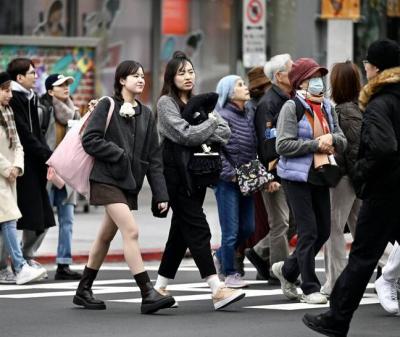
A cold surge advisory was today issued for 18 cities and counties across Taiwan, with temperatures of below 10°C forecast during the day and into tonight, the Central Weather Administration (CWA) said. New Taipei City, Taipei, Taoyuan and Hsinchu, Miaoli and Yilan counties are expected to experience sustained temperatures of 10°C or lower, the CWA said. Temperatures are likely to temporarily drop below 10°C in most other areas, except Taitung, Pingtung, Penghu and Lienchiang (Matsu) counties, CWA data showed. The cold weather is being caused by a strong continental cold air mass, combined with radiative cooling, a process in which heat escapes from
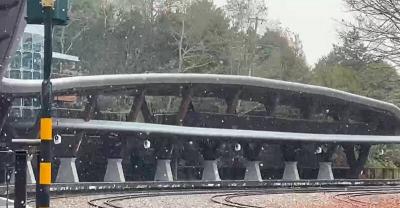
Snow this morning fell on Alishan for the first time in seven years, as a strong continental cold air mass sent temperatures plunging across Taiwan, the Central Weather Administration (CWA) said. The Alishan weather station, located at an elevation of about 2,200m in central Taiwan, recorded snowfall from 8:55am to 9:15am, when the temperature dropped to about 1°C, the CWA said. With increased moisture and low temperatures in the high-altitude Alishan area, the conditions were favorable for snow, CWA forecaster Tsai Yi-chi (蔡伊其) said. The last time snow fell at the Alishan weather station was on Jan. 10, 2018, while graupel fell there


 RSS
RSS