


Thirteen Taiwanese and Chinese who survived the 1945 Nagasaki and Hiroshima atomic bomb blasts filed a lawsuit with the Hiroshima District Court on Monday, each demanding ¥1.2 million (US$14,700) in compensation for refusal of medical services.
The collective lawsuit was initiated by 12 Taiwanese, aged between 67 and 97, including the family member of a survivor who passed away in 2007, and an 85-year-old Chinese man.
Among them, seven survived the Hiroshima bombing and the six others survived the bombing in Nagasaki.
The lawsuit was the first of its kind jointly filed by victims from across the Taiwan Strait.
The victims said the Japanese government excluded them from a medical aid program provided to all domestic victims because they were foreigners.
The government’s indifference caused them mental suffering, they said, citing it as the main reason for their lawsuit.
Among the Taiwanese litigants is Chen Hsin-tzu, a 95-year-old dermatologist who was a medical student at Nagasaki Medical College in 1945.
He was treating patients when the atomic bomb was dropped 700m from his facility. He returned to Taiwan after World War II and took residence in the former Kaohsiung county.
South Korean, US and Canadian nationals who formerly lived in Japan also took part in the collective lawsuit.
The US dropped an atomic bomb in Hiroshima on Aug. 6, 1945, killing 140,000 people. Three days later, it dropped another bomb in Nagasaki, killing more than 70,000. The bombings prompted Japan to surrender unconditionally on Aug. 15, 1945.
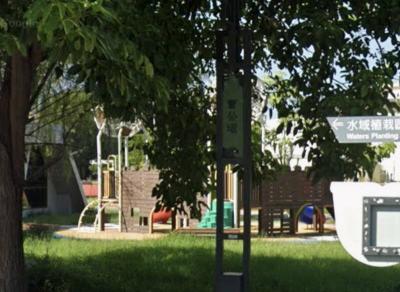
A 72-year-old man in Kaohsiung was sentenced to 40 days in jail after he was found having sex with a 67-year-old woman under a slide in a public park on Sunday afternoon. At 3pm on Sunday, a mother surnamed Liang (梁) was with her child at a neighborhood park when they found the man, surnamed Tsai (蔡), and woman, surnamed Huang (黃), underneath the slide. Liang took her child away from the scene, took photographs of the two and called the police, who arrived and arrested the couple. During questioning, Tsai told police that he had met Huang that day and offered to
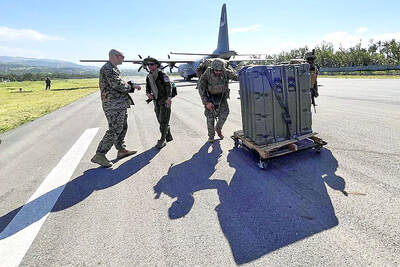
LOOKING NORTH: The base would enhance the military’s awareness of activities in the Bashi Channel, which China Coast Guard ships have been frequenting, an expert said The Philippine Navy on Thursday last week inaugurated a forward operating base in the country’s northern most province of Batanes, which at 185km from Taiwan would be strategically important in a military conflict in the Taiwan Strait. The Philippine Daily Inquirer quoted Northern Luzon Command Commander Lieutenant General Fernyl Buca as saying that the base in Mahatao would bolster the country’s northern defenses and response capabilities. The base is also a response to the “irregular presence this month of armed” of China Coast Guard vessels frequenting the Bashi Channel in the Luzon Strait just south of Taiwan, the paper reported, citing a

BETTER SERVICE QUALITY: From Nov. 10, tickets with reserved seats would only be valid for the date, train and route specified on the ticket, THSRC said Starting on Nov. 10, high-speed rail passengers with reserved seats would be required to exchange their tickets to board an earlier train. Passengers with reserved seats on a specific train are currently allowed to board earlier trains on the same day and sit in non-reserved cars, but as this is happening increasingly often, and affecting quality of travel and ticket sales, Taiwan High-Speed Rail Corp (THSRC) announced that it would be canceling the policy on Nov. 10. It is one of several new measures launched by THSRC chairman Shih Che (史哲) to improve the quality of service, it said. The company also said
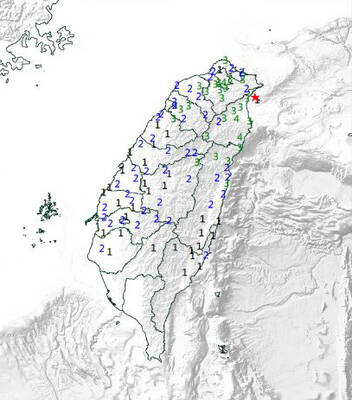
A magnitude 6 earthquake last night at 9:11pm struck off northeastern Yilan County, the Central Weather Administration (CWA) said. The earthquake’s epicenter was located in waters between Toucheng Township (頭城) and Turtle Island (Gueishan Island, 龜山島), about 22.1km northeast of Yilan County Hall at a depth of 112km, CWA data showed. There were no immediate reports of damage. The earthquake’s intensity, which gauges the actual effects of a temblor, was highest in Yilan’s Dongshan (冬山) and Nanao (南澳) townships and Taipei’s Xinyi District (信義), where it measured 4 on Taiwan’s seven-tier intensity scale. It measured 3 in other areas of Yilan and Taipei, as


 RSS
RSS