


When the Tokyo High Court rejected a lawsuit by a small group of elderly Taiwanese “comfort women” in 2004, Cheng Chen-tao (鄭陳桃), one of the plaintiffs, burst into tears in the courtroom.
Six years later, 89-year-old Cheng is still angred by the defeat, but said she and other comfort women would continue the decade-long legal battle against the Japanese government.
“I will not acknowledge defeat even though the court rejected our claims. I was forced to be a comfort woman when I was a student and I suffered all my life. It’s unacceptable that the Japanese government still refuses to apologize for what it did,” she said yesterday at an exhibition at the Taipei City Police Department’s Datong (大同) branch chronicling the women’s legal battle.

Photo: Wang Min-wei, Taipei Times
Cheng is one of 13 Taiwanese comfort women still alive. She joined eight other women to file a lawsuit against the Japanese government in 2001 for “recruiting” — most often through deception and coercion — tens of thousands of women from its colonies and occupied areas to serve as military sex slaves during World War II.
Cheng said she traveled all the way from Pingtung to attend the opening of the exhibition and asked for President Ma Ying-jeou’s (馬英九) assistance to help the surviving comfort women find justice and dignity.
“We flew to Japan several times, but they would not let us victims testify in court,” she said.
With the assistance from the Taipei Women’s Rescue Foundation, a non-profit organization that helped support the women’s case, the plaintiffs demanded ¥10 million (US$80,300) each in damages and an official apology from the Japanese government. However, Tokyo refused to admit it had recruited comfort women and has declined requests for an apology or compensation.
“These grandmothers don’t want monetary compensation from the Japanese government. They only ask for an official apology,” foundation chairwoman Liao Ying-chih (廖英智) said.
Speaking at the opening of the exhibition, Ma said he regretted the Japanese government’s failure to acknowledge its mistakes and promised to seek justice for the women.
“It is the responsibility of the Japanese government to admit its mistakes and apologize … The battle is not over yet and it is regretful that the Japanese government still refuses to face its mistakes,” he said.
Germany has made efforts to confront its historical atrocities and even puts details of concentration camps in history textbooks, Ma said.
“It is a great pity that there are places or nations that have not achieved this stage,” he said.
Ma said it was important for governments to address their mistakes and promised that as president he would not avoid major incidents in Taiwan’s history, including the 228 Massacre and the White Terror era.
“We can forgive historical mistakes, but history cannot be forgotten. The government should not be afraid [to face] disgraceful events and it should not avoid its responsibility to offer a formal apology,” he said.
Ma praised the three comfort women who were present yesterday for their courage and held a private discussion with them after the ceremony.
Liao said that during the past year, the foundation has been seeking assistance from the Japanese Diet in the hope that laws can be passed to oblige Tokyo to apologize for the country’s treatment of the comfort women.
The number of comfort women conscripted by the Japanese government during World War II is estimated to stand at 500,000, with women and girls taken from Taiwan, Korea, China, the Philippines and other countries, Liao said.
Titled A Long Way Gone, the exhibition features documents and media coverage of the women’s lawsuit against the Japanese government, which marked its 10th anniversary this year. The exhibition runs until Feb. 28.
Additional reporting by CNA

The military has spotted two Chinese warships operating in waters near Penghu County in the Taiwan Strait and sent its own naval and air forces to monitor the vessels, the Ministry of National Defense (MND) said. Beijing sends warships and warplanes into the waters and skies around Taiwan on an almost daily basis, drawing condemnation from Taipei. While the ministry offers daily updates on the locations of Chinese military aircraft, it only rarely gives details of where Chinese warships are operating, generally only when it detects aircraft carriers, as happened last week. A Chinese destroyer and a frigate entered waters to the southwest

Japanese Prime Minister Sanae Takaichi’s comment last year on Tokyo’s potential reaction to a Taiwan-China conflict has forced Beijing to rewrite its invasion plans, a retired Japanese general said. Takaichi told the Diet on Nov. 7 last year that a Chinese naval blockade or military attack on Taiwan could constitute a “survival-threatening situation” for Japan, potentially allowing Tokyo to exercise its right to collective self-defense. Former Japan Ground Self-Defense Force general Kiyofumi Ogawa said in a recent speech that the remark has been interpreted as meaning Japan could intervene in the early stages of a Taiwan Strait conflict, undermining China’s previous assumptions
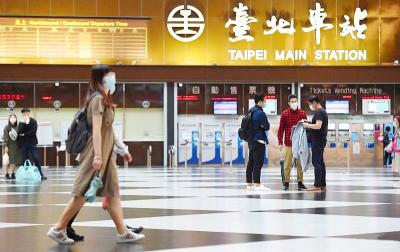
Taiwan Railways Corp (TRC) today announced that Shin Kong Mitsukoshi has been selected as the preferred bidder to operate the Taipei Railway Station shopping mall, replacing the current operator, Breeze Development Co Ltd. Among eight qualified firms that delivered presentations and were evaluated by a review committee, Shin Kong Mitsukoshi was ranked first, while Breeze was named the runner-up, the rail company said in a statement. Contract negotiations are to proceed in accordance with regulations, it said, adding that if negotiations with the top bidder fail, it could invite the second-ranked applicant to enter talks. Breeze in a statement today expressed doubts over
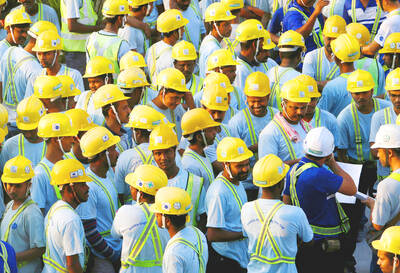
UNFOUNDED CONCERNS: Public concerns that allowing Indian workers to come and work in Taiwan would lead to increased sex crimes are baseless, the labor ministry said Amid public concern over the government’s plan to bring Indian workers to Taiwan, the Ministry of Labor (MOL) pointed to past intake and said that public safety remained stable. Minister of Labor Hung Sun-han (洪申翰) on April 9 told the legislature that the first group of Indian workers could arrive as early as the end of this year. Taiwan and India signed a memorandum of understanding (MOU) in February 2024 to address Taiwan’s labor shortage. The MOU was sent to the Legislative Yuan for review in mid-2024 and received cross-party backing, prompting the MOL to begin follow-up negotiations with India, Hung said. Public


 RSS
RSS