

The life and music of legendary songstress Teresa Teng (鄧麗君) will be featured at the Taipei International Flora Exposition, giving the public a chance to pay tribute to the late mega-star while enjoying three hectares of floral displays at the Yuanshan Park Area.
Known for her soothing voice and mastery of an array of genres, Teng is one of the most beloved cultural icons in the global Chinese community. The singer’s popularity expands far and wide to Japan, China, Hong Kong and Southeast Asia, despite her passing away in 1995.
“After a long deliberation, we unanimously agreed that Teng would be the best candidate to be honored at the expo’s Celebrity House because she fully embodies the traditional beauty of Chinese cultures,” organizing committee director Chen Hsiung-wen (陳雄文) said.
Divided into three halls, the Celebrity House complex — fashioned after traditional Japanese wooden architecture — is designed to give visitors what organizers describe as a visually and aurally stunning experience, with floral decorations and the flowing melodies of some of Teng’s best-known songs.
Teng’s die-hard fans can also cruise down memory lane as more than 40 never-before-displayed personal artifacts are to be put on show, including handwritten notes, stage costumes and a pair of pink roller skates.
A 38-minute documentary on Teng’s career will also be shown at the house, said Frank Teng (鄧長富), the singer’s older brother and chairman of the Teresa Teng Foundation.
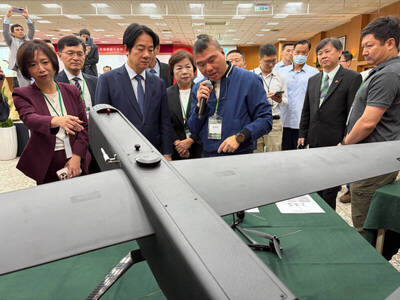
Two executives of drone supplier Jiin Ming Industry Co (錦明實業) have been detained and held incommunicado over the company's alleged use of prohibited China-made chips and camera lenses in drones supplied under recent military contracts, the Taoyuan District Prosecutors' Office said today. In a statement, prosecutors said they raided the offices of Jiin Ming — headquartered in Taoyuan — as well as those of its subsidiaries and its suppliers on Thursday last week. The raids followed a report that the company had breached its procurement contracts by putting the prohibited components into drones delivered to the military. During the raids, prosecutors summoned
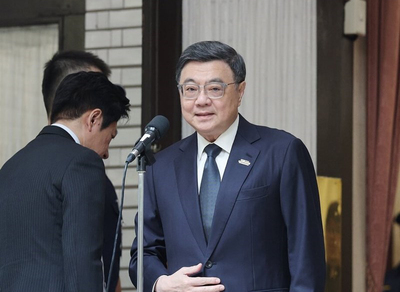
The government would continue monitoring online rumors that a pneumonic plague outbreak has spread from Russia into China and could enhance existing quarantine measures, Premier Cho Jung-tai (卓榮泰) said today. During a legislative meeting, Democratic Progressive Party Legislator Wang Ting-yu (王定宇) said rumors were circulating that the disease had spread across several Chinese provinces. He asked Cho whether the government was prepared to prevent the disease from spreading to Taiwan, given the frequent exchanges between Taiwan and China, and how concerned the government was about the alleged outbreak. The Ministry of Health and Welfare implemented border quarantine measures after briefing the Executive Yuan
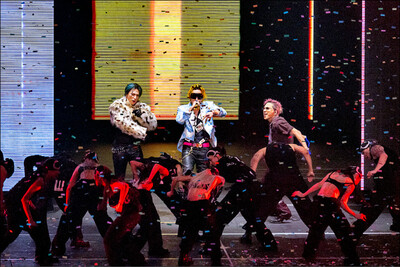
South Korean boy band BigBang drew 120,000 fans to three concerts at Taipei Dome from Friday through yesterday, as the band thanked them for their support over their 20-year career. The Taipei Dome concerts were part of BigBang's "2026-2027 World Tour XX: Cosmos." Friday's concert was BigBang's first performance in Taiwan in 11 years. During the encore, group leader G-Dragon (GD) shouted "I love you" in Chinese and said he was especially happy to perform in Taiwan with bandmates Taeyang and Daesung. "Taipei, I'm very grateful to you all," GD said in Chinese, asking fans to wait for the band's return. Daesung thanked
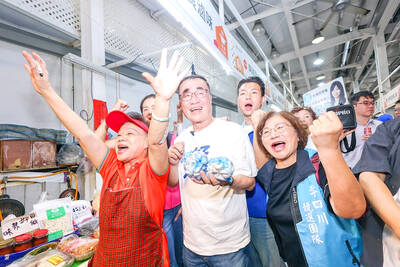
MAYORAL RACE: Su Chiao-hui made gains by persuading undecided voters and winning over voters in KMT-leaning districts, a pollster said Legislator Su Chiao-hui (蘇巧慧), the Democratic Progressive Party’s (DPP) candidate for New Taipei City mayor, has a 13.1 percentage point lead over her Chinese Nationalist Party (KMT) rival Lee Shu-chuan (李四川), a poll released yesterday showed. The poll, commissioned by the Taipei Trust in Democracy Association, showed that 43.1 percent of respondents said they would vote for Su, up 7.9 percentage points from a poll conducted in late August, while support for Lee was at 30 percent, down 4.7 percentage points. It showed that 48.6 percent of respondents thought Su would make a suitable mayor, compared with 35.9 percent for Lee. Independent candidate


 RSS
RSS