


The Department of Health (DOH) said that during its latest round of inspections of 13 types of red yeast rice currently on the market, four were found to contain levels of citrinin that were two to three times the legal limit.
In recent years, foodstuffs made with red yeast rice have become popular because it is believed to reduce cholesterol and provide other health benefits. Red yeast rice products are made from rice and a red yeast called Monascus purpureus. Fermented rice is used as a food preservative, food coloring and an ingredient in rice wine.
However, if red yeast rice is not properly preserved or packaged, the amount of the toxin citrinin present can increase to levels harmful to the human body. Health officials therefore conducted inspections on 13 types of red yeast rice and found that four types contained citrinin between 10.2ppm (parts per million) to 14.5ppm, when the maximum legal limit allowed in such foods is only 5ppm.
Three of the red yeast rice products that contained too much citrinin were found in Taipei City, while one was found in Tainan County. Health officials have ordered that the products be immediately removed from shelves and they are investigating their origin.
Other foodstuffs made with red yeast were also inspected by the DOH, and all nine types of processed food passed inspections. Health officials said that 20 types of rice and wheat products, 19 types of coffee beans, 18 types of apple juice drinks, 10 types of infant formula and 28 types of solid baby food were all found to comply with food safety regulations.
The DOH said that because citrinin is produced naturally by fungi such as red yeast, it is not advisable to consume too much food made using it. When shopping for red yeast, consumers should choose well-known brands and products that are vacuum-packaged and refrigerated to avoid consuming too much toxin, it added.

LOUD AND PROUD Taiwan might have taken a drubbing against Australia and Japan, but you might not know it from the enthusiasm and numbers of the fans Taiwan might not be expected to win the World Baseball Classic (WBC) but their fans are making their presence felt in Tokyo, with tens of thousands decked out in the team’s blue, blowing horns and singing songs. Taiwanese fans have packed out the Tokyo Dome for all three of their games so far and even threatened to drown out home team supporters when their team played Japan on Friday. They blew trumpets, chanted for their favorite players and had their own cheerleading squad who dance on a stage during the game. The team struggled to match that exuberance on the field, with
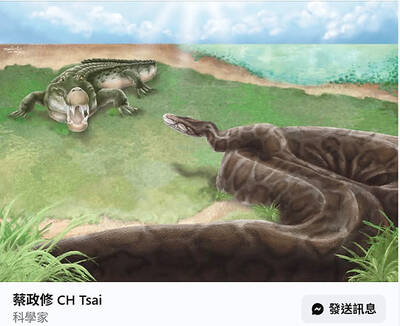
Taiwanese paleontologists have discovered fossil evidence that pythons up to 4m long inhabited Taiwan during the Pleistocene epoch, reporting their findings in the international scientific journal Historical Biology. National Taiwan University (NTU) Institute of Ecology and Evolutionary Biology associate professor Tsai Cheng-hsiu (蔡政修) led the team that discovered the largest snake fossil ever found in Taiwan. The single trunk vertebra was discovered in Tainan at the Chiting Formation, dated to between 400,000 and 800,000 years ago in the Middle Pleistocene, the paper said. The area also produced Taiwan’s first avian fossil, as well as crocodile, mammoth, saber-toothed cat and rhinoceros fossils, it said. Discoveries

Taiwanese paleontologists have discovered fossil evidence that pythons up to 4m long inhabited Taiwan during the Pleistocene epoch, reporting their findings in the international scientific journal Historical Biology. National Taiwan University (NTU) Institute of Ecology and Evolutionary Biology associate professor Tsai Cheng-hsiu (蔡政修) led the team that discovered the largest snake fossil ever found in Taiwan. A single trunk vertebra was discovered in Tainan at the Chiting Formation, dated to between 800,000 to 400,000 years ago in the Middle Pleistocene, the paper said. The area also produced Taiwan’s first avian fossil, as well as crocodile, mammoth, sabre-toothed cat and rhinoceros fossils, it said. Discoveries
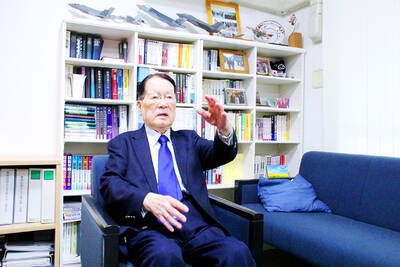
Whether Japan would help defend Taiwan in case of a cross-strait conflict would depend on the US and the extent to which Japan would be allowed to act under the US-Japan Security Treaty, former Japanese minister of defense Satoshi Morimoto said. As China has not given up on the idea of invading Taiwan by force, to what extent Japan could support US military action would hinge on Washington’s intention and its negotiation with Tokyo, Morimoto said in an interview with the Liberty Times (sister paper of the Taipei Times) yesterday. There has to be sufficient mutual recognition of how Japan could provide


 RSS
RSS