


President Ma Ying-jeou (馬英九) yesterday praised Taiwanese democracy pioneer Chiang Wei-shui (蔣渭水) as “a great man of Taiwan,” saying that studying the life and time of the democracy trailblazer was a good way to help promote Taiwanese identity.
Addressing the first annual conference on Chiang at National Chengchi University, Ma said Chiang had made many contributions to Taiwan.
“A lot of people talk about how to promote Taiwanese identity and win respect from the international community,” he said. “One way to do it is to study Chiang Wei-shui.”
Describing Chiang as a “legend,” Ma said Chiang’s reputation derived from his talents and love for Taiwan.
He hoped that learning about Chiang would become an important part of education.
Yesterday’s speech was Ma’s second time to attend activities to promote Chiang since he took office in May. He paid tribute to Chiang on the 77th anniversary of Chiang’s death early last month.
Chiang, who founded the nation’s first political party, the Taiwan People’s Party (台灣民眾黨), formed the Taiwan Culture Association (台灣文化協會) with a group of intellectuals in October 1921. Its aim was to awaken Taiwanese consciousness through cultural enlightenment. Chiang was imprisoned more than 10 times for defying orders from the Japanese regime. He died of typhoid in 1931, at the age of 40.
The president said yesterday that Chiang enlightened Taiwanese society with his words, actions and publications.
Despite his vast impact on the country, there are few in-depth studies on Chiang, Ma said.
“I believe it has a lot to do with politics,” he said.
After he took over the helm of the Chinese Nationalist Party (KMT), Ma said he thought it was time to apologize to Chiang Wei-shui and his family for the injustice he suffered.
During his term as KMT chairman, Ma said he hung framed portraits of Chiang Wei-shui and anti-Japanese hero Li You-pang (李友邦) on the outside wall of the party headquarters. The move, however, drew criticism from Tokyo that he was anti-Japan.
“But I am not anti-Japan,” he said.
“I just tried to highlight the relationship between the KMT and Taiwan during that period of history when Chiang was one of the key figures,” Ma said.
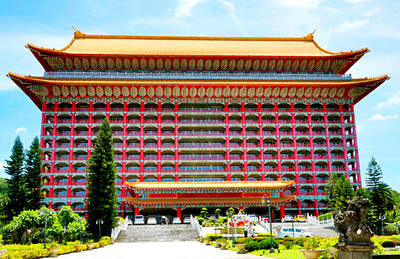
The Grand Hotel Taipei on Saturday confirmed that its information system had been illegally accessed and expressed its deepest apologies for the concern it has caused its customers, adding that the issue is being investigated by the Ministry of Justice Investigation Bureau. The hotel said that on Tuesday last week, it had discovered an external illegal intrusion into its information system. An initial digital forensic investigation confirmed that parts of the system had been accessed, it said, adding that the possibility that some customer data were stolen and leaked could not be ruled out. The actual scope and content of the affected data
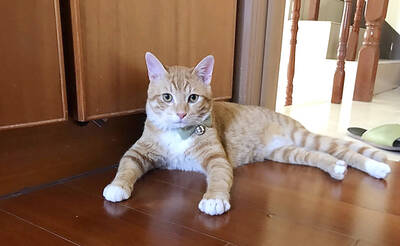
DO THEY BITE IT? Cats have better memories than people might think, but their motivation is based entirely around the chance of getting fed Cats can remember the identity of the people who fed them the day before, Taipei-based veterinarians said on Friday, debunking a popular myth that cats have a short memory. If a stray does not recognize the person who fed them the previous day, it is likely because they are not carrying food and the cat has no reason to recognize them, said Wu Chou Animal Hospital head Chen Chen-huan (陳震寰). “When cats come to a human bearing food, it is coming for the food, not the person,” he said. “The food is the key.” Since the cat’s attention is on the food, it
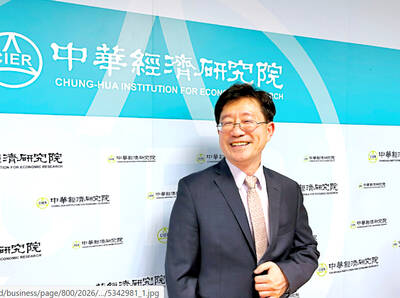
Taiwan must act to preempt potential Section 301 investigations as US President Donald Trump moves to a new tariff strategy, following a US Supreme Court ruling that voided tariff measures, an academic said yesterday. Countries running the largest trade surpluses with the US face a growing likelihood of Section 301 investigations, Chung-Hua Institution for Economic Research president Lien Hsien-ming (連賢明) said. Section 301 refers to a provision of the Trade Act of 1974 that allows Washington to impose retaliatory tariffs over perceived unfair trade practices, including the running of large trade surpluses. Because Taiwan has become the fourth-largest source of the US’ trade
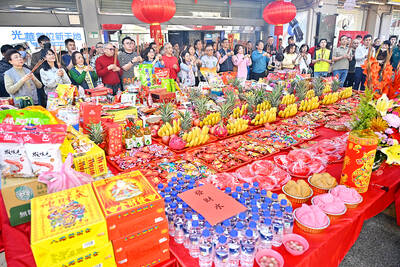
People hold incense and pray with offerings in front of Taipei’s Kuanghwa Market yesterday. The fifth day of the Lunar New Year is traditionally about welcoming the God of Wealth, during which companies and shops set off firecrackers to celebrate their reopening and pray for good business in the new year.


 RSS
RSS