

Cooperation between the Chinese Nationalist Party (KMT) and the People First Party (PFP) increased yesterday as the chairmen of the two parties unveiled the four PFP legislator-at-large candidates nominated by the two parties and vowed to work closely together to win the elections next year.
The four PFP candidates -- Cheng Chin-ling (
"To achieve victory in the legislative and presidential elections, the KMT and the PFP must unite and closely cooperate. I have asked the candidates to join the KMT for complete KMT-PFP integration during the elections," PFP Chairman James Soong (宋楚瑜) said yesterday at KMT headquarters.
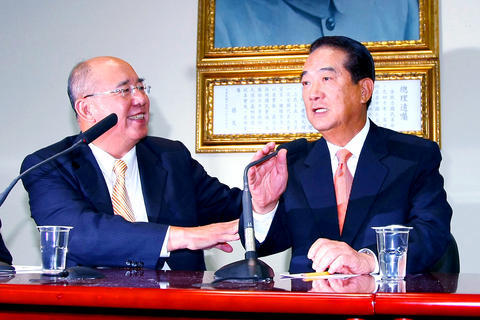
PHOTO: CNA
Joining Soong in announcing KMT-PFP cooperation during the legislative election, KMT Chairman Wu Poh-hsiung (吳伯雄) said the two parties had discussed cooperation for six months, but declined to comment on any final merger of the two parties.
"We won't talk about a merger now and the KMT will not meddle in the operations of the PFP's legislative caucus during this session," Wu said.
In addition to the four legislator-at-large candidates, six legislative candidates were nominated via the KMT-PFP alliance.
Ko Shu-ming (柯淑敏), Lee Hung-chun (李鴻鈞), Wu Chin-chih (吳清池), Chung Shao-Ho (鍾紹和), Fu Kun-chi (傅崑萁) and Daniel Hwang (黃義交) will join the KMT and register under the party, Soong said.
While he encouraged KMT-PFP cooperation for the elections, Soong nevertheless criticized the KMT for "deceiving voters" with its UN referendum bid and its recent removal of the "1992 consensus" from its mission statement.
"The Democratic Progressive Party [DPP] is fooling people with its UN referendum bid. [But] the KMT's bid to return to the UN under the name `Republic of China' [ROC] is also impossible. Isn't that deceptive as well?" Soong said.
Soong also expressed his disappointment with the KMT and its presidential candidate, Ma Ying-jeou (
"The PFP maintains that the ROC is the only option. Taiwanese independence is not an option for us. The PFP will not change its beliefs or alter its course for electoral purposes," he said.
During a visit to Europe last year, Ma said independence remained an option for Taiwan and has increasingly relied on pro-localization rhetoric to attract voters.
Soong denied he was targeting Ma with his remarks, but continued to called on the KMT not to forget its history and to stick to its political beliefs.
In response to Soong's criticism, Wu said the "1992 consensus" continued to be key a cross-strait policy in the party's Charter.
"But the KMT has to continue pushing the UN referendum bid, as it reflects the nation's difficult position in the international community," Wu said.
While the two chairmen declined to discuss the KMT-PFP merger, many expect the two parties will start preparations for a final merger after the new legislative session begins in February.
Asked for comment, PFP Legislator Shen Chin-hwei (
Shen said that even without KMT and PFP support she remained determined to run in the legislative election in the second district of Taichung City.
If Shen stands, she will be up against KMT Legislator Lu Shiow-yen (
In response, Marr said she had been included in the lineup because of her efforts to push for eco-friendly technology.
Approached by reporters, PFP Legislator Liu Wen-hsiung (
Additional reporting by Flora Wang

Starbucks Taiwan’s decision to charge for drink customization, which had been free, has sparked consumer backlash, highlighting the challenge of raising prices without making customers feel they are losing value, experts said. Since Oct. 12, customers who order drinks with less or no ice and ask to have the volume topped up with milk or other liquid have been charged an additional NT$15. Topping off drinks without ice was previously free, and disgruntled customers posted photos on social media showing that iced drinks ordered without ice were only half full if the extra NT$15 was not paid. The posts drew tens of thousands
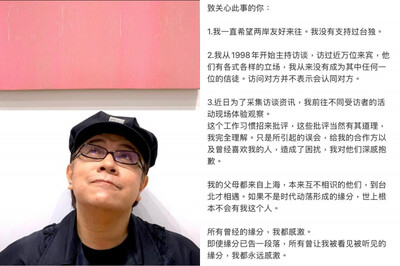
EXPLANATION: Tsai said he attended events featuring various interviewees to observe them firsthand as part of his interview research Television host Kevin Tsai (蔡康永) last night broke his silence over a controversy surrounding his appearance at a campaign event for Democratic Progressive Party Taipei mayoral candidate Puma Shen (沈伯洋), saying he had never supported Taiwan independence. “I have always hoped for friendly cross-strait relations. I have never supported Taiwan independence,” Tsai wrote in a post on the Chinese social media platform Sina Weibo. Tsai, who has hosted television shows in China, attended the opening of Shen’s campaign headquarters on Oct. 4, drawing criticism from Chinese social media users and prompting some Chinese companies to distance themselves from him. China’s Taiwan Affairs Office

Major department stores across Taiwan, including Taipei 101, Shin Kong Mitsukoshi, Far Eastern SOGO, Breeze and Honhui Plaza, are closed today due to Typhoon Champi, while major supermarkets remain open. Taipei 101 said its shopping mall, observatory and restaurants on higher floors are closed for the day, with future hours to be adjusted based on the storm's status. Shin Kong Mitsukoshi has closed all 16 of its branches nationwide, as well as its Taipei Railway Station mall and SKM Park Outlets in Kaohsiung. Far Eastern SOGO said it has closed all of its branches nationwide, including Garden City in Taipei, citing the safety
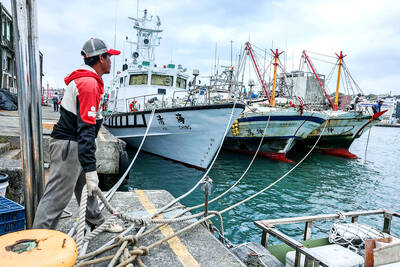
DOUBLE-CHECK: Mandarin Airlines said that it would adjust its schedule according to weather conditions, while high-speed rail services are to remain undisrupted Airlines, ferry services, railways and national parks announced cancelations and closures yesterday, as Typhoon Champi bore down on Taiwan. The Central Weather Administration yesterday issued land warnings for most of Taiwan proper, as Champi is forecast to come closest to the nation today. Taiwan Railway Corp (TRC) has canceled all express trains on its western and eastern trunk lines today, while the high-speed rail system would continue to operate normally. For non-reserved TRC services, trains on the Coast Line, Chengzhui Line, Yilan Line and North Link Line are fully suspended. Services between Hualien and Taitung counties, as well as other unsuspended routes, would operate


 RSS
RSS