


A legislative committee yesterday failed to reach a consensus on upgrading the legal status of the National Space Organization (NSO) amid allegations that the space center had colluded with contractors to waste taxpayers' money.
Facing opposition from some committee members, the Organic Laws and Statutes Committee resolved that committee members will visit the center to obtain first-hand information before reaching any decision.
The committee requested that the National Science Council present an assessment report on the center's request to upgrade its legal status and change its name to national space institute.
The committee will also hold a public hearing to solicit opinions from experts on the issue before reviewing the draft bill governing the establishment of the institution.
Taiwan Solidarity Union caucus whip Liao Pen-yen (廖本煙) questioned the center's ARGO satellite project, alleging that the center awarded the contract to a favored company and wasted taxpayers' money.
Chief engineer David Chu (
The center granted the contract in August last year and did not pay any money for the information the company provided over the past year, he added.
Once the project is up and running, it is estimated it will bring in NT$2.4 billion (US$75 million) in six years, Chiu said.
Liao called the center's Director General Lance Wu (吳作樂) a liar and requested he review the center's future direction before asking the committee to let it upgrade its legal status.
Liao said revenues generated by the sale were NT$1 million last year, he said. Wu, however, said the figures were higher.
Chinese Nationalist Party (KMT) Legislators Tsao Shou-min (曹壽民) proposed to suspend the debate on upgrading the center's legal status before certain issues were addressed.
Tsao said that the center has spent NT$19.7 billion on the space technology development project since its commencement in October 1991 but so far has only produced a five-page report.
He questioned the quantity and quality of the center's scientists, saying that some of them were college graduates and that 14 of its research fellows received monthly salaries that were as high as the basic salary of lawmakers.

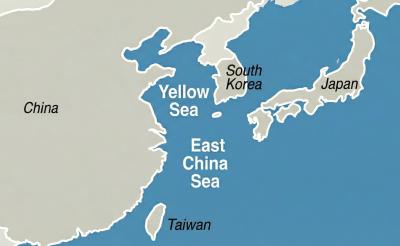
China has reserved offshore airspace in the Yellow Sea and East China Sea from March 27 to May 6, issuing alerts usually used to warn of military exercises, although no such exercises have been announced, the Wall Street Journal (WSJ) reported yesterday. Reserving such a large area for 40 days without explanation is an “unusual step,” as military exercises normally only last a few days, the paper said. These alerts, known as Notice to Air Missions (Notams), “are intended to inform pilots and aviation authorities of temporary airspace hazards or restrictions,” the article said. The airspace reserved in the alert is
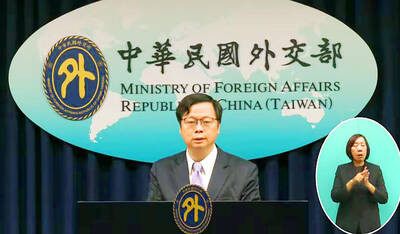
NAMING SPAT: The foreign ministry called on Denmark to propose an acceptable solution to the erroneous nationality used for Taiwanese on residence permits Taiwan has revoked some privileges for Danish diplomatic staff over a Danish permit that lists “Taiwan” as “China,” Eric Huang (黃鈞耀), head of the Ministry of Foreign Affairs’ Department of European Affairs, told a news conference in Taipei yesterday. Reporters asked Huang whether the Danish government had responded to the ministry’s request that it correct the nationality on Danish residence permits of Taiwanese, which has been listed as “China” since 2024. Taiwan’s representative office in Denmark continues to communicate with the Danish government, and the ministry has revoked some privileges previously granted to Danish representatives in Taiwan and would continue to review

More than 6,000 Taiwanese students have participated in exchange programs in China over the past two years, despite the Mainland Affairs Council’s (MAC) “orange light” travel advisory, government records showed. The MAC’s publicly available registry showed that Taiwanese college and university students who went on exchange programs across the Strait numbered 3,592 and 2,966 people respectively. The National Immigration Agency data revealed that 2,296 and 2,551 Chinese students visited Taiwan for study in the same two years. A review of the Web sites of publicly-run universities and colleges showed that Taiwanese higher education institutions continued to recruit students for Chinese educational programs without

A bipartisan group of US senators has introduced a bill to enhance cooperation with Taiwan on drone development and to reduce reliance on supply chains linked to China. The proposed Blue Skies for Taiwan Act of 2026 was introduced by Republican US senators Ted Cruz and John Curtis, and Democratic US senators Jeff Merkley and Andy Kim. The legislation seeks to ease constraints on Taiwan-US cooperation in uncrewed aerial systems (UAS), including dependence on China-sourced components, limited access to capital and regulatory barriers under US export controls, a news release issued by Cruz on Wednesday said. The bill would establish a "Blue UAS


 RSS
RSS