


Cautioning fellow party members against taking irrational measures, Chinese Nationalist Party (KMT) Chairman Ma Ying-jeou (馬英九) yesterday urged his party caucus to expedite negotiations with the pan-green camp over a cross-strait transport links bill before the proposed legislation is tabled for legislative review a third time tomorrow.
The pan-green camp has twice blocked the pan-blues' proposed amendments to the Statute Governing the Relations Between the People of the Taiwan Area and the Mainland Area (
Protests
Facing possible resistance from the pan-green camp tomorrow, the KMT central standing committee yesterday discussed possible solutions, with some party members suggesting public protests to get the bill passed in the legislature.
"To get the bill passed, I'd support mobilizing people to block the Legislative Yuan. It's not a time to talk about politeness when dealing with a barbaric government," KMT Legislator Yao Chiang-lin (
Ma rejected Yao's proposal.
"It's not that we are weak, because we wouldn't lose a fist fight in the legislature. But people may ask, `What can you do except for fighting and making promises?' The KMT doesn't want to give people the wrong impression," Ma said.
Ma said that the party should respect the rights of the executive branch to carry out the law, and promised that the party would give the government time to make any necessary modifications to the amendment before it is implemented.
"But we need to push for the passage of the amendment so that it can be put into practice," he said.
"If we don't do that, we'll have to wait at least two years before pushing for direct links, once the KMT regains power," Ma added.
KMT Legislator Lai Shyh-bao (
Tseng Yung-chuan (
No more news
Meanwhile, the committee also decided to close the Central Daily News, a KMT-owned Chinese-language newspaper established in 1951.
According to KMT Spokeswoman Cheng Li-wen (
The newspaper will cease operations at the end of this month. Cheng said that the party would be happy to see the newspaper resume operations if a buyer could be found.

The military has spotted two Chinese warships operating in waters near Penghu County in the Taiwan Strait and sent its own naval and air forces to monitor the vessels, the Ministry of National Defense (MND) said. Beijing sends warships and warplanes into the waters and skies around Taiwan on an almost daily basis, drawing condemnation from Taipei. While the ministry offers daily updates on the locations of Chinese military aircraft, it only rarely gives details of where Chinese warships are operating, generally only when it detects aircraft carriers, as happened last week. A Chinese destroyer and a frigate entered waters to the southwest

A magnitude 6.1 earthquake struck off the coast of Yilan County at 8:39pm tonight, the Central Weather Administration (CWA) said, with no immediate reports of damage or injuries. The epicenter was 38.7km east-northeast of Yilan County Hall at a focal depth of 98.3km, the CWA’s Seismological Center said. The quake’s maximum intensity, which gauges the actual physical effect of a seismic event, was a level 4 on Taiwan’s 7-tier intensity scale, the center said. That intensity level was recorded in Yilan County’s Nanao Township (南澳), Hsinchu County’s Guansi Township (關西), Nantou County’s Hehuanshan (合歡山) and Hualien County’s Yanliao (鹽寮). An intensity of 3 was

Japanese Prime Minister Sanae Takaichi’s comment last year on Tokyo’s potential reaction to a Taiwan-China conflict has forced Beijing to rewrite its invasion plans, a retired Japanese general said. Takaichi told the Diet on Nov. 7 last year that a Chinese naval blockade or military attack on Taiwan could constitute a “survival-threatening situation” for Japan, potentially allowing Tokyo to exercise its right to collective self-defense. Former Japan Ground Self-Defense Force general Kiyofumi Ogawa said in a recent speech that the remark has been interpreted as meaning Japan could intervene in the early stages of a Taiwan Strait conflict, undermining China’s previous assumptions
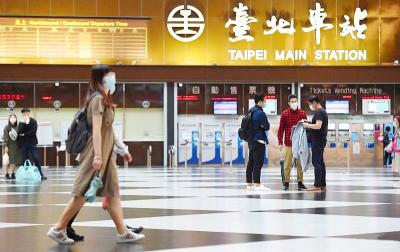
Taiwan Railways Corp (TRC) today announced that Shin Kong Mitsukoshi has been selected as the preferred bidder to operate the Taipei Railway Station shopping mall, replacing the current operator, Breeze Development Co Ltd. Among eight qualified firms that delivered presentations and were evaluated by a review committee, Shin Kong Mitsukoshi was ranked first, while Breeze was named the runner-up, the rail company said in a statement. Contract negotiations are to proceed in accordance with regulations, it said, adding that if negotiations with the top bidder fail, it could invite the second-ranked applicant to enter talks. Breeze in a statement today expressed doubts over


 RSS
RSS