


Education ministry officials yesterday said a list of 73 recognized Chinese higher-education schools set by the ministry almost 10 years ago was never valid since the Executive Yuan did not accept the list. However, the list was never abolished, they added.
The list of 73 schools approved by the Ministry of Education was compiled in 1997 along with the Guidelines for Reviewing and Accrediting Academic Degrees on the Chinese Mainland (
However, a month later, the then Executive Yuan of the Chinese Nationalist Party (KMT) administration told the ministry that "Chinese degrees are not merely an education problem, but are connected with cross-strait policies" and advised the ministry to rethink the list.
The Control Yuan said in the same month that due to the large number of Taiwanese students going to China to study for medical degrees there may be a surplus of doctors in the country once they all returned. It also said the ministry's policy could pose a threat to national security.
During an Education and Culture Committee question session at the Legislative Yuan yesterday, legislators queried why the guidelines and list were still in existence and had not been abolished.
KMT Legislator Diane Lee (
Vice Education Minister Lu Mu-lin (呂木琳) acknowledged the situation was unclear and said it led to the education ministry's recent loss of a lawsuit in which the ministry was forced to recognize an application for the accreditation of a Chinese diploma. The application was filed by a woman who had obtained her university degree at Jilin University of Technology in China. The education ministry has appealed the ruling.
According to Lu the court said that since the list and guidelines still exist the public may not be aware that they were "not applicable."
However, the guidelines cannot be abolished at the moment because Taiwan still recognized Chinese qualifications below university level, Lu said.
Elementary, junior high, and high school diplomas obtained in China all follow the guidelines, he said.
The ministry has no plans to abolish the list or guidelines, nor to start accrediting Chinese university diplomas, Lu said.

Hong Kong singer Eason Chan’s (陳奕迅) concerts in Kaohsiung this weekend have been postponed after he was diagnosed with Covid-19 this morning, the organizer said today. Chan’s “FEAR and DREAMS” concert which was scheduled to be held in the coming three days at the Kaohsiung Arena would be rescheduled to May 29, 30 and 31, while the three shows scheduled over the next weekend, from May 23 to 25, would be held as usual, Universal Music said in a statement. Ticket holders can apply for a full refund or attend the postponed concerts with the same seating, the organizer said. Refund arrangements would
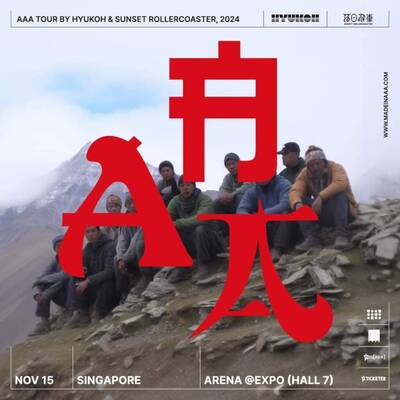
Taiwanese indie band Sunset Rollercoaster and South Korean outfit Hyukoh collectively received the most nominations at this year’s Golden Melody Awards, earning a total of seven nods from the jury on Wednesday. The bands collaborated on their 2024 album AAA, which received nominations for best band, best album producer, best album design and best vocal album recording. “Young Man,” a single from the album, earned nominations for song of the year and best music video, while another track, “Antenna,” also received a best music video nomination. Late Hong Kong-American singer Khalil Fong (方大同) was named the jury award winner for his 2024 album
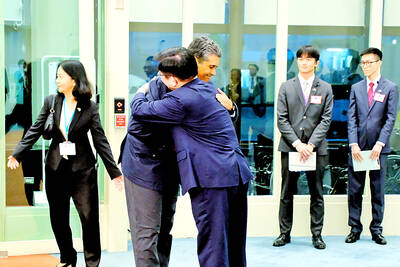
Palauan President Surangel Whipps Jr arrived in Taiwan last night to kick off his first visit to the country since beginning his second term earlier this year. After arriving at Taoyuan International Airport at around 6:30 pm, Whipps and his delegation were welcomed by Minister of Foreign Affairs Lin Chia-lung (林佳龍). Speaking to gathered media, the Palauan leader said he was excited and honored to be back in Taiwan on his first state visit to Taiwan since he was sworn in this January. Among those traveling with Whipps is Minister of State Gustav N. Aitaro, Public Infrastructure
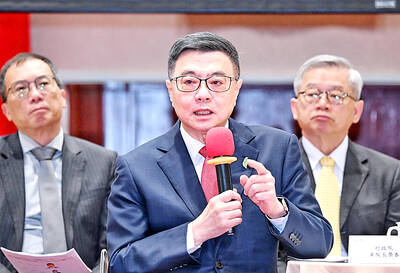
Premier Cho Jung-tai (卓榮泰) on Friday laid out the Cabinet’s updated policy agenda and recapped the government’s achievements ahead of the one-year anniversary of President William Lai’s (賴清德) inauguration. Cho said the government had made progress across a range of areas, including rebuilding Hualien, cracking down on fraud, improving pedestrian safety and promoting economic growth. “I hope the public will not have the impression that the Cabinet only asked the legislature to reconsider a bunch of legal amendments,” Cho said, calling the moves “necessary” to protect constitutional governance and the public’s interest. The Cabinet would work toward achieving its “1+7” plan, he said. The


 RSS
RSS