


Just a block away from the hustle and bustle of the Taipei streets, the passenger vessel, the Blue Sky sat silently moored at the Da Dao Cheng Wharf (大稻埕碼頭) by the Tamsui River (淡水河).
Traffic noise was faint at the other side of the riverbank. The ticket stand stood unused. Only residents living nearby come to the much-neglected wharf for a walk at sunset. The Blue Sky had no passengers, no crew, no captain.
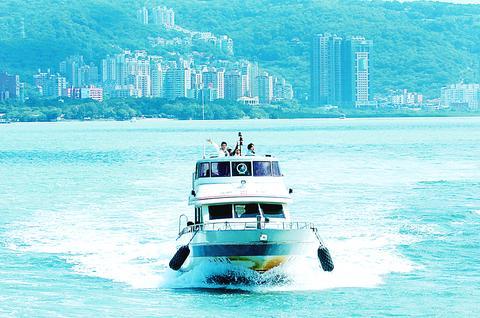
PHOTO: SEAN CHAO, TAIPEI TIMES
On Friday, however, the bulky, white vessel revved up its engine and scythed its way through the calm water. Lin Tse-ying, (林志盈), commissioner of Taipei City Government's department of transportation, stood by the Blue Sky and welcomed the first group of passengers.
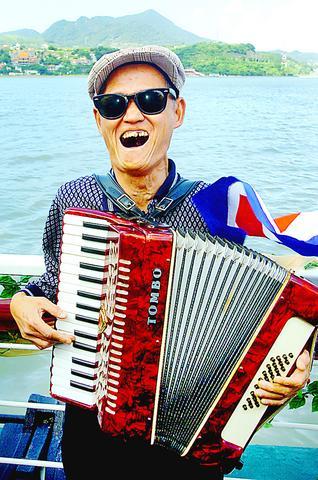
PHOTO: SEAN CHAO, TAIPEI TIMES
"The Blue Sky will begin her maiden voyage from the Da Dao Cheng Wharf to the Tamsui Fisherman's Wharf," Lin said, while reporters roamed around the area.
Because of Fisherman's Wharf's recent rise in popularity, the route between these two wharfs is the busiest section of the so-called Taipei Blue Highway, a local tourism project the Taipei City Government launched on the Tamsui River to promote "river culture" in the Taipei basin.
The Blue Highway was meant to blaze new roads for Taipei's leisure industry. Among the tourism projects proposed by Taipei Mayor Ma Ying-jeou (馬英九) when he sought re-election two years ago, the Taipei Blue Highway is the only one to be realized.
After city government opened up the Keelung River (基隆河) and Tamsui River waterways last year, the docks became packed with citizens eager for a leisurely cruise on the weekends. But the wave of popularity soon faded. This summer, the route between the Keelung River's Dajia Riverside Park (大佳河濱公園) to Tamsui River's Guandu Wharf (關渡碼頭) attracted only a few dozen visitors.
The costly maintenance of the Blue Highway also dims the its future prospects. Some Taipei City counselors doubted how the government could afford to maintain waterway while the city's coffers were running empty. The Taipei City Government allotted nearly NT$300 million to repair riverbanks damaged by Typhoon Nari last month, and also to clean garbage floating in the river.
During a meeting in Taipei City Council last month, DPP Counselor Chou Wei-yu (
Snaking its way through Taipei basin, the Blue Highway passes many historical sites that tell the story of Taipei. History abounds on the Blue Highway, particularly at the Da Dao Cheng and Tamsui wharfs.
During the Qing Dynasty, the Da Dao Cheng Wharf was a busy international port used for exporting tea and importing opium. Today's Dihua Street is a microcosm of the port's prosperity. During the 1920s, as the Keelung Port overtook Tamsui Port in terms of popularity, the amount of trade shrunk drastically. The wharf was finally abandoned.
Today, evidence of the good old days remain in Tamsui's old town, ten minutes' drive from the Fisherman's Wharf. Sitting on the mouth of the Tamsui River, the old town was once the source of much of northern Taiwan's commercial prosperity. At its golden age in the late 18 century, the Tamsui port could take in boats weighing as much as 2,000 tonnes.
A darker side of the old town's history came with the occupations of foreign powers, particularly the Spanish, the Dutch, and the Japanese. The old town is shaped by centuries of conflict between Eastern and Western nations, such as the Dutch occupation before it was expelled by the Ming Loyalist, Koxinga (國姓爺鄭成功).
Now, the open area along the waterfront is crammed with food vendors for which the town has become famous.
The Blue Sky edged steadily away from the Da Dao Cheng Wharf headed for Tamsui.
"This is fun," a passenger said, listening to blind singer Lee Bing-hui (李炳輝) singing the singing the popular song, "Wandering to Tamsui," in his husky old voice.
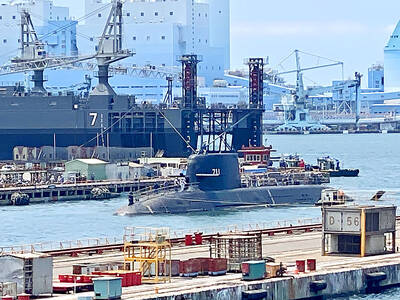
AGING: While Japan has 22 submarines, Taiwan only operates four, two of which were commissioned by the US in 1945 and 1946, and transferred to Taiwan in 1973 Taiwan would need at least 12 submarines to reach modern fleet capabilities, CSBC Corp, Taiwan chairman Chen Cheng-hung (陳政宏) said in an interview broadcast on Friday, citing a US assessment. CSBC is testing the nation’s first indigenous defense submarine, the Hai Kun (海鯤, Narwhal), which is scheduled to be delivered to the navy next month or in July. The Hai Kun has completed torpedo-firing tests and is scheduled to undergo overnight sea trials, Chen said on an SET TV military affairs program. Taiwan would require at least 12 submarines to establish a modern submarine force after assessing the nation’s operational environment and defense
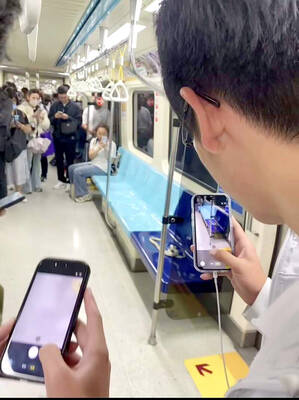
A white king snake that frightened passengers and caused a stir on a Taipei MRT train on Friday evening has been claimed by its owner, who would be fined, Taipei Rapid Transit Corp (TRTC) said yesterday. A person on Threads posted that he thought he was lucky to find an empty row of seats on Friday after boarding a train on the Bannan (Blue) Line, only to spot a white snake with black stripes after sitting down. Startled, he jumped up, he wrote, describing the encounter as “terrifying.” “Taipei’s rat control plan: Release snakes on the metro,” one person wrote in reply, referring
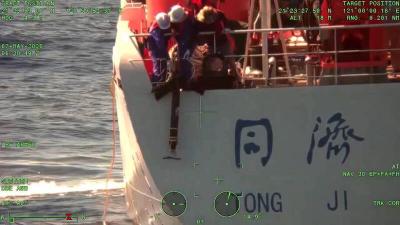
The coast guard today said that it had disrupted "illegal" operations by a Chinese research ship in waters close to the nation and driven it away, part of what Taipei sees a provocative pattern of China's stepped up maritime activities. The coast guard said that it on Thursday last week detected the Chinese ship Tongji (同濟號), which was commissioned only last year, 29 nautical miles (54km) southeast of the southern tip of Taiwan, although just outside restricted waters. The ship was observed lowering ropes into the water, suspected to be the deployment of scientific instruments for "illegal" survey operations, and the coast
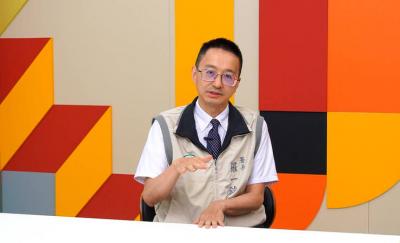
Taiwan’s two cases of hantavirus so far this year are on par with previous years’ case numbers, and the government is coordinating rat extermination work, so there should not be any outbreaks, Centers for Disease Control (CDC) Director-General Philip Lo (羅一鈞) said today in an interview with the Liberty Times (the Taipei Times’ sister newspaper). An increase in rat sightings in Taipei and New Taipei City has raised concerns about the spread of hantavirus, as rats can carry the disease. In January, a man in his 70s who lived in Taipei’s Daan District (大安) tested positive posthumously for hantavirus, Taiwan’s


 RSS
RSS