


Kaohsiung Mayor Frank Hsieh (
The newly re-elected mayor had little time to celebrate his success on Dec. 7 last year before facing a barrage of attacks implicating him in the vote-buying scam surrounding the council's speakership election.
Coming at a time when he was seen as one of the foremost stars of the DPP, along with President Chen Shui-bian (
"Hsieh is facing the biggest challenge of his political life," said a presidential official, speaking on condition of anonymity.
"Whereas Chen's public support had been raised by his immediate pledge to crack down on bribery, Hsieh's reputation has been tarnished because he failed to provide clear explanations about the role he played in the speakership election," the official said.
The scandal erupted after the election of the council speaker on Dec. 25, when prosecutors found evidence that almost 30 councilors on the 44-member council had sold their votes at NT$5 million each to the controversial and already scandal-tainted Chu An-hsiung (朱安雄).
Although Hsieh never stated a preference for any particular candidate before the election, reports have said that he tacitly endorsed Chu. It is difficult for Hsieh to avoid the fallout from the controversy because his aide, Wang Wen-cheng (王文正), the director of Kaohsiung's Civil Affairs Bureau, has admitted that he lobbied for Chu.
Wang was detained last week on suspicion of approaching city councilors on Chu's behalf and later delivering bribe payments.
Also at issue is the NT$2.8 million Hsieh received from Hsu Wen-liang (
Hsieh has developed a reputation for being articulate but evasive in the face of disputes.
Before the election, Hsieh offered ambiguous explanations in response to accusations from opposition lawmakers that he had received a NT$4.5 million check from Zanadau majority shareholder Su Hui-chen (蘇惠珍) in 1994 as part of an influence-peddling scheme.
Regarding the vote-buying scam and the payment from the temple, Hsieh has been vague about whether he knew Wang was helping Chu and about why he accepted the payment from Hsu.
"As a lawyer, Hsieh is skillful at analysis from a legal perspective. His explanations may sound plausible under the law. But as a politician, he should answer in accordance with the political responsibility bestowed upon him," the official said.
Holding a bachelor of law degree from National Taiwan University (NTU) and a master of philosophy diploma from Kyoto University in Japan, the 57-year-old mayor is one of the few DPP leaders with a reputation for being talented, quick-witted and erudite.
The competitive yet cooperative relationship between Hsieh and Chen is one of the most talked-about relationships within the DPP.
Chen, who also graduated from NTU's law department, is five years younger than Hsieh. They both began their involvement in politics in the early 1980s when they served as defense lawyers for the political prisoners of the Kaohsiung Incident. Both were elected as Taipei City councilors in 1981.
The two, along with another tangwai (outside the party,
In 1992, they were both elected as lawmakers. Two years later, Hsieh decided to withdraw from the second stage of the party's primary in the run-up to the Taipei mayoral election, after narrowly losing to Chen in the first round.
He served instead as Chen's campaign director, when the latter took the Taipei mayoralty for the DPP. But the rivalry between the two was not over.
Seeking to boost his popularity nationwide, Hsieh ran in the 1996 presidential election as DPP presidential candidate Peng Ming-min's (
Hsieh later chose to develop his own turf in Kaohsiung after his failed presidential bid.
In 1998, Hsieh was elected as Kaohsiung mayor, outshining Chen, who was defeated in his bid for re-election in Taipei.
Not to be outdone, Chen went on to become president in March 2000. Two months later, Hsieh once again demonstrated his own strength in the party, winning election as the party's chairman.
In July last year, Chen succeeded Hsieh to the chairmanship of the party, reducing Hsieh's influence within the party.
When Hsieh won his re-election bid last month, it was partly thanks to Chen's support.
Hsieh's standing would seem to have lagged behind Chen's since he conceded the DPP's candidacy in the 1994 Taipei mayoral election. But to the public, the difference between the two has never been as great as it has become following the vote-buying scandal.
Political observers say that differences in their personalities are the key to this.
Although Chen is not considered as talented as Hsieh, he is seen as diligent, decisive, modest and willing to learn from the young.
While Chen selects strong teams to work for him, whatever his post, Hsieh by contrast, though seen as wiser and more knowledgeable, is perceived as overly calculating and distrusting of others.
"Whether serving as a mayor, or the DPP chairman, Hsieh hasn't made use of his resources to train a team of his own because he fears his subordinates might steal his resources to start a career of their own," said an official who has known Hsieh for a long time.
"His intelligence and articulateness can sometimes be a drawback because they lead to the impression that he is insincere or dishonest," said the official, who did not want to be named.
While others think him smart, Hsieh does not think himself smart enough, which perhaps explains why he has sought wisdom from convicted fraudster Sung Chi-li (宋七力) -- a notorious cult leader who claims to have supernatural powers, those who know Hsieh said.
A few days after the mayoral election last month, Hsieh sparked controversy by reiterating earlier remarks that he believed in Sung, despite his conviction for fraud.
The officials said that, with one controversy after another, Hsieh's prospects of succeeding Chen have been greatly reduced, and it remains to be seen whether he will emerge from this latest crisis unscathed.
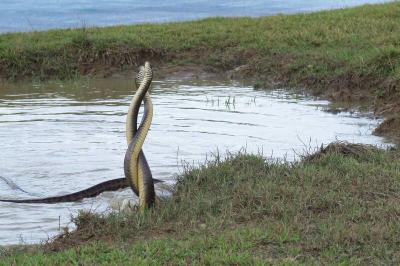
Kenting National Park service technician Yang Jien-fon (楊政峰) won a silver award in World Grand Prix Photography Awards Spring Season for his photograph of two male rat snakes intertwined in combat. Yang’s colleagues at Kenting National Park said he is a master of nature photography who has been held back by his job in civil service. The awards accept entries in all four seasons across six categories: architectural and urban photography, black-and-white and fine art photography, commercial and fashion photography, documentary and people photography, nature and experimental photography, and mobile photography. Awards are ranked according to scores and divided into platinum, gold and

More than half of the bamboo vipers captured in Tainan in the past few years were found in the city’s Sinhua District (新化), while other districts had smaller catches or none at all. Every year, Tainan captures about 6,000 snakes which have made their way into people’s homes. Of the six major venomous snakes in Taiwan, the cobra, the many-banded krait, the brown-spotted pit viper and the bamboo viper are the most frequently captured. The high concentration of bamboo vipers captured in Sinhua District is puzzling. Tainan Agriculture Bureau Forestry and Nature Conservation Division head Chu Chien-ming (朱健明) earlier this week said that the
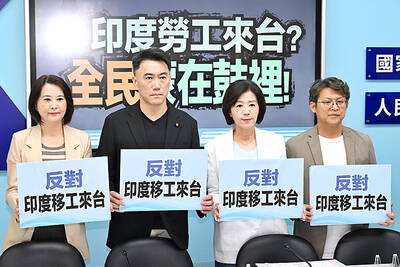
The Chinese Nationalist Party (KMT) caucus yesterday said it opposes the introduction of migrant workers from India until a mechanism is in place to prevent workers from absconding. Minister of Labor Hung Sun-han (洪申翰) on Thursday told the Legislative Yuan that the first group of migrant workers from India could be introduced as early as this year, as part of a government program. The caucus’ opposition to the policy is based on the assessment that “the risk is too high,” KMT caucus secretary-general Lin Pei-hsiang (林沛祥) said. Taiwan has a serious and long-standing problem of migrant workers absconding from their contracts, indicating that
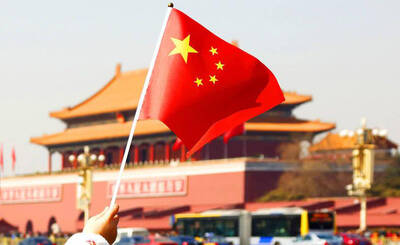
TRADE-OFF: Beijing seeks to trade a bowl of tempura for a Chinese delicacy, an official said, while another said its promises were attempts to interfere in the polls The government must carefully consider the national security implications of building a bridge connecting Kinmen County and Xiamen, China, the Public Construction Commission (PCC) said yesterday. PCC Commissioner Derek Chen (陳金德), who is also a minister without portfolio, made the remarks in a meeting of the legislature’s Transportation Committee, after Democratic Progressive Party Legislator Hsu Fu-kuei (徐富癸) asked about China’s proposal of new infrastructure projects to further connect Kinmen and Lienchiang (Matsu) counties with Xiamen. China unveiled the bridge plan, along with nine other policies for Taiwan, on Sunday, the last day of Chinese Nationalist Party (KMT) Chairwoman Cheng Li-wun’s (鄭麗文) visit


 RSS
RSS