


History
Penghu was developed quite early. According to historic records, people have inhabited here during the Shui and Tang dynasties. In the 6th year of Shuiyang of the Shui dynasty, Emperor Shuiyang used to send Chenlin to develop Penghu. In the middle era of Emperor Shenchung of the Tang dynasty, Shi Chienwu settled in Penghu.
In the 7th year of Emperor Shiaochung of the South Sung, Penghu became a part of China domain. It was officially established in the 18th year of the Chih Yuan reign of the Yuan dynasty. It was the first officially established island of Taiwan Province.
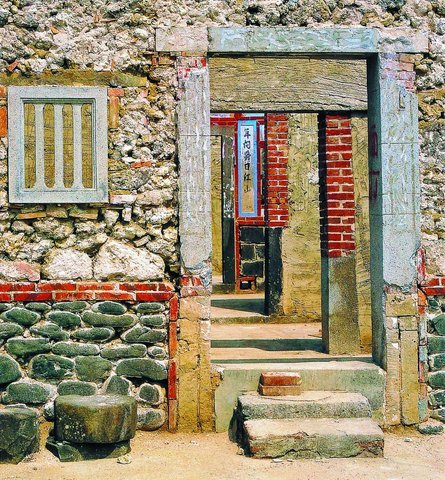
PHOTOS COURTESY OF TOURISM BUREAU PENGHU COUNTY GOVERNMENT
In the early of the Ming dynasty, because people immigrated to Mainland China and the imperial government abolished the official control, Penghu was occupied by pirates. In the 2nd year of Tien Chi of the Ming dynasty, Dutch invaded Penghu, building up forts for coast defense. In the 4th year, Dutch troops were defeated and then invaded Tainan in Taiwan.
Because of the failure of the Sino-Japanese War, the Ching dynasty was forced to sign the Treaty of Shimonoseki, ceding Taiwan and Penghu to Japan. In 1945, after defeating Japan, Penghu officially established a county government. In 1981, Makung Town promoted to be Makung City.
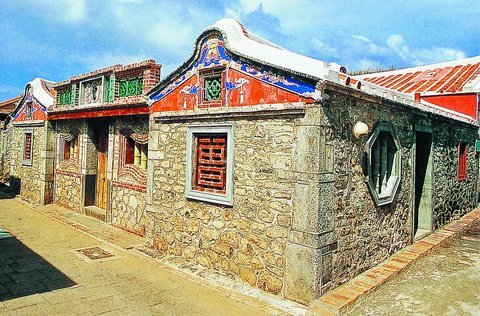
Archaeologists have found that there existed on Penghu's main island and other small islands as early as four to five thousand years ago "crude rope, striped pottery", "thin rope, striped pottery', and "simply decorated, red clay pottery" cultures, to name just a few, thereby verifying the origins of the cultural heritage of these islands.
Culture
Like pearls scattering in the East Sea, the Penghu archipelago is located in the southwest of the Taiwan Strait. It is between Chiai county and Kimen county, facing Taiwan on the east, and Fuchien Province on the west, linking Matsu archipelago, Tachen island and Choushan archipelago on the north, and Tungsha islands and Nansha islands on the south.
The interlocking influences of environment, the Han culture and historical factors have combined to form unique human characteristics in the Penghus. Immigrants from along the coast of Fuchien Province established here a lifestyle to accommodate themselves and cope with nature, and the traditional Chinese agricultural culture had to be adjusted to the effects of barren land, high winds, and lack of rainfall on these islands, as most of the inhabitants made their living by fishing, Europeans called it "Islands of the Fishermen."
Penghu's inhabitants have lived a very simple life and have adapted to their natural circumstances. The area itself, largely under tight security measures given the military value arising from its strategic geographical position, has never been developed on a large scale. Its long-time cultural assets, and a unique life-style that adapts to nature in harmony instead of undertaking full-scale development, have therefore been able to be maintained as a basic and appropriate means by which mankind copes with the nature.
For more information, please visit www.tour.penghu.gov.tw

The National Chungshan Institute of Science and Technology yesterday showcased its locally developed variants of the Vision 60 robotic patrol dog, which it plans to deploy on the nation’s outlying territories in the South China Sea. The variants were produced under the Joint Lab project — created by the institute and domestic companies — and assembled with domestically produced motors, lenses and artificial intelligence (AI) systems alongside licensed tech from the US, Missile and Rocket Systems Research Division deputy director Jen Kuo-kang (任國光) told the media event at a military base in Taipei’s Dazhi (大直) area. Taiwan has built up its strengths

RIGHT DIRECTION: Taiwan’s efforts to prevent forced labor include a proposal to ‘fully prohibit’ employers from withholding workers’ documents, an official said Taiwan is to establish a mechanism to restrict imports of goods linked to forced labor, the Executive Yuan said yesterday, after the US proposed imposing additional tariffs on Taiwanese goods over labor concerns. “The Ministry of Labor and the Ministry of Economic Affairs are to establish an interministerial review procedure,” Executive Yuan spokesperson Michelle Lee (李慧芝) said at a news briefing in Taipei. “The government is to use the Foreign Trade Act [貿易法] as the legal basis to restrict imports of goods produced with forced labor” and bring its supply chain governance more in line with international standards on human rights, resilience

NOT IMMEDIATE: Taiwan has a chance to appeal the proposed 10 percent tariff before it starts, while other countries face a 12.5 percent tariff from the trade office Taiwan is among 60 economies determined by the US to have failed to impose or enforce a ban on the importation of goods produced with forced labor, according to a notice released on Tuesday by the Office of the US Trade Representative (USTR), which proposed imposing an additional 10 percent or more tariff on them. The USTR in a statement said that following an investigation, it had determined under Section 301 of the Trade Act of 1974 that the failure of the 60 economies to impose and effectively enforce a prohibition on the importation of goods produced with forced labor is

TIT-FOR-TAT: The US allegedly revoked the visa of a Chinese national working at Xinhua News Agency in the US in response to Beijing’s expulsion of Vivian Wang The Presidential Office yesterday condemned China for expelling a New York Times correspondent from Beijing following the newspaper’s interview with President William Lai (賴清德), saying the move highlighted Beijing’s suppression of press freedom and its threat to international news media. Taiwan has noted a series of recent incidents in which Beijing used similar tactics to “threaten and pressure international media outlets and journalists,” Presidential Office spokeswoman Karen Kuo (郭雅慧) said in a statement. “This concerns not only press freedom and freedom of expression, but also the safety of journalists, and Taiwan and relevant partners are paying close attention to the situation,” she


 RSS
RSS