


Former heavyweight champion George Foreman, who lost to Muhammad Ali in boxing’s iconic 1974 “Rumble in the Jungle” before reclaiming the title two decades later, died on Friday, his family said.
He was 76.
Fondly known as “Big George,” Foreman dropped out of school as a teenager and went on to become an Olympic champion and later a legend of boxing.
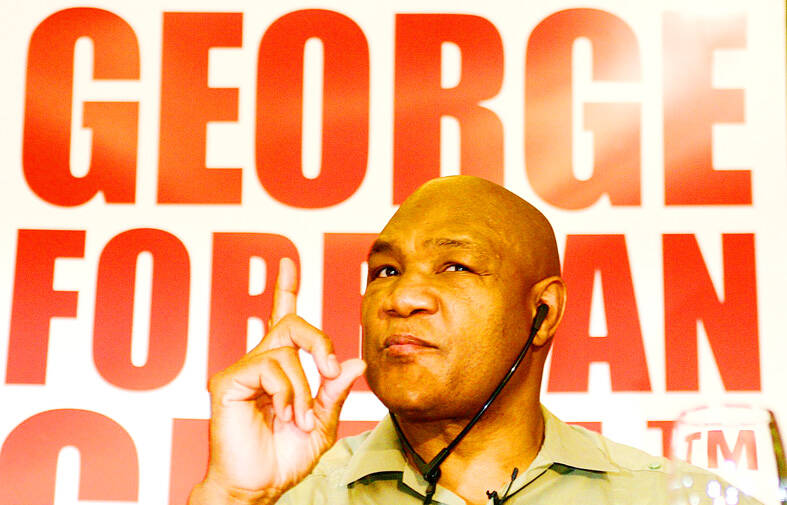
Photo: EPA-EFE
He fought 81 times as a professional, winning 76, 68 of those by knockout.
As well as boxing, he put his name to the George Foreman Lean Mean Fat-Reducing Grilling Machine, appearing smiling and friendly in the TV ads, becoming a celebrity outside the sport.
“With profound sorrow we announce the passing of our beloved George Edward Foreman Sr, who peacefully departed on March 21, 2025, surrounded by loved ones,” Foreman’s family said in a statement on Instagram. “We are grateful for the outpouring of love and prayers, and kindly ask for privacy as we honor the extraordinary life of a man we were blessed to call our own.”
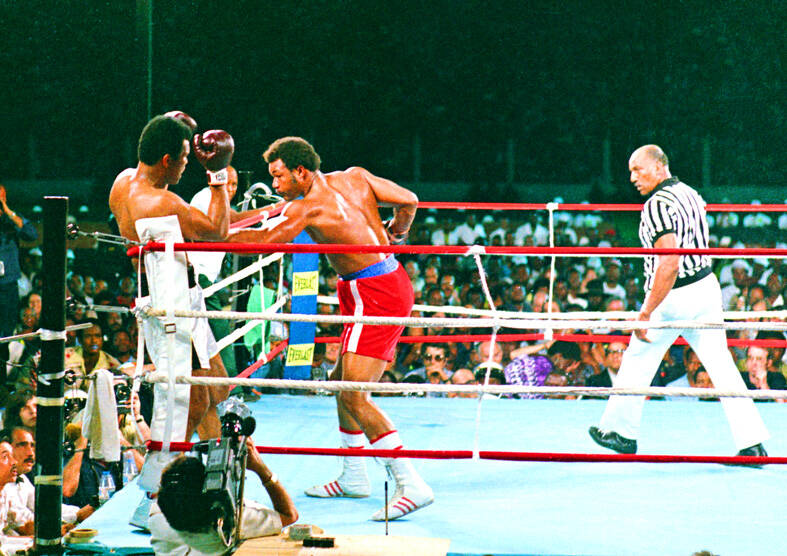
Photo: AP
Legendary boxing promoter Bob Arum saluted Foreman as “one of the biggest punchers and personalities the sport has ever seen.”
Born in Texas on Jan. 10, 1949, Foreman grew up in Houston.
The man who raised him was frequently absent and often drunk. Foreman only found out that J.D. Foreman was not his biological father after he won the world heavyweight title when his real father, a decorated World War II veteran, got in touch.
Photo: Reuters
As an adolescent, Foreman flirted with crime and left school at 16.
“At 13-years-old, George was about 6-foot-2 [1.88m], 200 pounds [90.7kg] and the terrorist in the neighborhood,” his younger brother Roy told the BBC last year. “And when you’re bigger and stronger, and think you’re better than everyone else, you take things.”
Foreman took up boxing.
“I tried boxing just to show my friends that I wasn’t afraid,” Foreman said later. “Well, 25 fights and one year later, I was an Olympic gold medalist.”
At the Mexico Games in 1968, the 19-year-old Foreman bludgeoned his way to the super-heavyweight gold.
As he celebrated his final victory, 10 days after fellow African-Americans Tommie Smith and John Carlos had made a black power salute following the 200m track final, Foreman waved a US flag in the ring.
At 1.93m, “Big George” was larger and stronger than the other leading heavyweights of the time. He was light on his feet, but slugged his way through the professional ranks to earn a heavyweight title shot against champion Joe Frazier, demolishing the champion in two rounds.
By the time he fought his third title defense over 15 rounds against Ali in October 1974 in Kinshasa, Foreman was unbeaten in 40 professional bouts.
He had won all but three inside the distance and had not needed to develop stamina.
Ali’s “rope-a-dope” tactics exhausted the big man, who lost in eight rounds.
The defeat punctured Foreman’s intimidating aura, not least in his own mind.
“I just couldn’t believe I’d lost the world title,” he said later. “It was the most embarrassing moment of my life. It went from pride to pity. That’s devastating.”
His campaign for another title shot ended when he lost on points to another contender, Jimmy Young, in March 1977 on a hot night in Puerto Rico.
Foreman fell ill after the fight and said he sensed God telling him to change his life.
He retired aged 28 and became an ordained minister. When he announced his comeback 10 years later, bald where he had once sported an Afro and flabby instead of chiseled, it seemed like a boxing gimmick. He wrote later that he needed money for his youth center.
Over the next three years he fought 21 times, mostly against mediocre opponents, winning every bout, 20 of them inside the distance.
A big name in a weakened and fragmented division, he earned a title shot against Evander Holyfield in 1991 and then against Tommy Morrison two years later, losing both on points.
In November 1994 he faced Michael Moorer, who had dethroned Holyfield. In the same shorts he had worn 20 years and six days earlier against Ali, Foreman was trailing badly when he caught Moorer on the chin in the 10th for a knockout.
At 45 years and 299 days old he was the oldest heavyweight world champion.
He was stripped of first his WBA title and then his IBF crown for refusing to fight nominated opponents, but won three more fights and was still “lineal” world champion when he lost on points to Shannon Briggs in 1997, aged 48, and retired again.
Foreman, who hosted a 1996 TV program, Bad Dads, married four times, fathering 10 children and adopting two.
He named all of his five sons George Edward, explaining that he wanted them to know, “If one of us goes up, then we all go up together, and if one goes down, we all go down together.”
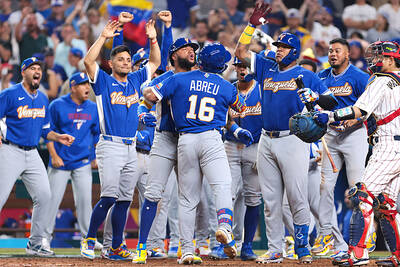
Wilyer Abreu watched the ball leave the park and tossed his bat high in the air. His Venezuela teammates streamed out of the dugout in celebration. The comeback was on and the win over the reigning World Baseball Classic (WBC) champion Japan was within reach. Japan, their 11-game WBC winning streak on the line, held a 5-4 lead in the sixth inning of Saturday’s thrilling quarter-final matchup when Abreu put his team ahead with the biggest swing of the game: a three-run shot off Hiromi Itoh that sent the loanDepot Park crowd into a passionate roar and helped seize Venezuela’s 8-5
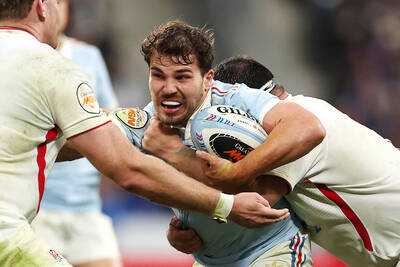
A BREATHLESS BATTLE: France clinched the championship in a vicious back-and-forth match with England, denying Ireland the title by just a few points France won back-to-back Six Nations titles after beating England 48-46 on a last-second penalty-kick by Thomas Ramos in a thriller for the ages on Saturday. England scored their seventh try in the 77th minute and converted for 46-45. If the score held for a few more minutes, Ireland would have been crowned the champion. But France pressed yet again with 14 men, lost possession, regained it, and earned two simultaneous penalties after the fulltime siren. Captain Antoine Dupont debated with referee Nika Amashukeli where the penalty spots were. Ramos, who did not miss a goal-kick all night, finally lined up his seventh

Home runs are greeted with a celebratory shot of espresso and the donning of an Armani jacket. Victories are marked with bottles of red wine while the soaring voice of opera singer Andrea Bocelli echoes through the locker room. Welcome to baseball, Italian-style. Written off as 80-1 underdogs before the World Baseball Classic started, Italy’s fairytale tournament has carried them all the way to today’s (Taipei time) semi-finals in Miami against Venezuela. On Saturday, Italy — who scored a stunning upset of a star-studded US lineup during the pool phase — kept their unbeaten campaign alive with a nail-biting 8-6
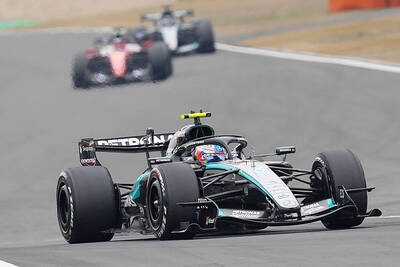
Kimi Antonelli became Formula 1’s second-youngest race winner with a composed drive to victory for Mercedes in an eventful Chinese Grand Prix yesterday. The 19-year-old Italian was the youngest pole position starter and briefly lost the lead to Lewis Hamilton of Ferrari at the start, but retook it soon after and was in control after that. “We did it! We did it!” Antonelli shouted to his team on the radio amid laughs and whoops. It was another 1-2 finish for Mercedes to start the season as Antonelli’s teammate George Russell came through a battle with both Ferraris to finish second. Lewis Hamilton was


 RSS
RSS