


Postponing the Tokyo Olympics to next year would make the event more costly for all parties, the International Olympic Committee (IOC) acknowledged on Thursday, although it offered few details on what the final bill might be.
Four directors of the Olympic body held a conference call three days after Tokyo’s new dates were finalized, with the Games pushed back to July 23 to Aug. 8 next year because of the COVID-19 pandemic.
While the new dates cleared up any uncertainty about the event’s future, there are still plenty of question marks as the committee begins to work with Tokyo organizers and the governing bodies of 33 sports in a huge task to amend thousands of contracts. They include agreements for 41 venues, an Olympic village of 5,000 apartments, hotels and transport, as well as the supply of goods and services.
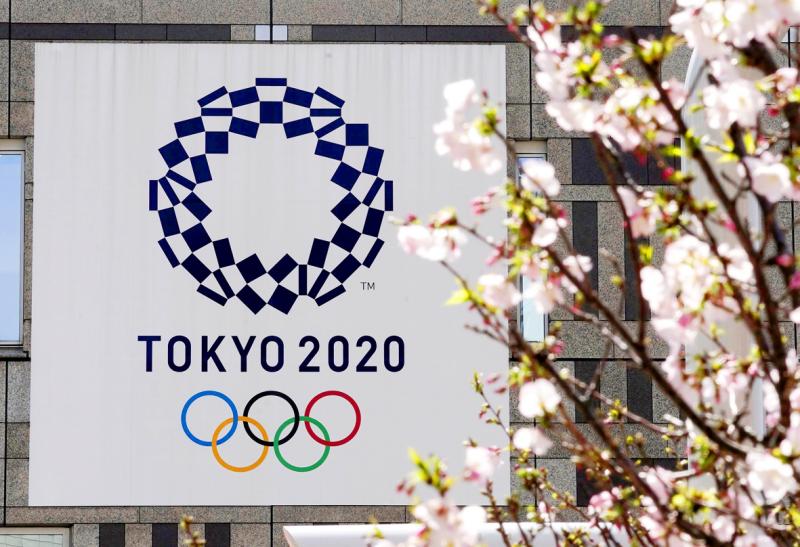
Photo: EPA-EFE
“All of this now has to be resecured for one year later,” IOC Olympic Games executive director Christophe Dubi said. “There will be costs for [Tokyo local organizers] and the IOC and Olympic family side.”
The estimations for how much it will cost to postpone the Games have started at US$2 billion and gone much higher. Japanese taxpayers are expected to meet most of it, adding to their share of an official budget of US$12.6 billion.
The IOC was contributing US$1.3 billion to Tokyo’s original operating budget.
Asked if the Switzerland-based Olympic body would meet some of the extra costs from its own insurance policy or US$1 billion reserve fund, the official line on Thursday was that it was too early to say.
It was also unclear how the payments from broadcasters would be structured.
“We’re only just getting into all of this,” IOC managing director of TV and marketing Timo Lumme said.
Broadcasters including the US’ National Broadcasting Corp contributed 73 percent of the IOC’s US$5.7 billion income from the previous four-year cycle up to the 2016 Rio de Janeiro Olympics. Of that, US$540 went to the governing bodies of the 28 core Summer Games sports.
That figure is expected to go up for Tokyo, but it is still unclear when the governing bodies would get IOC payments from their share of those revenues.
The IOC has not committed to paying 25 percent of that money in advance this year to ease the governing bodies’ cash flow. Many face extra costs for Tokyo, while also having to cancel revenue-earning world championships and other international events.
“They’ll get to 2021, but in what condition?” Association of Summer Olympic International Federations president Francesco Ricci Bitti said this week.
He told reporters that “15 to 20 are very dependent on Olympics funding.”
One Tokyo Olympics decision could come within two weeks, IOC sports director Kit McConnell said.
The IOC would have talks with FIFA about raising the age limit in men’s soccer from 23 to 24 to account for the one-year delay.
Hundreds of potential Olympic athletes who get IOC funding for their training are getting one-year extensions to their scholarships.
The IOC has yet to reschedule its annual meeting that was set for Tokyo in July — or a presidential election that is scheduled for June next year in Athens, Greece. That is now just one month before the start of the Tokyo Games.
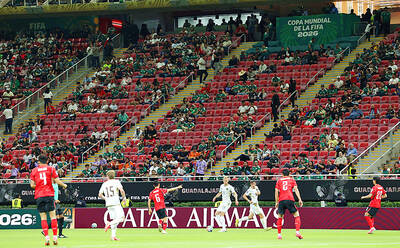
FIFA on Friday blamed the empty seats during the FIFA World Cup match between South Korea and the Czech Republic in Guadalajara, Mexico, on fans who watched from the concourses. There were many visible empty spots at the 45,664-capacity Guadalajara Stadium, with sections in the middle of the stands showing many unoccupied spaces and with other empty seats scattered around the venue. The announced attendance was 44,985 — including FIFA president Gianni Infantino. “Official attendance figures reflect the number of tickets scanned and spectators present within the stadium footprint, rather than visual assessments of seating occupancy at any given moment
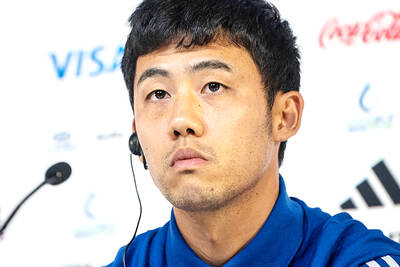
Japan captain Wataru Endo on Thursday was ruled out of the FIFA World Cup with injury and announced his international retirement, three days before his team’s opener against the Netherlands. The Liverpool midfielder pulled out of the tournament after failing to recover from a foot injury and was replaced in Japan’s squad by Shuto Machino. The 33-year-old Endo said on social media that he was “frustrated” at not being able to play, but backed his team to impress in Group F, where they face the Netherlands, Tunisia and Sweden. “There will definitely come a time in the future when Japan win the World
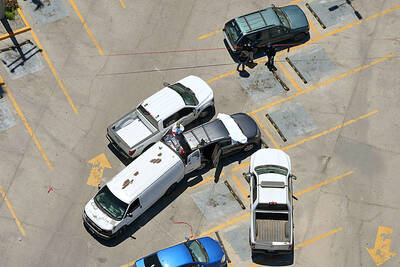
A rotting body was found on Friday in the trunk of a car parked near the stadium where Iran’s FIFA World Cup team is training in Mexico. The gruesome discovery came with games under way in the tournament, which is being jointly hosted by Mexico, the US and Canada. Reporters watched as police in Tijuana opened the trunk of the gray Toyota SUV, which had California plates, in the parking lot of a supermarket directly across from the Caliente Stadium, where Team Melli are training as they prepare for three games in the US. Specialists in white protective suits worked
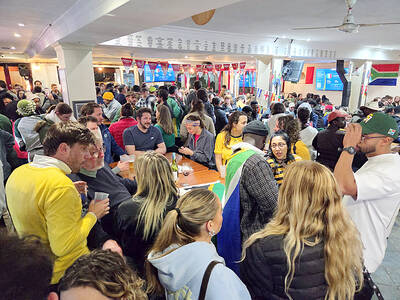
About 100 people gathered at a bar in Taipei to watch the FIFA World Cup start in Mexico, despite the early hour of 3am yesterday. All seats had been reserved before the game started, said a clerk at the Brass Monkey, a bar in Taipei where customers can watch live sports broadcasts. The Group A clash between Mexico and South Africa drew supporters from multiple continents to the venue. For Misael Alanis, a Mexican student who has lived in Taiwan for two-and-a-half years, the atmosphere was just as important as the game itself. “There are a lot of Mexicans here and you can tell


 RSS
RSS