


The Government Information Office (GIO) yesterday formally announced that it will ditch its decade-long emblem that features an image of China.
During a press conference yesterday afternoon, Director-General of the GIO Su Tzen-ping (蘇正平) introduced a new emblem featuring a bridge, symbolizing the GIO's role as a bridge between the government and the public.
Su dismissed charges by critics that the GIO's move to abandon the old emblem was indicative of the DPP-led government's pro-independence stance.
The existing GIO emblem, which featured an ROC national flag and a map of China, was first used in 1988 under the instruction of former GIO director-general Shaw Yu-ming (邵玉銘).
Shaw served as the KMT government spokesman from 1987 to 1991.
According to information provided by the GIO, many of Su's predecessors, including Jason Hu (胡志強), Su Chi (蘇起) and Chen Chien-jen (程健人), had looked into changing the emblem, but to no avail.
"If so many GIO chiefs have proposed changing the emblem but failed to do so, it shows that they were worried that others would criticize their reform from a political and ideological point of view, as people have criticized our reform," Su said.
Su said the move to abolish the emblem stemmed from pragmatic rather than political considerations as the existing emblem, which even included the map of outer Mongolia -- which declared independence in 1921 -- has caused confusion.
"The historical entanglement surrounding our country's territory can't be explained in a few words. And indeed some overseas visitors have asked us about why the emblem still includes outer Mongolia," Su said.
The choice of the new emblem was made by GIO employees, who were asked to vote for one of two designs chosen from an original field of 21 candidates, officials said.
Some critics have said the change of the GIO emblem is indicative of Taiwan's growing alienation of China as a result of attempts by former president Lee Teng-hui (

The Tourism Administration yesterday announced that it would reward repeat international visitors with incentives of up to NT$8,000 to boost inbound tourism. The incentives are available to all international tourists, it said, adding that repeat visitors would be rewarded with NT$5,000 and would receive an additional NT$3,000 if they bring travel companions. The nation received 2,990,657 inbound visitors during the first quarter, marking a 3.8 percent increase from the same period last year, agency data showed. Japanese nationals are among groups visiting Taiwan the most. About 1.48 million Japanese tourists arrived last year, a year-on-year increase of more than 12
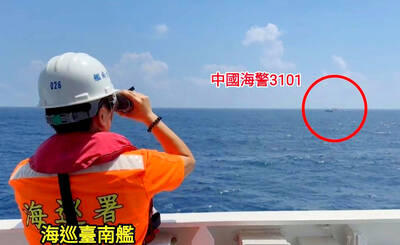
‘BRAZEN’: The holiday did not stop China from activities that infringe on Taiwan’s maritime jurisdiction, but the CGA is ready to defend the nation, Kuan Bi-ling said Beijing is intensifying maritime pressure on Taiwan, but the nation will never yield, Ocean Affairs Council Deputy Minister Sung Chen-en (宋承恩) said. The Coast Guard Administration (CGA) has adopted a “shadowing and monitoring” approach to avoid falling into a Chinese trap to escalate tensions and deepen the conflict, Sung said in an interview published yesterday in the Chinese-language Liberty Times (the Taipei Times’ sister newspaper). China Coast Guard formations patrolling waters east of Taiwan, as well as official Chinese vessels entering areas around Itu Aba Island (Taiping Island, 太平島) and Pratas Islands (Dongsha Islands, 東沙群島) show Beijing’s attempts to significantly step up
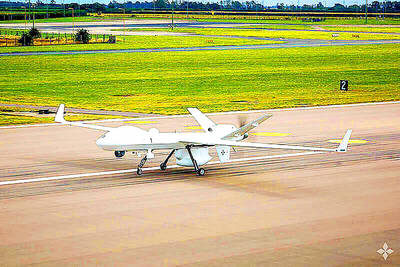
BOOST: By operating the same advanced systems as the US military, Taiwan would be better positioned to share and integrate intelligence with partners, an expert said The first batch of MQ-9B SkyGuardian drones has arrived in Taiwan, and is being assembled and tested by drone manufacturer General Atomics and the military ahead of flight trials as part of the air force’s acquisition to bolster its aerial surveillance capabilities, a source said yesterday. The air force allocated a budget of NT$21.7 billion (US$687 million) from 2022 to 2029 to procure four MQ-9B uncrewed aerial vehicles (UAVs) manufactured by General Atomics along with associated equipment such as ground control stations. The US has agreed to deliver the four MQ-9Bs to Taiwan in two batches this year and next
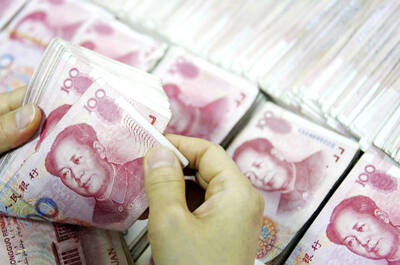
Taiwanese firms’ China investments have dwindled to less than 1 percent of their total foreign investments, putting China-based investments on track for a record low this year, Ministry of Economic Affairs data showed. Taiwan’s investments abroad in the first five months of this year reached US$35.92 billion, Department of Investment Review data showed. Investments outside China totaled US$35.61 billion, up 133.94 percent year-on-year, while investments in China totaled US$310.3 million, down 32.3 percent and about 0.86 percent of the total, data showed. Major overseas projects included Taiwan Semiconductor Manufacturing Co’s (TSMC, 台積電) US$30 billion capital injection into an overseas subsidiary,


 RSS
RSS