


President Chen Shui-bian (陳水扁) yesterday attended a gathering commemorating the 70th anniversary of the death of Chiang Wei-shui (蔣渭水), a trailblazer of Taiwan's democracy movement.
President Chen applauded Chiang's achievement and appealed to the public to uphold his ideals to construct a genuine democratic state.
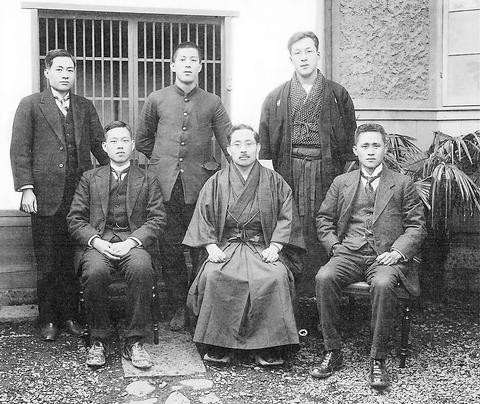
PHOTO COURTESY OF THE COUNCIL FOR CULTURAL AFFAIRS, EXECUTIVE Y
He said that a slogan introduced 70 years ago by Chiang, "Fellow countrymen unite, unity brings true power," was like a clarion call to his countrymen to build a mighty nation.
"The concise yet appealing catchphrase after 70 years has proved to be an eternal truth. It is like a tocsin for us, and we hope the sound will reach the heart of each countryman and political leader," Chen said.
The president made the remarks when addressing the ceremony commemorating Chiang -- the founder of the Taiwan Culture Association (
Besides Chen, a host of politicians, intellectuals, physicians and the social elite also appeared at yesterday's gathering, which was initiated by Huang Huang-hsiung (
While lauding the achievements made by Chiang in igniting a social movement under the Japanese occupation, the president used the occasion to call on the public to forge a genuine democracy in line with the liberal spirit inspired by Chiang.
"When remembering Chiang, the founder of the nation's premier political party, Taiwanese have to ponder how to establish effective party politics through partisan cooperation and competition after we finally gained the freedom to form parties," the president said.
Chen urged the gathering to always recall the accomplishments made by its forefathers. He said due to political causes and the lack of teaching of Taiwanese history in our educational system, Chiang's spirit and efforts in striving for national dignity have passed into oblivion.
The president therefore suggested the government and responsible departments reintroduce historical personalities in the curriculum of elementary and high schools, so as to allow ancestors' life stories to be truthfully chronicled in history.
A literati, physician and forerunner of the Taiwanese nationalist movement under Japan's rule, Chiang Wei-shui was born in 1891 in Ilan county.
Chiang's nationalist consciousness emerged after he entered the Taipei Medical School (
In 1921, Chiang launched the first large-scale cultural enlightenment movement in Taiwan when he organized the Taiwan Culture Association, saying he sought to "uproot Taiwanese intellectual malnu-trition." To achieve this end, Chiang toured the nation lecturing and forming seminars and was dubbed "the nation's head of culture."
In addition to cultural activities, Chiang was a crucial leader in cultivating a sense of national awareness in Taiwanese society under the Japanese.
In 1923, Chiang was incarcerated for the first time, being accused of violating a security law. Determined not to let his jailing break his spirit, Chiang read avidly in jail, contemplated the nature of society, and wrote voluminously on humanitarian issues.
He founded the Taiwan People's Party, the nation's first political party in 1927. He also organized the New Taiwan Alliance and the Taiwanese Labor Alliance in the quest for a more liberal and independent state.
Chiang wrote political columns opposing Japanese atrocities, most of which were published in Taiwan's People's Newspaper, and conveyed his thoughts through speeches. He was jailed a dozen times during his lifetime and was eulogized as "the savior of Taiwanese" when he died in 1931 at the age of 40.
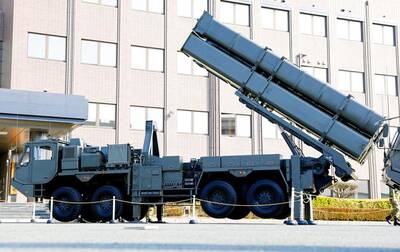
Japan has deployed long-range missiles in a southwestern region near China, the Japanese defense minister said yesterday, at a time when ties with Beijing are at their lowest in recent years. The missiles were installed in Kumamoto in the southern region of Kyushu, as Japan is attempting to shore up its military capacity as China steps up naval activity in the East China Sea. “Standoff defense capabilities enable us to counter the threat of enemy forces attempting to invade our country ... while ensuring the safety of our personnel,” Japanese Minister of Defense Shinjiro Koizumi said. “This is an extremely important initiative for
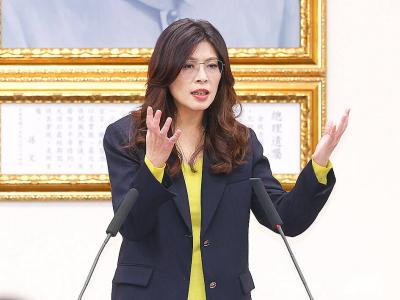
Chinese Nationalist Party (KMT) Chairwoman Cheng Li-wun (鄭麗文) today accepted an invitation from Chinese President Xi Jinping (習近平) to lead a delegation to China next month, saying she hopes to promote the peaceful development of cross-strait relations and bring stability to the Taiwan Strait. “I am grateful and happy to accept this invitation,” Cheng said in a statement from the KMT chairperson’s office. Cheng said she hopes both sides can work together to promote the peaceful development of cross-strait relations, enhance exchange and cooperation, bring stability to the Taiwan Strait and improve people’s livelihoods. At today's news conference, Cheng said any efforts to
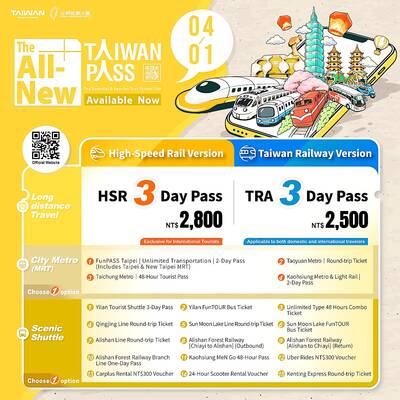
MORE POPULAR: Taiwan Pass sales increased by 59 percent during the first quarter compared with the same period last year, the Tourism Administration said The Tourism Administration yesterday said that it has streamlined the Taiwan Pass, with two versions available for purchase beginning today. The tourism agency has made the pass available to international tourists since 2024, allowing them to access the high-speed rail, Taiwan Railway Corp services, four MRT systems and four Taiwan Tourist Shuttles. Previously, five types of Taiwan Pass were available, but some tourists have said that the offerings were too complicated. The agency said only two types of Taiwan Pass would be available, starting from a three-day pass with the high-speed rail and a three-day pass with Taiwan Railway Corp. The former costs NT$2,800

The nation’s fastest supercomputer, Nano 4 (晶創26), is scheduled to be launched in the third quarter, and would be used to train large language models in finance and national defense sectors, the National Center for High-Performance Computing (NCHC) said. The supercomputer, which would operate at about 86.05 petaflops, is being tested at a new cloud computing center in the Southern Taiwan Science Park in Tainan. The exterior of the server cabinet features chip circuitry patterns overlaid with a map of Taiwan, highlighting the nation’s central position in the semiconductor industry. The center also houses Taiwania 2, Taiwania 3, Forerunner 1 and


 RSS
RSS