


Taiwan is being deluged with pornography from Japan, a representative of the ROC Publishing Foundation (中華民國出版評議基金會) said yesterday.
More than 3 million items were smuggled in to Taiwan every year, with as many as 130,000 pornographic comic books, 72,000 pornographic magazines and 52,000 albums of nude photos smuggled into the island in the past month, foundation executive Hsu Wen-pin (
"More than 250,000 obscene publications are being smuggled into Taiwan every month," Hsu said.

PHOTO: AFP
Hsu, along with KMT Legislator Tseng Tsai Mei-tso (
Hsu said that obscene publications can easily be found when they pass through customs, but they are seldom seized.
The foundation said that it suspected illegal collusion between smut importers and customs officers.
Tseng Tsai also pointed out that this material can easily be looked at by Taiwan's youngsters at their local bookstores.
The situation was worrisome, she said.
Hsu said many local publishers are smuggling these books and magazines into Taiwan because of the large profits to be earned, citing one publishing company which increased its yearly profit by a factor of 22 by selling smuggled pornography.
In response to the foundation's accusation, Yeh Fang-hua (葉芳華), an official at the Directorate General of Customs under the Ministry of Finance, yesterday said that Article 45 of the Customs Law does state that pornographic books, magazines and pictures are contraband goods and are banned from being imported to Taiwan.
However, since Taiwan's Publishing Law was revoked, the Government Information Office, which is supposed to determine what counts as pornographic material, lacks the necessary authority and has withdrawn all its inspectors from the customs service already.
Also the customs service is facing a manpower shortage and it is impossible for the customs officers to check all imported publications, Yeh said.
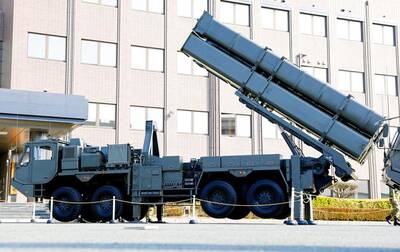
Japan has deployed long-range missiles in a southwestern region near China, the Japanese defense minister said yesterday, at a time when ties with Beijing are at their lowest in recent years. The missiles were installed in Kumamoto in the southern region of Kyushu, as Japan is attempting to shore up its military capacity as China steps up naval activity in the East China Sea. “Standoff defense capabilities enable us to counter the threat of enemy forces attempting to invade our country ... while ensuring the safety of our personnel,” Japanese Minister of Defense Shinjiro Koizumi said. “This is an extremely important initiative for
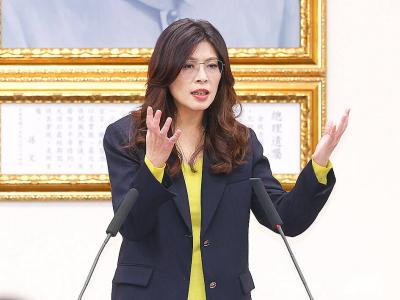
Chinese Nationalist Party (KMT) Chairwoman Cheng Li-wun (鄭麗文) today accepted an invitation from Chinese President Xi Jinping (習近平) to lead a delegation to China next month, saying she hopes to promote the peaceful development of cross-strait relations and bring stability to the Taiwan Strait. “I am grateful and happy to accept this invitation,” Cheng said in a statement from the KMT chairperson’s office. Cheng said she hopes both sides can work together to promote the peaceful development of cross-strait relations, enhance exchange and cooperation, bring stability to the Taiwan Strait and improve people’s livelihoods. At today's news conference, Cheng said any efforts to
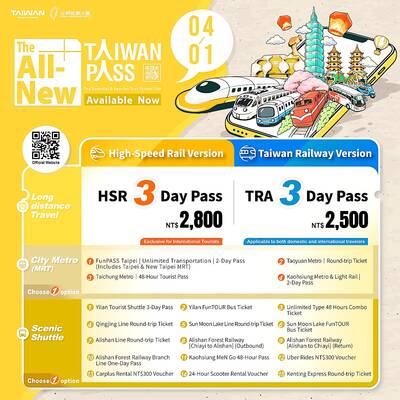
MORE POPULAR: Taiwan Pass sales increased by 59 percent during the first quarter compared with the same period last year, the Tourism Administration said The Tourism Administration yesterday said that it has streamlined the Taiwan Pass, with two versions available for purchase beginning today. The tourism agency has made the pass available to international tourists since 2024, allowing them to access the high-speed rail, Taiwan Railway Corp services, four MRT systems and four Taiwan Tourist Shuttles. Previously, five types of Taiwan Pass were available, but some tourists have said that the offerings were too complicated. The agency said only two types of Taiwan Pass would be available, starting from a three-day pass with the high-speed rail and a three-day pass with Taiwan Railway Corp. The former costs NT$2,800

The nation’s fastest supercomputer, Nano 4 (晶創26), is scheduled to be launched in the third quarter, and would be used to train large language models in finance and national defense sectors, the National Center for High-Performance Computing (NCHC) said. The supercomputer, which would operate at about 86.05 petaflops, is being tested at a new cloud computing center in the Southern Taiwan Science Park in Tainan. The exterior of the server cabinet features chip circuitry patterns overlaid with a map of Taiwan, highlighting the nation’s central position in the semiconductor industry. The center also houses Taiwania 2, Taiwania 3, Forerunner 1 and


 RSS
RSS