


When exiled Tibetan spiritual leader the Dalai Lama visits Taiwan this weekend, eight Buddhist priests in his delegation will perform a ritual to stop earthquakes in Taiwan, the Dalai Lama's representative office said yesterday.
The Earthquake Aversion Ritual will take three to seven days. It will be performed in Puli, where a quake struck on Sept. 21, 1999, office spokesman Tsegyam said.
The quake killed roughly 2,400 people, injured 10,000 and left tens of thousands homeless.
Taiwan lies on the circum-Pacific seismic belt and is rocked by hundreds of moderate quakes every year.
"The lamas will draw a sand picture with 14 colors, say prayers, put the sand into bottles and throw the bottles into the sea to restrain the Dragon King," Tsegyam said.
"They will also build a pagoda in the earthquake-stricken area, which is part of the Earthquake Aversion Ritual.
"The Dragon King controls the Earth's movement. Once it is pacified, there will be less or no earthquakes," he said.
According to Tsegyam, the Dalai Lama performed the Earthquake Aversion Ritual in Dharamsala, north India, to stop tremors there.
Dharamsala is the seat of the Tibetan government-in-exile.
"Dharamsala is an earthquake-prone area. About 100 years ago, a destructive quake wiped out all the houses there. When the Dalai Lama fled to Dharamsala from Tibet in 1959, he performed the Earthquake Aversion Ritual. We have lived in peace ever since," he said.
The Dalai Lama will make his second visit to Taiwan from March 31 to April 9.
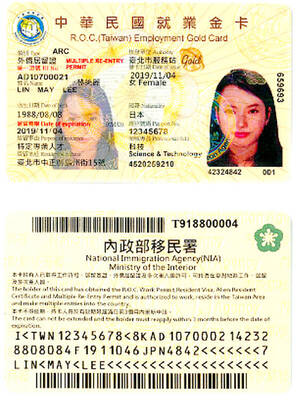
GAINING STEAM: The scheme initially failed to gather much attention, with only 188 cards issued in its first year, but gained popularity amid the COVID-19 pandemic Applications for the Employment Gold Card have increased in the past few years, with the card having been issued to a total of 13,191 people from 101 countries since its introduction in 2018, the National Development Council (NDC) said yesterday. Those who have received the card have included celebrities, such as former NBA star Dwight Howard and Australian-South Korean cheerleader Dahye Lee, the NDC said. The four-in-one Employment Gold Card combines a work permit, resident visa, Alien Resident Certificate (ARC) and re-entry permit. It was first introduced in February 2018 through the Act Governing Recruitment and Employment of Foreign Professionals (外國專業人才延攬及雇用法),
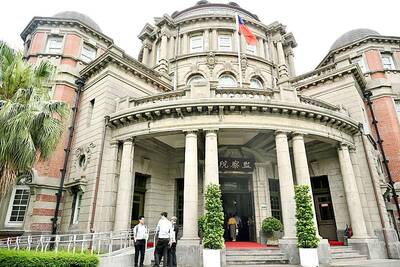
WARNING: From Jan. 1 last year to the end of last month, 89 Taiwanese have gone missing or been detained in China, the MAC said, urging people to carefully consider travel to China Lax enforcement had made virtually moot regulations banning civil servants from making unauthorized visits to China, the Control Yuan said yesterday. Several agencies allowed personnel to travel to China after they submitted explanations for the trip written using artificial intelligence or provided no reason at all, the Control Yuan said in a statement, following an investigation headed by Control Yuan member Lin Wen-cheng (林文程). The probe identified 318 civil servants who traveled to China without permission in the past 10 years, but the true number could be close to 1,000, the Control Yuan said. The public employees investigated were not engaged in national

The zero emissions ship Porrima P111 was launched yesterday in Kaohsiung, showcasing the nation’s advancement in green technology, city Mayor Chen Chi-mai (陳其邁) said. The nation last year acquired the Swiss-owned vessel, formerly known as Turanor PlanetSolar, in a bid to boost Taiwan’s technology sector, as well as ecotourism in Palau, Chen said at the ship’s launch ceremony at Singda Harbor. Palauan President Surangel Whipps Jr and Minister of Foreign Affairs Lin Chia-lung (林佳龍) also attended the event. The original vessel was the first solar-powered ship to circumnavigate the globe in a voyage from 2010 to 2012. Taiwan-based Porrima Inc (保利馬) installed upgrades with
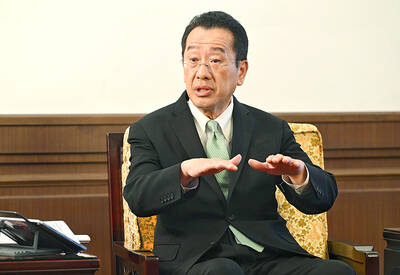
ENHANCE DETERRENCE: Taiwan has to display ‘fierce resolve’ to defend itself for China to understand that the costs of war outweigh potential gains, Koo said Taiwan’s armed forces must reach a high level of combat readiness by 2027 to effectively deter a potential Chinese invasion, Minister of National Defense Wellington Koo (顧立雄) said in an interview with the Chinese-language Liberty Times (sister newspaper of the Taipei Times) published yesterday. His comments came three days after US Secretary of State Marco Rubio told the US Senate that deterring a Chinese attack on Taiwan requires making a conflict “cost more than what it’s worth.” Rubio made the remarks in response to a question about US policy on Taiwan’s defense from Republican Senator John Cornyn, who said that Chinese


 RSS
RSS