


Although pursuing "interim agreements" between Beijing and Taipei could improve stability across the Taiwan Strait, the US should not dictate the specifics of such deals, two former US officials said yesterday.
Reacting to comments made yesterday by President Chen Shui bian (
Lake was referring to Chen's high-profile meeting on Thursday with former US state department official Stanley Roth.
Roth is known in Taiwan political circles as the first US official to raise the idea of interim agreements between Beijing and Taipei in remarks he made on the issue in March 1999 in Washington.
Chen said yesterday that he agreed with Roth that any such interim agreement referred to "a concept and a process," adding that both Beijing and Taipei should put aside thornier issues for the time being while seeking to reach consensus on issues that are easier to sort out.
One of Chen's top advisors on foreign affairs, however, told the Taipei Times yesterday that Chen's statement on Thursday was "not meant to endorse the so-called interim agreement" mapped out by Roth.
The agreement Roth spoke of in 1999 drew on earlier ideas by US scholar Kenneth Lieberthal. One version was a deal in which Taiwan would promise not to seek independence and to start unification negotiations after a certain period of time, say 50 years, while China denounces the use of force against Taiwan. Analysts have said the deal's appeal for the US is it might remove a worrying security threat in the region, but a disadvantage for Taiwan is the renunciation of its right to self-determination.
The source added that Chen's statement merely echoed remarks he made on Jan. 1 that emphasized Beijing and Taipei should seek integration in economic and cultural arenas before both sides map out a framework for political integration.
Analysts said yesterday Chen's remarks continue the friendly approach the president has employed with Beijing since his inauguration in May last year.
"Chen's statement expressed our willingness to resume dialogue with China so as to stabilize the situation across the Taiwan Strait," said Lin Bih-jaw (
But whether Beijing will take Chen's comments seriously will depend on Beijing's "interpretation" of Chen's remarks, Lin added.
"I think Beijing will articulate its stance clearly only after the new US administration comes up with its policy platform towards China and Taiwan," said Lin, who was former deputy secretary general of the National Security Council and former deputy secretary-general of the Presidential Office.
The Bush administration has yet to review its China policy, and will take probably three months to complete the review, Lin said.
Echoing Lake's view, former US Representative Stephen Solarz said any initiative on the interim agreements should come not from the US, but from Beijing and Taipei.
"I don't think the Bush administration is going to offer itself as an intermediary between Taiwan and China. But I certainly think the Bush administration would support and encourage Taipei and Beijing to sit down and to begin the process of finding ways to resolve their differences and to generate a greater sense of confidence on both sides of the Taiwan Strait," Solarz said.
Lin revealed that when Roth first raised the idea in 1999, the general sentiment within the Taiwan government was positive, but it did raise some concerns regarding Taiwan security.
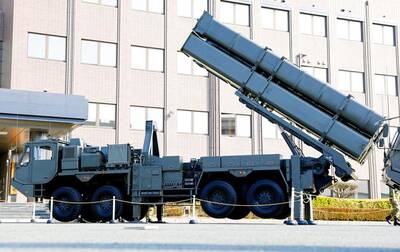
Japan has deployed long-range missiles in a southwestern region near China, the Japanese defense minister said yesterday, at a time when ties with Beijing are at their lowest in recent years. The missiles were installed in Kumamoto in the southern region of Kyushu, as Japan is attempting to shore up its military capacity as China steps up naval activity in the East China Sea. “Standoff defense capabilities enable us to counter the threat of enemy forces attempting to invade our country ... while ensuring the safety of our personnel,” Japanese Minister of Defense Shinjiro Koizumi said. “This is an extremely important initiative for
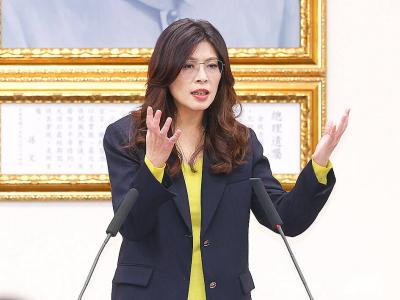
Chinese Nationalist Party (KMT) Chairwoman Cheng Li-wun (鄭麗文) today accepted an invitation from Chinese President Xi Jinping (習近平) to lead a delegation to China next month, saying she hopes to promote the peaceful development of cross-strait relations and bring stability to the Taiwan Strait. “I am grateful and happy to accept this invitation,” Cheng said in a statement from the KMT chairperson’s office. Cheng said she hopes both sides can work together to promote the peaceful development of cross-strait relations, enhance exchange and cooperation, bring stability to the Taiwan Strait and improve people’s livelihoods. At today's news conference, Cheng said any efforts to
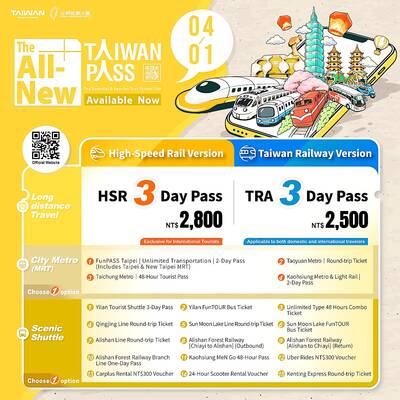
MORE POPULAR: Taiwan Pass sales increased by 59 percent during the first quarter compared with the same period last year, the Tourism Administration said The Tourism Administration yesterday said that it has streamlined the Taiwan Pass, with two versions available for purchase beginning today. The tourism agency has made the pass available to international tourists since 2024, allowing them to access the high-speed rail, Taiwan Railway Corp services, four MRT systems and four Taiwan Tourist Shuttles. Previously, five types of Taiwan Pass were available, but some tourists have said that the offerings were too complicated. The agency said only two types of Taiwan Pass would be available, starting from a three-day pass with the high-speed rail and a three-day pass with Taiwan Railway Corp. The former costs NT$2,800

The nation’s fastest supercomputer, Nano 4 (晶創26), is scheduled to be launched in the third quarter, and would be used to train large language models in finance and national defense sectors, the National Center for High-Performance Computing (NCHC) said. The supercomputer, which would operate at about 86.05 petaflops, is being tested at a new cloud computing center in the Southern Taiwan Science Park in Tainan. The exterior of the server cabinet features chip circuitry patterns overlaid with a map of Taiwan, highlighting the nation’s central position in the semiconductor industry. The center also houses Taiwania 2, Taiwania 3, Forerunner 1 and


 RSS
RSS