


Lawyers and activists for domestic violence victims' rights yesterday said that many victims receive inadequate protection due to the attitudes of judges and discrepancies and delays in the issuing of protective restraining orders.
The views were voiced at a news conference at which the Ju-dicial Reform Foundation (民間司法改革基金會) presented a report on the effects of the implementation of the Domestic Violence Prevention and Control Law (家庭暴力防治法), which came into force a year ago.
According to lawyers at the conference, many judges have still failed to grasp the essence of the legislation and victims of domestic violence receive insufficient protection as a result.
"Many judges still consider domestic violence incidents as purely domestic matters, adhering to traditional Chinese notions that place family harmony at a premium and frown on victims who take legal action," said John Chen (陳傳岳), the foundation's chairman.
As a result, some judges tend to find fault with victims rather than perpetrators, questioning, for instance, whether they have had affairs or otherwise provoked the perpetrator, according to the report.
The report stresses, however, that: "The purposes of the law are to ensure the safety of victims and to prevent violence, not to license moral inquisition and the making of value judgements on the part of the judiciary."
Activists have urged judges to change the way they view such matters. In addition, they want Article 1 of the law amended so that "improving family harmony" is deleted as one of the law's goals.
Activists also pointed to problems relating to the issuance of protective restraining orders.
The report identifies slowness in issuing such orders as the most common problem, resulting in failures to provide protection in time. In addition, there are substantial discrepancies between the practices of different courts over the issuance of the orders.
The foundation's statistics indicate that in the past year the Taitung District Court, for example, approved 98.59 percent of petitions for restraining orders submitted to it, while Taipei District Court only approved 77.84 percent.
"The problem is that the courts are given too much discretion," said lawyer Lai Fang-jue (
"We need far greater uniformity of standards so that victims have a clearer idea as to the circumstances under which an order is likely to be granted," Lai said.
Even restraining orders, however, do not guarantee a high quality of life. "In many cases, the victims face humiliating isolation in their families," Lai said.
The Domestic Violence Prevention and Control Law took effect on June 24 last year. Despite the misgivings voiced yesterday, law-yers generally welcomed the law as a positive step forward.
"The law was basically trans-planted from the West," Lai said. "This was a transplant of a piece of Western legislation without the accompanying Western culture."
In Taiwan, Lai said, it was the law that was leading the way forward on domestic violence, despite -- rather than because of -- society. It was not surprising, she argued, that attitudes in society at large were not always in keeping with the spirit of the law.
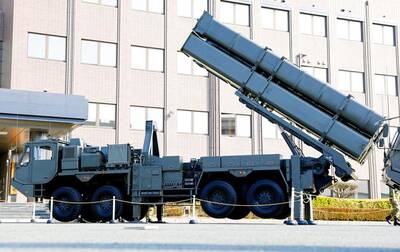
Japan has deployed long-range missiles in a southwestern region near China, the Japanese defense minister said yesterday, at a time when ties with Beijing are at their lowest in recent years. The missiles were installed in Kumamoto in the southern region of Kyushu, as Japan is attempting to shore up its military capacity as China steps up naval activity in the East China Sea. “Standoff defense capabilities enable us to counter the threat of enemy forces attempting to invade our country ... while ensuring the safety of our personnel,” Japanese Minister of Defense Shinjiro Koizumi said. “This is an extremely important initiative for
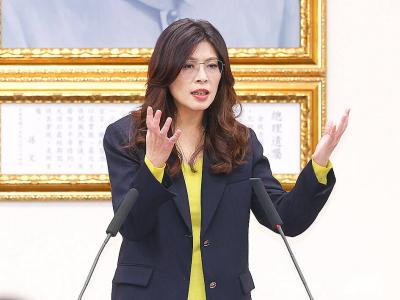
Chinese Nationalist Party (KMT) Chairwoman Cheng Li-wun (鄭麗文) today accepted an invitation from Chinese President Xi Jinping (習近平) to lead a delegation to China next month, saying she hopes to promote the peaceful development of cross-strait relations and bring stability to the Taiwan Strait. “I am grateful and happy to accept this invitation,” Cheng said in a statement from the KMT chairperson’s office. Cheng said she hopes both sides can work together to promote the peaceful development of cross-strait relations, enhance exchange and cooperation, bring stability to the Taiwan Strait and improve people’s livelihoods. At today's news conference, Cheng said any efforts to

MORE POPULAR: Taiwan Pass sales increased by 59 percent during the first quarter compared with the same period last year, the Tourism Administration said The Tourism Administration yesterday said that it has streamlined the Taiwan Pass, with two versions available for purchase beginning today. The tourism agency has made the pass available to international tourists since 2024, allowing them to access the high-speed rail, Taiwan Railway Corp services, four MRT systems and four Taiwan Tourist Shuttles. Previously, five types of Taiwan Pass were available, but some tourists have said that the offerings were too complicated. The agency said only two types of Taiwan Pass would be available, starting from a three-day pass with the high-speed rail and a three-day pass with Taiwan Railway Corp. The former costs NT$2,800

The nation’s fastest supercomputer, Nano 4 (晶創26), is scheduled to be launched in the third quarter, and would be used to train large language models in finance and national defense sectors, the National Center for High-Performance Computing (NCHC) said. The supercomputer, which would operate at about 86.05 petaflops, is being tested at a new cloud computing center in the Southern Taiwan Science Park in Tainan. The exterior of the server cabinet features chip circuitry patterns overlaid with a map of Taiwan, highlighting the nation’s central position in the semiconductor industry. The center also houses Taiwania 2, Taiwania 3, Forerunner 1 and


 RSS
RSS