


Minister of Education Ovid Tzeng (
Questioning Tzeng at an Education and Culture Committee meeting yesterday, lawmakers said that Tzeng's choice was a clear indication that the minister lacked confidence in Taiwan's education system.
Tzeng said his son was studying at TAS because he couldn't adjust to life at local schools.
Tzeng lived in the US for almost 19 years before returning to Taiwan in 1990 to teach at National Chung Cheng University in Chiayi. His son, who was born in the US, was eight years old when Tzeng returned to Taiwan.
Tzeng said he did send his son to a local elementary school soon after their return, but the child encountered setbacks both in terms of learning the language and school life.
"My son could not write Chinese characters ... he was even slapped in the face by a teacher for saluting the national flag with his hand placed on his chest, as he was taught in America," Tzeng said.
Tzeng said it took his son a year of therapy in the US to get over the trauma brought about by this incident. To respect his son's preference for an American education, Tzeng said he sent his son back to the US to have his secondary education. Tzeng said his son returned to Taiwan last year and has since studied at TAS. His son is now an 11th grader at TAS.
This explanation, however, failed to win the sympathy of the legislators.
"You sent your son to TAS because he could not write Chinese characters well. Does that mean that other children can also be sent to TAS for the same reason?" asked KMT legislator Huang Mu-tien (
PFP legislator Diane Lee (李慶安) said that although her children have also been slapped by teachers, she has not thought about sending them to TAS.
Lee said her children, like most other school children, still have to adjust to the local educational environment, rather than trying to escape.
Tzeng insisted there is nothing wrong with his son's choice, saying he believes the motive to learn is a crucial element in education.
"If my son isn't motivated to learn [in a Chinese environment], I don't have the right to take away his right to choose [to study at TAS]," Tzeng said.
Tzeng said his son's situation had been one reason he was eager to try and change the educational system in Taiwan.
Tzeng said that this was why he had given numerous speeches in elementary and secondary schools around the island to tell teachers how to allow students to enjoy learning.
On questions concerning his son's nationality, Tzeng admitted that his son has US citizenship and does not plan to renounce it.
Tzeng, who acquired US citizenship during his stay in the US, officially renounced it on Monday, since Taiwan prohibits those holding public office from holding dual citizenship.
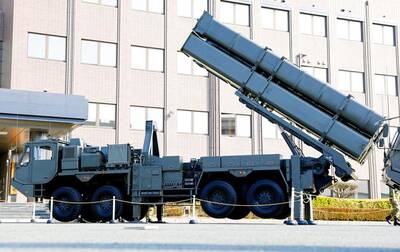
Japan has deployed long-range missiles in a southwestern region near China, the Japanese defense minister said yesterday, at a time when ties with Beijing are at their lowest in recent years. The missiles were installed in Kumamoto in the southern region of Kyushu, as Japan is attempting to shore up its military capacity as China steps up naval activity in the East China Sea. “Standoff defense capabilities enable us to counter the threat of enemy forces attempting to invade our country ... while ensuring the safety of our personnel,” Japanese Minister of Defense Shinjiro Koizumi said. “This is an extremely important initiative for
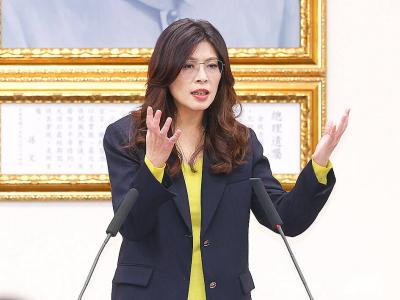
Chinese Nationalist Party (KMT) Chairwoman Cheng Li-wun (鄭麗文) today accepted an invitation from Chinese President Xi Jinping (習近平) to lead a delegation to China next month, saying she hopes to promote the peaceful development of cross-strait relations and bring stability to the Taiwan Strait. “I am grateful and happy to accept this invitation,” Cheng said in a statement from the KMT chairperson’s office. Cheng said she hopes both sides can work together to promote the peaceful development of cross-strait relations, enhance exchange and cooperation, bring stability to the Taiwan Strait and improve people’s livelihoods. At today's news conference, Cheng said any efforts to

MORE POPULAR: Taiwan Pass sales increased by 59 percent during the first quarter compared with the same period last year, the Tourism Administration said The Tourism Administration yesterday said that it has streamlined the Taiwan Pass, with two versions available for purchase beginning today. The tourism agency has made the pass available to international tourists since 2024, allowing them to access the high-speed rail, Taiwan Railway Corp services, four MRT systems and four Taiwan Tourist Shuttles. Previously, five types of Taiwan Pass were available, but some tourists have said that the offerings were too complicated. The agency said only two types of Taiwan Pass would be available, starting from a three-day pass with the high-speed rail and a three-day pass with Taiwan Railway Corp. The former costs NT$2,800

The nation’s fastest supercomputer, Nano 4 (晶創26), is scheduled to be launched in the third quarter, and would be used to train large language models in finance and national defense sectors, the National Center for High-Performance Computing (NCHC) said. The supercomputer, which would operate at about 86.05 petaflops, is being tested at a new cloud computing center in the Southern Taiwan Science Park in Tainan. The exterior of the server cabinet features chip circuitry patterns overlaid with a map of Taiwan, highlighting the nation’s central position in the semiconductor industry. The center also houses Taiwania 2, Taiwania 3, Forerunner 1 and


 RSS
RSS