


Although he surprisingly beat veteran military leader Ku Chung-lien (
He is, however, expected to be important to incumbent defense minister Tang Fei (
Wu's usefulness to Tang hinges mostly on the fact that he has been working as Tang's right-hand man for more than a year already. In addition, officials say, Wu is a hard-working man and disinterested in power struggles.
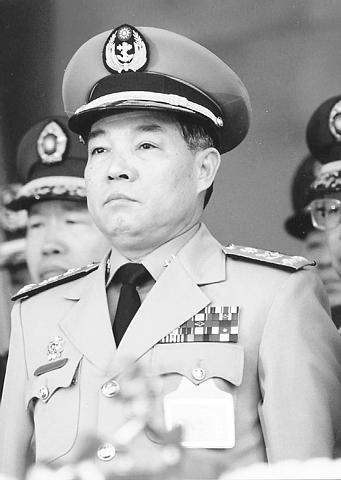
FILE PHOTO
According to the rotation rules accepted by the three armed services, the post of the chief of the general staff (CGS) should have been given to Wu two years ago, the defense officials said.
Wu, then navy commander-in-chief, was due to succeed Tang Fei as the CGS after the previous two CGS's, Lo Peng-Li (
But the position was offered instead to army General Tang Yao-ming (
Deprived of the once-in-a-lifetime chance, Wu apparently accepted the arrangement without any grudges and took the vice defense minister post, which is normally reserved for retiring military leaders.
Now, however, Wu stands the greatest chance to win back what he had lost -- to become not only defense minister, but someone who will be for the first time in Taiwan's history more powerful than the CGS.
The status change was mandated by restructuring plans that are to coming into effect over the next few years.
Over the past year, Wu assisted Tang in lobbying for the passage of the landmark Defense Law and Organization Law for Ministry of National Defense (MND) by the nation's legislature.
Despite these efforts Wu never tried to steal the limelight and faithfully served as Tang's aide.
This, observers explained, was why others held the impression that Wu was a man of few words and couldn't be eloquent when answering inquiries from lawmakers.
In Chinese society, Wu is just the kind of person a political leader would want as a right-hand man, analysts say.
With a mild man such as Wu serving as the defense minister, Tang would be able to keep the military under his virtual control even after he becomes the premier, they say.
That's also one of the main reasons why president-select Chen Shui-bian (
With unquestionable cooperation from Tang and Wu, Chen should face much less difficulty when pushing ahead on the military reforms required by law.
It is widely known in the military that Tang Fei was at odds with CGS Tang over the content of the two laws.
If CGS Tang became the defense minister, it would be much harder to promote military reform, analysts said.
But, maybe out of sheer politeness, Tang still recommended CGS Tang as his successor despite the fact that the move would not serve the best interest of the new government.
In addition, Wu's appointment would cause a reshuffle of Taiwan's high-ranking officers.
If Ku Chung-lien -- ex-navy commander-in-chief and now Taiwan's representative to Holland -- assumed the post of defense minister, the relationship between the minister and the premier might not have been as good as Tang would have expected, analysts said.
Ku, considered to be Chen's first choice for the position, had a better relationship with lawmakers and politicians outside the KMT.
But he is older than Tang, and analysts are of the opinion that with his dexterity in public relations he could have possibly outshone Tang.
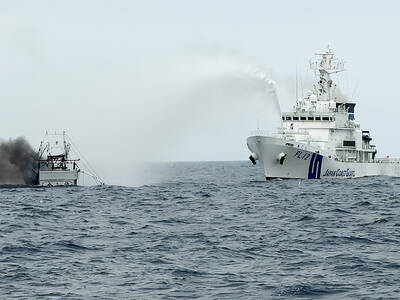
CREDIT-GRABBER: China said its coast guard rescued the crew of a fishing vessel that caught fire, who were actually rescued by a nearby Taiwanese boat and the CGA Maritime search and rescue operations do not have borders, and China should not use a shipwreck to infringe upon Taiwanese sovereignty, the Coast Guard Administration (CGA) said yesterday. The coast guard made the statement in response to the China Coast Guard (CCG) saying it saved a Taiwanese fishing boat. The Chuan Yu No. 6 (全漁6號), a fishing vessel registered in Keelung, on Thursday caught fire and sank in waters northeast of Diaoyutai Islands (釣魚台). The vessel left Keelung’s Badouzih Fishing Harbor (八斗子漁港) at 3:35pm on Sunday last week, with seven people on board — a 62-year-old Taiwanese captain surnamed Chang (張) and six
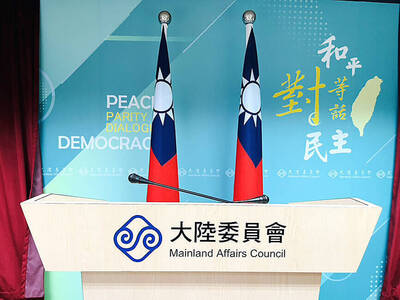
RISKY BUSINESS: The ‘incentives’ include initiatives that get suspended for no reason, creating uncertainty and resulting in considerable losses for Taiwanese, the MAC said China’s “incentives” failed to sway sentiment in Taiwan, as willingness to work in China hit a record low of 1.6 percent, a Ministry of Labor survey showed. The Directorate-General of Budget, Accounting and Statistics (DGBAS) also reported that the number of Taiwanese workers in China has nearly halved from a peak of 430,000 in 2012 to an estimated 231,000 in 2024. That marked a new low in the proportion of Taiwanese going abroad to work. The ministry’s annual survey on “Labor Life and Employment Status” includes questions respondents’ willingness to seek employment overseas. Willingness to work in China has steadily declined from
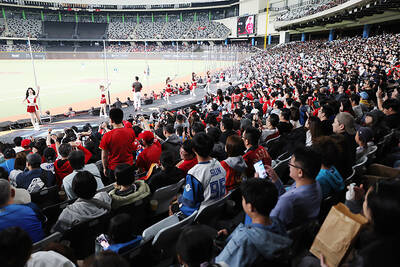
The Legislative Yuan’s Finance Committee yesterday approved proposed amendments to the Amusement Tax Act (娛樂稅法) that would abolish taxes on films, cultural activities and competitive sporting events, retaining the fee only for dance halls and golf courses. The proposed changes would set the maximum tax rate for dance halls and golf courses at 50 and 20 percent respectively, with local governments authorized to suspend the levies. Article 2 of the act says that “amusement tax shall be levied on tickets sold or fees charged by amusement places, facilities or activities” in six categories: “Cinema; professional singing, story-telling, dancing, circus, magic show, acrobatics
INFLATION UP? The IMF said CPI would increase to 1.5 percent this year, while the DGBAS projected it would rise to 1.68 percent, with GDP per capita of US$44,181 The IMF projected Taiwan’s real GDP would grow 5.2 percent this year, up from its 2.1 percent outlook in January, despite fears of global economic disruptions sparked by the US-Iran conflict. Taiwan’s consumer price index (CPI) is projected to increase to 1.5 percent, while unemployment would be 3.4 percent, roughly in line with estimates for Asia as a whole, the international body wrote in its Global Economic Outlook Report published in the US on Monday. The figures are comparatively better than the IMF outlook for the rest of the world, which pegged real GDP growth at 3.1 percent, down from 3.3 percent


 RSS
RSS