


Tens of thousands of troops have been mobilized over the past six days to assist with search and rescue for victims of Tuesday's devastating earthquake. As of yesterday, a total of 104,906 troops had been mobilized.
A number of troops are now living in tents like their civilian counterparts in regions worst hit by the quake because their quarters have also become unlivable and hazardous, an official with the Ministry of National Defense said.
No injuries have been reported so far among troops deployed for search and rescue, said one official, who asked not to be identified.
Major military property damaged included a base in Nantou County's Chichi (
Troops conducting search-and- rescue work have on some occasions had to blaze new trails to get to remote areas in central mountainous regions which were cut off from the outside due to mudslides caused by the quake, the official said.
These troops, mostly from signal units, bring food to people trapped in those areas until reinforcements arrive and move them out to safer areas, he said.
Major Yang Chu-chieh (楊著潔), a spokesman with the army's command post in Nantou County's Puli (埔里) township, said the most unbearable thing for the rescue units is that many of them live in the worst-hit regions in central Taiwan, with family members having suffered injuries and sustained property damage in the quake.
"These soldiers have to forget about their family losses while trying to minimize the loss for other families," Yang said. "They don't complain about it at all. They still stay on their job and work hard."
Yang said that as far as military hardware is concerned, the US-made UH-1H Huey transport helicopters, "though commonly considered to be too old to be used intensively," have surprised everybody by their effectiveness.
"The disaster provides a good chance for the military to test and improve its preparedness for emergency situations," he said.
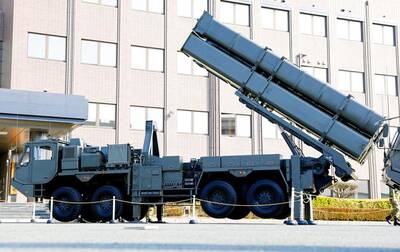
Japan has deployed long-range missiles in a southwestern region near China, the Japanese defense minister said yesterday, at a time when ties with Beijing are at their lowest in recent years. The missiles were installed in Kumamoto in the southern region of Kyushu, as Japan is attempting to shore up its military capacity as China steps up naval activity in the East China Sea. “Standoff defense capabilities enable us to counter the threat of enemy forces attempting to invade our country ... while ensuring the safety of our personnel,” Japanese Minister of Defense Shinjiro Koizumi said. “This is an extremely important initiative for
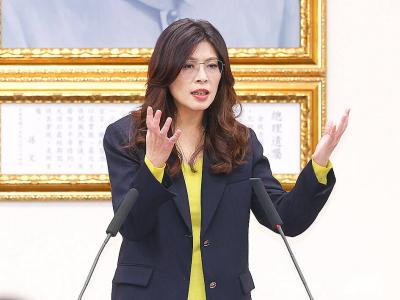
Chinese Nationalist Party (KMT) Chairwoman Cheng Li-wun (鄭麗文) today accepted an invitation from Chinese President Xi Jinping (習近平) to lead a delegation to China next month, saying she hopes to promote the peaceful development of cross-strait relations and bring stability to the Taiwan Strait. “I am grateful and happy to accept this invitation,” Cheng said in a statement from the KMT chairperson’s office. Cheng said she hopes both sides can work together to promote the peaceful development of cross-strait relations, enhance exchange and cooperation, bring stability to the Taiwan Strait and improve people’s livelihoods. At today's news conference, Cheng said any efforts to

MORE POPULAR: Taiwan Pass sales increased by 59 percent during the first quarter compared with the same period last year, the Tourism Administration said The Tourism Administration yesterday said that it has streamlined the Taiwan Pass, with two versions available for purchase beginning today. The tourism agency has made the pass available to international tourists since 2024, allowing them to access the high-speed rail, Taiwan Railway Corp services, four MRT systems and four Taiwan Tourist Shuttles. Previously, five types of Taiwan Pass were available, but some tourists have said that the offerings were too complicated. The agency said only two types of Taiwan Pass would be available, starting from a three-day pass with the high-speed rail and a three-day pass with Taiwan Railway Corp. The former costs NT$2,800

The nation’s fastest supercomputer, Nano 4 (晶創26), is scheduled to be launched in the third quarter, and would be used to train large language models in finance and national defense sectors, the National Center for High-Performance Computing (NCHC) said. The supercomputer, which would operate at about 86.05 petaflops, is being tested at a new cloud computing center in the Southern Taiwan Science Park in Tainan. The exterior of the server cabinet features chip circuitry patterns overlaid with a map of Taiwan, highlighting the nation’s central position in the semiconductor industry. The center also houses Taiwania 2, Taiwania 3, Forerunner 1 and


 RSS
RSS