

Taiwanese students have achieved impressive results in four major international assessments in recent years. Across mathematics, science, reading, civic knowledge, computer and information literacy, computational thinking and problem-solving, Taiwanese students ranked among the world’s top five. They ranked first in the world in civic knowledge and computational thinking, reflecting concrete results from the 12-year Basic Education Curriculum’s emphasis on competency-based learning.
Concrete Results from the 12-year Basic Education Curriculum
The Trends in International Mathematics and Science Study (TIMSS) assesses fourth- and eighth-grade students in mathematics and science, with 70 countries and education systems participating. In 2023, Taiwan’s fourth-graders ranked second in the world in mathematics and third in science, while eighth-graders ranked second in both mathematics and science.
The International Civic and Citizenship Education Study (ICCS) assesses civic knowledge among eighth-graders, with about 24 countries and education systems participating. In 2022, Taiwan ranked first in the world in civic knowledge.
The International Computer and Information Literacy Study (ICILS) assesses eighth-graders’ computer and information literacy as well as computational thinking. A total of 35 countries and regions participated. In 2023, Taiwan ranked first in the world in computational thinking and fourth in computer and information literacy.
The Programme for International Student Assessment (PISA) assesses the mathematics, science and reading literacy of 15-year-old students, with about 91 countries and education systems participating. In 2025, Taiwan ranked fourth in science, third in reading and fourth in mathematics, while ranking fifth in computational problem-solving.
Education Minister Thanks Teachers for Their Dedication
Education Minister Cheng Ying-yao said the results Taiwanese students have achieved in the international assessments are a source of pride. In addition to the government’s forward-looking education policies and investment in education, he expressed his gratitude to teachers for upholding their professional commitment and devoting themselves to educating students, as well as to parents for their support.
“Teachers are the unsung heroes supporting the talent and development of Taiwan’s technology industry,” Cheng said. Ahead of Teachers’ Day, he paid tribute to teachers and called on society to have greater confidence in Taiwan’s education system.
Strong Performance in Academic, Digital and Civic Literacy
Tseng Fen-lan, deputy director of the National Taiwan Normal University Center for Educational and Psychological Research and Testing, said Taiwan ranks among the world’s leading group in three major areas: academic, digital and civic literacy.
Taiwan’s strength is no longer limited to outstanding performance in a single subject, she said. Instead, it has developed a comprehensive advantage in talent development. The results stem from stable basic education, a strong tradition in mathematics and science education, competency-based curriculum reforms and the long-term accumulation of efforts in reading, information technology and civic education.
Students Receive Balanced, High-Quality Education
Tseng said the 12-year Basic Education system has enabled most students to receive relatively balanced educational opportunities and quality.
Taiwan’s mathematics and science education emphasizes logical reasoning, problem analysis and mastery of knowledge and skills. The 2019 curriculum guidelines, commonly known as the 108 Curriculum, further strengthened inquiry-based learning, hands-on exploration, interdisciplinary learning and problem-solving.
International assessments increasingly emphasize the application of knowledge to real-world situations, civic judgment and digital problem-solving. Taiwan’s students consistently rank near the top in these areas, indicating that the competency-based curriculum reforms are increasingly reflected in student performance.
International Assessments Provide Important Reference for Curriculum Review
Deputy Education Minister Chang Liao Wan-chien said the strong results reflect the achievements of the 12-year Basic Education Curriculum in strengthening competency-based learning, inquiry-based practice and interdisciplinary learning.
International assessments can also help identify students’ learning outcomes and areas that need improvement, providing an important reference for reviewing curricula and education policies, he said.
(Translated by Lin Lee-kai, Taipei Times)
台灣學子令人驕傲!近年四大國際學習評比,從數學、科學、閱讀、公民認知、電腦與資訊素養,到運算思維、解決能力,台灣學子都進入世界前五名,其中公民認知及運算思維拿下世界第一,反映十二年國教課綱強化素養導向有具體成果。
12年國教課綱強化素養具體成果
「國際數學與科學教育成就趨勢調查」(TIMSS)評量四、八年級數學及科學,共七十個國家及地區參與,二?二三年台灣四年級數學世界第二、科學第三,八年級數學及科學均居第二。
「國際公民教育與素養調查研究」(ICCS)評量八年級公民素養,約二十四個國家及地區參與,二?二二年公民認知世界第一;「國際電腦與資訊素養研究」(ICILS)評量八年級電腦與資訊素養及運算思維,共三十五個國家及地區參與,二?二三年運算思維世界第一,電腦與資訊素養世界第四。
「國際學生能力評量計畫」(PISA)評量十五歲學生的數學、科學及閱讀素養,大約九十一個國家及地區參與,二?二五年科學第四、閱讀第三、數學第四,運算式問題解決能力世界第五。
教長感謝老師信守專業、用心教導學生
教育部長鄭英耀表示,台灣學生在國際評比表現令人驕傲,除了政府規劃前瞻教育政策及投入教育經費,更感謝老師信守專業、用心教導學生,及家長支持,「教師是支撐台灣科技產業人才與發展的無名英雄」,在教師節前夕,他向老師們致敬,也希望社會對台灣教育更有信心。
學科、數位及公民素養 屬領先群
台師大心測中心副主任曾芬蘭表示,台灣在學科、數位及公民素養三大面向均位居世界領先群,已非單一學科突出,而是形成完整的人才培育優勢,成果來自穩定的基礎教育、扎實數理傳統、素養導向改革,以及閱讀、資訊科技與公民教育的長期累積。
學生接受品質均衡的教育
曾芬蘭分析,十二年國教讓多數學生接受品質相對均衡的教育;台灣數理教育重視邏輯推理、問題分析及精熟學習,一?八課綱再強化探究實作、跨領域學習及問題解決。各項評比重視真實情境應用、公民判斷及數位問題解決,台灣均名列前茅,顯示素養導向改革逐漸反映在學生表現。
評比可作為檢視課程重要參考
教育部政次張廖萬堅表示,優異表現反映十二年國教課綱強化素養導向、探究實作及跨領域學習的成果。國際評比也可掌握學生學習及待精進之處,作為檢視課程與政策重要參考。
(自由時報記者林曉雲)
#本文由生成式 AI 協作,本刊編輯編修。 We think. We decide. We act. It all seems simple and under our control. Yet, beneath these everyday processes lie hidden patterns that influence our behavior in surprising ways. These patterns, known as “effects,” help explain why people tend to react similarly under certain conditions, even without realizing it. A. The Dunning–Kruger Effect Olivia learned to play the piano on her own by watching some online videos. After picking up a few simple pieces, she saw herself as naturally gifted. Feeling confident, she signed up for a piano competition. Unfortunately, she was eliminated in the first round, as the judges
When we use phones, laptops, or wireless earbuds, we rarely pause to ask what makes these devices so light, efficient and powerful. Hidden inside them are “rare earth elements” (REEs), indispensable to modern life yet central to global controversy. REEs are a group of 17 similar metals that are difficult to tell apart. First identified in the late 18th century, they were known as rare earths because early chemists found them in unusual mineral deposits and believed them to be scarce. In fact, despite the name, many REEs are about as abundant in Earth’s crust as copper or lead. What makes
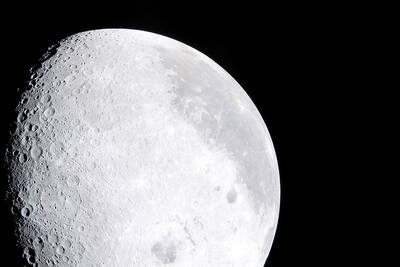
A: The four-day Mid-Autumn Festival-Teachers’ Day holiday weekend will begin tomorrow. I’m going to several concerts, and then Maokong hill to admire the moon. B: I heard astrologer Celine has released a lunar phase-themed luck quiz that can predict your fortune. A: Yeah, which shape would you choose? (A) crescent moon, (B) half-moon, (C) dark moon, (D) gibbous moon, or (E) full moon? B: I choose (E). How’s my luck? A: Your luck index is 70 percent: “Think about not just yourself but also those around you, make corresponding efforts, and break old bad habits.

A: The four-day Mid-Autumn Festival-Teachers’ Day holiday weekend begins today. The lunar phase-themed luck quiz from yesterday’s “Speak Up!” was interesting. I’ll test my classmates during the barbecue party at our teacher’s house. B: Taiwanese love barbecue and music. There’ll be multiple shows by Lany, Treasure, Be: First, B1A4 and Henry Moodie during this weekend alone. A: Will you be attending the K-pop “Krazy Music Festival” at Taipei’s Dajia Riverside Park? B: Sure. Saturday’s lineup includes BoA, CNBlue, P1Harmony, Pentagon, Wonder Girls’ Sun-mi, SHINee’s Tae-min, and Woodz. Sunday’s lineup includes EXO’s Baek-hyun, DPR Ian, Itzy, J.J.


 RSS
RSS