


Bilingual Story is a fictionalized account. 雙語故事部分內容純屬虛構。
“One DA-BEI... WU LONG... NAI?” Yujing smiled as the foreigner struggled to order. He looked like an embarrassed puppy. She repeated the order in Chinese, then English: “Oolong milk tea, large size. Half sweet, no ice?” she said gently. He beamed — the kind of full-face, sunshine smile that Latinos are famous for. “Yes! That! You are... lo maximo… the best!”
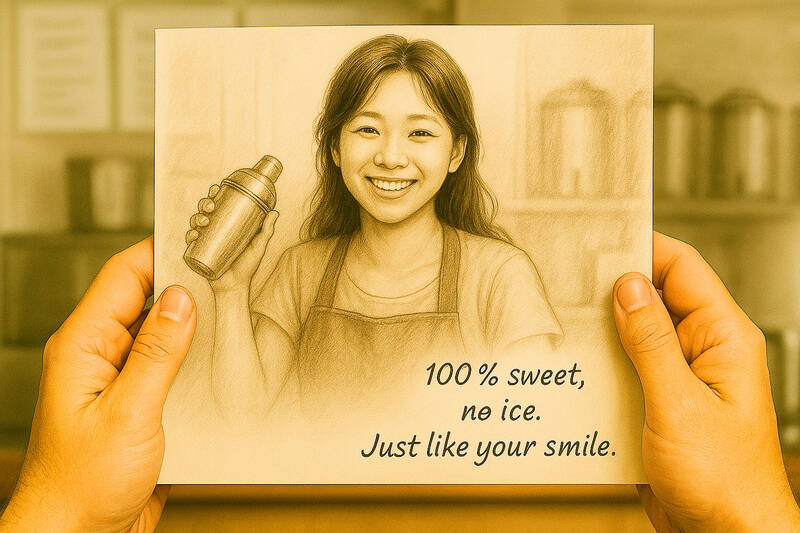
Photo: ChatGPT 照片:ChatGPT
After he left, Lily nudged her. “Nice save. You’re getting the hang of it.” Yujing had taken this summer job at the bubble tea shop to build confidence and get work experience. And maybe to save up for a new iPhone. At first, she couldn’t remember all the options: sweetness level, ice level, add-ins, size. She messed up a few orders. But Lily trained her: “Just listen: Size, drink, sugar, ice, toppings.”
Now, she could say “Oolong milk tea, half sweet with brown sugar boba” backwards, forwards and in her sleep. And that included the 60 other drinks on the menu — for a total of over 200,000 possible combinations.
The foreigner came in twice a week, always cheerful, always practicing his Chinese. Once, he asked: “What is meaning of ‘CHU BING’? No ice?” She laughed and explained. After that, he always said it proudly: “Qu bing.”
Then there was him. Every Thursday at 3:17pm, he came in: longish hair, K-pop soft-boy style, oversized shirt, sketchpad in one hand, and big headphones covering half his face. He never made eye contact. He mumbled with a thick Korean accent, “Lemon green tea, full sugar, no ice. Aloe.” And left quietly.
In her third week, the notes started. “You’re better than you think.” “Your smile is the best thing on the menu.” “Half sugar, full heart.” Lily whispered, “It’s totally the Spanish guy. He can’t stop smiling at you.” Yujing wasn’t sure. But part of her hoped.
On her last shift at the end of August, the quiet guy came in late. Ordered the same thing. This time, he handed her a paper envelope. No words. Just a nod. Inside was a sketch. It was her, mid-shift, smiling. In the corner, it read: “100% sweet, no ice. Just like your smile.” She looked up. He was finally looking back — and smiling too.
「One...DA-BEI...WU LONG...NAI?」看著點餐結結巴巴的外國人,語晴笑了。他看起來像一隻尷尬的小狗狗。她用中文重複了一次他的點單,然後又用英文說:「Oolong milk tea, large size. Half sweet, no ice?」(大杯烏龍奶茶,半糖,去冰嗎?)她溫柔地說。他笑開了——以那種拉美人招牌的、陽光般燦爛的笑容。「對!就是那個!妳是…lo maximo!…最棒的!」
他離開後,莉莉輕輕推了她一下。「不錯嘛。妳越來越上手了。」語晴接下這份在飲料店的暑期打工,為的就是建立自信心和累積工作經驗——也或許只是想多存點錢,好換一隻新的iPhone。一開始,她記不住所有的選項:甜度、冰塊、加料、尺寸。她搞砸了好幾張訂單。但莉莉教她:「聽就對了:大小、飲料、糖、冰、加料。」
現在,她無論是倒著背、順著背、甚至是在睡夢中都可以說出「中杯烏龍奶茶,半糖微冰,加珍珠」。這還不只如此,菜單上另外六十種飲品她也一樣難不倒——總共超過二十萬種可能的組合,她全都熟記在心。
那個外國人每週來兩次,總是笑容滿面,一邊點著飲料一邊練習他的中文。有一次,他問:「『CHU BING』是什麼意思?是No ice嗎?」她笑了,並解釋給他聽。從那之後,他總是驕傲地說:「去冰!」
再來是他。每個星期四下午三點十七分,他準時走進店內:稍長的頭髮,韓系暖男風,寬鬆上衣,一手拿著素描本,大大的耳機遮住了他半張臉。他從不和人對視。總是用濃厚的韓國口音低聲說:「檸檬綠茶,全糖,去冰。加蘆薈。」然後靜靜地離開。
在她工作的第三個星期,紙條開始出現了。「妳比妳想像的還要棒。」「妳的笑容是菜單上最美好的品項。」「飲料半糖,但妳的甜是全糖。」莉莉悄悄地說:「絕對是那個西班牙男生!他每次看到妳就止不住微笑。」語晴不確定,但她心裡有一部分也是這麼希望著。
八月底,她最後一次輪班時,那個安靜的男生很晚才來,並點了同樣的東西。這次,他遞給她一個信封紙。沒有說任何話。只是點了點頭。信封裡是一張素描。畫的是她,在忙碌中微笑的樣子。在角落寫著:「全糖,去冰。就跟妳的微笑一樣。」她抬起頭,他正好望著她,這一次,終於也笑了。
Epilogue 故事討論
For many high school and university students in Taiwan, a summer job is more than just a way to save money for a new iPhone. Like Yujing, they see it as an important step in growing up — a chance to leave the classroom and experience the “real world.”
These jobs, often in busy cafes, after-school learning centers or shops, are great for learning the value of hard work and improving social skills. The experience of learning a new skill, talking with customers, and having responsibilities gives them a lot of confidence for when they go back to school. It’s an important experience that teaches them life lessons you can’t always find in a textbook.
The “bubble tea shop,” called a “shouyaoyin dian” (手搖飲店) in Chinese, is at the center of a special Taiwanese tradition. Ordering a drink might seem simple, but it’s actually quite complex, like its own special language. First, there is a huge variety of drinks, from different kinds of teas to fruit drinks and teas with creamy toppings. But the real fun is in customizing your drink. You can choose how sweet you want it (from full sugar to no sugar), how much ice you want, or even no ice at all (去冰, qu bing). There are also many different add-ins, like pearls, aloe or grass jelly.
Learning all these combinations, like Yujing did, is a skill that most local people have. It turns a simple drink into a special, personal treat that you can enjoy every day. And sometimes, the perfect mix of tea and add-ins can lead to the start of a sweet summer crush.
對許多台灣的高中生和大學生來說,暑期打工不僅僅是為了存錢買新的iPhone。跟語晴一樣,他們將打工視為一個重要的成長階段——一個離開教室、體驗「真實世界」的機會。
這些打工,通常是在忙碌的咖啡廳、課後補習班或商店裡,能讓學生學會努力工作的價值,也能提升社交能力。學習新技能、與客人交談、承擔責任的過程,會讓他們在回到學校後更有自信。這是一段重要的經驗,能教會他們課本上學不到的人生課題。
飲料店,中文常稱作「手搖飲店」,是台灣一項特別的文化核心。點一杯飲料看似簡單,其實是門學問,就像一種專屬語言一樣。首先,飲料種類繁多,從各式茶底、果汁到奶蓋類的飲料應有盡有。但真正的樂趣在於客製化你的飲料。你可以選擇甜度(從全糖到無糖)、冰塊量,甚至完全去冰。你還可以加上不同的料,像是珍珠、蘆薈或仙草。
像語晴這樣學會怎麼搭配飲料的本事,是許多在地人都具備的生活技能。這讓原本一杯普通的飲料,變成了專屬於自己的小犒賞。而有時候,完美的茶飲搭配,也可能悄悄開啟一段甜蜜的夏日戀曲。
Vocabulary 單字片語
1. crush 暗戀
2. bubble tea shop 飲料店、手搖店
3. confidence 自信
4. work experience 工作經驗
5. sweetness level 甜度
6. add-ins 加料
7. to make eye contact 對視
8. sketch 素描
9. summer job 暑期打工
10. customize 客製化
Idioms 相關成語
1. to struggle 結結巴巴
2. to get the hang of it 越來越上手
3. can’t stop smiling 止不住微笑
4. an important step in growing up 重要成長階段
Nigel P. Daly is a writer with a language learning newsletter called Chin-glish bilingual lab (https://ndaly.substack.com).
Cynthia Chen is a translator and writer specializing in blogs, scripts and articles.

A: In addition to the biopic “Michael,” comedy “The Devil Wears Prada 2” is finally in theaters. I can’t believe it’s been 20 years since the 2006 debut of the original film. B: Does the sequel still revolve around the fashion industry? A: This time, “Miranda,” the fashion magazine editor-in-chief played by Meryl Streep, will team up with her former assistant “Andy,” played by Anne Hathaway, to fight against Emily, her other ex-assistant played by Emily Blunt. B: Isn’t the role of “Miranda” based on then US “Vogue” editor-in-chief Anna Wintour? A: Yup, it established Anna’s fashion status, influenced pop culture
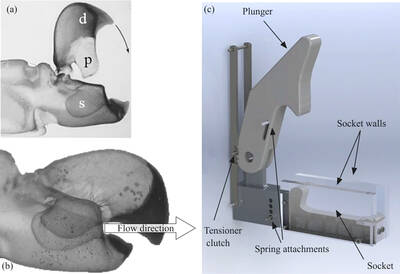
Few sea creatures of their size have as much destructive power as pistol shrimp. These small animals, usually measuring around four centimeters long, produce shock waves that can stun or even kill their prey. The attack begins when the shrimp opens its specialized claw, allowing water to fill a chamber inside. Then the claw closes rapidly. A bump on the claw strikes the chamber, forcing the trapped water out through a narrow opening at a high speed of about 25 meters per second. The rapid movement forms a bubble in the water that collapses almost instantly under the pressure of the

★ Bilingual Story is a fictionalized account. 雙語故事部分內容純屬虛構。 Rain hammered the roof in hard, uneven bursts. “Hold him still!” Baosheng pressed one hand against the stranger’s brow as the man twisted on the wooden bed. His left eye was swollen shut. The right one burned red like a coal. “It feels like fire,” the man gasped. “Like something is clawing inside.” Thunder rolled across the mountain. Baosheng leaned closer. The man’s skin was cold, but heat rose from his face. A strange smell hung in the air. He began the four methods of diagnosis: looking, listening/smelling,
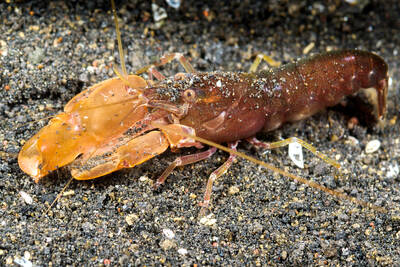
Continued from yesterday(延續自昨日) https://www.taipeitimes.com/News/lang One way to monitor marine biodiversity is to send divers down to take photos and notes; however, this method is expensive, time-consuming, and sometimes risky. On coral reefs, noise is an indicator of a healthy seabed. This is largely thanks to pistol shrimp, which often live inside sea sponges on coral reefs. The healthier the reef, the more pistol shrimp it hosts. This makes them perfect biological indicators. However, counting them visually is tricky because they often stay hidden. To address this, scientists turn to sound. Pistol shrimp snaps are loud, short, and rich in energy. They stand out


 RSS
RSS