


After steel and aluminum, US President Donald Trump has set his sights on slapping 25 percent tariffs on semiconductors, cars and pharmaceuticals.
Trump has already slapped additional 10 percent tariffs on goods from China and has also threatened tariffs on Canada and Mexico, plus ordered a study into putting into place reciprocal tariffs.
Here’s a look who would be hit the hardest if US import tariffs on semiconductors, cars and pharmaceuticals go into force.
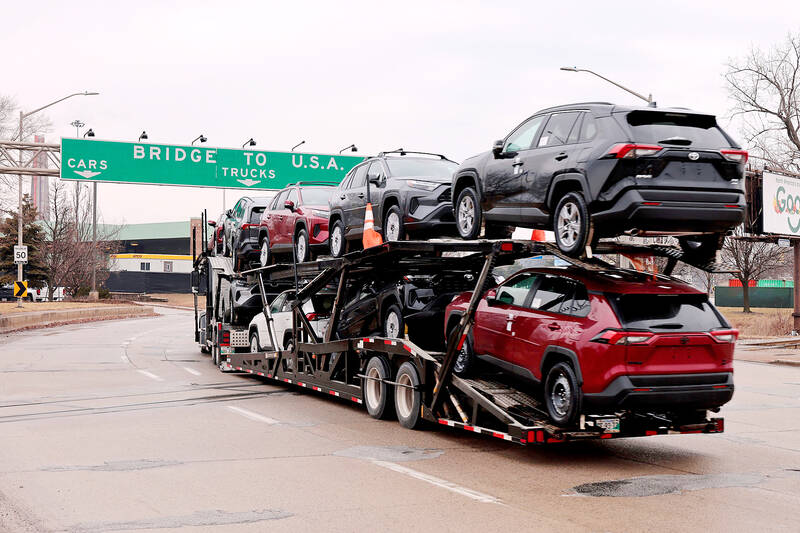
Photo: AFP 照片:法新社
SEMICONDUCTORS: ASIA IN THE CROSSHAIRS
Semiconductors, or microchips, are the brains in our electronic devices and demand has soared with the development of AI, which relies on thousands of them to crank through reams of information.
Asia is a major center of manufacturing of semiconductors.
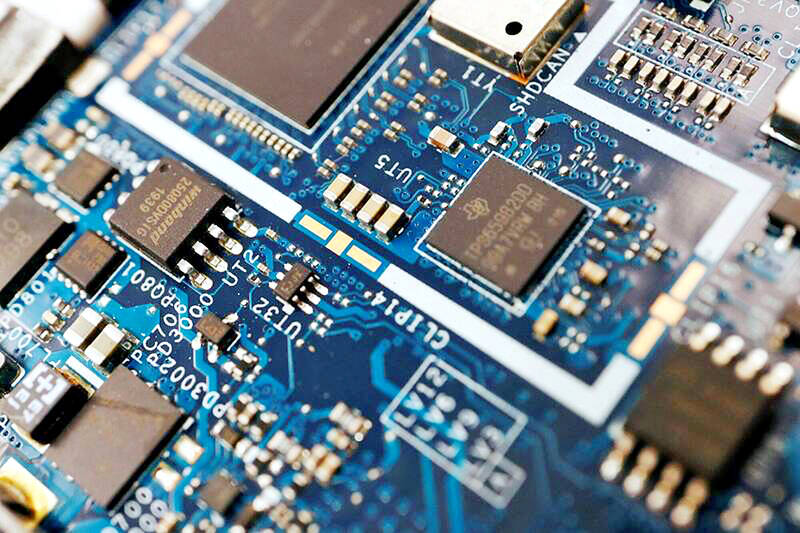
Photo: Reuters 照片:路透
The United States exported US$70 billion of electronic components last year, but imported double that amount, according to the US Commerce Department.
Imports from Taiwan alone represented nearly US$37 billion.
The island is home to chip manufacturing giant TSMC and a big portion of its factories. Tariffs could encourage it to diversify its production sites further. It already has plans to build three new factories in the United States.
Photo: Reuters 照片:路透
President William Lai (賴清德) said on Feb. 14 that Taiwan would “expand investment and procurement in the United States to promote bilateral trade balance.”
South Korea, home to Samsung, saw its exports of electronic components double last year to more than US$8 billion, according the country’s customs data. Its components are the country’s second-largest export item to the United States behind cars.
“Disrupting the supply chain... would create serious challenges for the whole world, including the United States,” said an executive of the trade association for South Korea’s electronics industry.
EVERYONE IMPACTED BY CAR TARIFFS
The United States, the world’s number two auto market behind China — imported US$269 billion in vehicles last year according to US Commerce Department figures.
Of those, US$95 billion came from Mexico. Japan, South Korea, Canada and Germany are also major importers of vehicles into the United States.
US auto exports totaled only US$72 billion.
Additional tariffs would affect all carmakers, with US automakers having factories in Mexico and Canada. US carmakers would also be affected through components suppliers located abroad, noted Matthieu Noel at the Roland Berger consultancy.
Laurel Broten, who heads up Canada’s agency that attracts foreign investment, Invest in Canada, gave an example of an auto component that crossed the US-Canadian border eight times before being installed into a vehicle. “Tariffs on ‘Canadian cars’ are also tariffs on US players in the supply chain,” she told AFP.
Moreover, carmakers from all countries, including the United States, built factories “in Mexico to tap into lower wages,” noted Noel. For US consumers, “the price of vehicles will rise considerably. When one adds 25 percent import tariffs that can’t be totally absorbed by margins,” he said.
But many international brand cars are now made in the United States.
The world’s largest carmaker, Japan’s Toyota, sold 2.3 million vehicles in the United States last year. But more than half were manufactured in the United States, where it will soon open its eleventh factory.
German carmakers Volkswagen, BMW and Mercedes already manufacture SUVs in the United States.
Stellantis, which owns the Jeep, Ram, Dodge and Chrysler brands in addition to a number of European marques — said it wants to boost its US production even before Trump’s latest announcements.
PHARMACEUTICALS: LIMITED IMPACT?
Ireland alone accounted for 30 percent of US pharmaceutical imports in 2024. The country’s favorable tax rates have attracted drugs manufacturers, including US firms.
Italy was the top source for US antibiotics imports, followed closely by China.
Nearly a quarter of Germany’s pharmaceutical exports — in particular vaccines and immunology products, head to the United States.
Some products are in very high demand by Americans, particularly the weight-loss treatments Ozempic and Wegovy made by Danish drugmaker Novo Nordisk.
But the drugs market is not like others, noted analysts at Moody’s. “Patients’ medical needs, lack of substitutes, insurance coverage and doctor preferences limit the effects of price changes on demand,” it said in a recent note.
“Most branded pharmaceutical companies have diversified manufacturing, including US facilities, and can absorb tariff increases thanks to high profit margins,” it added.
US consumers might see more price increases on generic drugs made abroad as manufacturers have tight margins and would likely pass on the cost of tariffs.
(AFP)
繼鋼鐵和鋁之後,美國總統唐納‧川普又將目光投向了半導體、汽車和藥品,準備徵收25%的關稅。
川普已經對來自中國的商品加徵10%的關稅,並威脅對加拿大和墨西哥徵收關稅,並下令研究實施對等關稅。
如果美國對半導體、汽車和藥品加徵進口關稅,我們來看看誰會受到最嚴重的打擊。
半導體:亞洲成為目標
半導體,或晶片,是我們電子設備的大腦;隨著人工智慧(AI)的發展,對它們的需求也大幅增加,因為AI需要成千上萬的半導體或晶片來處理大量資訊。
亞洲是半導體的主要製造中心。
據美國商務部稱,去年美國出口了價值700億美元的電子元件,但進口額卻是出口額的兩倍。
光是從台灣的進口額,就達到近370億美元。
台灣是晶片製造巨頭台積電及其大部分工廠的所在地。關稅可能會鼓勵其進一步實現生產基地多元化。台積電已計劃在美國興建三個新工廠。
賴清德總統2月14日表示,台灣將「擴大對美投資與採購,以促進雙邊貿易平衡」。
根據韓國海關數據,三星總部所在地韓國去年的電子元件出口翻了一倍,達到80多億美元。電子元件是韓國對美國的第二大出口產品,僅次於汽車。
韓國電子產業貿易協會一位高層人士表示:「破壞供應鏈……將給包括美國在內的全世界帶來嚴峻挑戰」。
汽車關稅影響每個人
根據美國商務部的數據,美國是僅次於中國的全球第二大汽車市場,去年汽車進口額達2,690億美元。
其中的950億美元來自墨西哥。日本、韓國、加拿大和德國也是美國進口汽車的主要來源國。
美國汽車出口總額僅720億美元。
額外的關稅將影響所有汽車製造商,美國汽車製造商在墨西哥和加拿大設有工廠。羅蘭貝格顧問公司的馬修‧諾艾爾指出,美國汽車製造商也會受到位於國外的零件供應商的影響。
加拿大聯邦政府招商單位「加拿大投資署」負責人羅芮爾‧布洛頓舉例說明,一個汽車零件在安裝到汽車之前,要跨越美加邊境八次。她對法新社表示:「對『加拿大汽車』徵收關稅,也是在對供應鏈中的美國廠商徵收關稅」。
此外,諾艾爾指出,包括美國在內的各國汽車製造商都在墨西哥建廠,「以利用其較低的工資」。對美國消費者來說,「汽車價格將大幅上漲。如果再加上25%的進口關稅,這些關稅成本將無法被利潤完全吸收」。他說。
但現在許多國際品牌汽車都是在美國生產的。
全球最大的汽車製造商日本豐田去年在美國銷售了230萬輛汽車。但超過一半的產品是在美國製造的,豐田很快就會在美國開設第11家工廠。
德國汽車製造商大眾、BMW寶馬和賓士已經在美國生產SUV。
除了一些歐洲品牌外,斯泰蘭蒂斯(Stellantis)旗下還擁有吉普(Jeep)、公羊(Ram)、道奇(Dodge)和克萊斯勒(Chrysler)等品牌。
製藥業:影響有限?
光是愛爾蘭一國就佔2024年美國藥品進口量的30%。愛爾蘭的優惠稅率吸引了包括美國公司在內的藥品製造商。
義大利是美國抗生素進口的最大來源國,緊隨其後的是中國。
德國近四分之一的醫藥出口——特別是疫苗和免疫學產品——是銷往美國。
有些產品在美國很受歡迎,尤其是丹麥製藥商諾和諾德(Novo Nordisk)生產的減肥藥胰妥讚(Ozempi)和Wegovy。
但信用評等公司穆迪的分析師指出,藥品市場與其他市場不同。穆迪最近一份報告指出:「患者的醫療需求、替代品的缺乏、保險的保障範圍,以及醫師的偏好限制了價格變化對需求的影響」。
該報告補充說:「大多數品牌製藥公司都實現了生產多元化,包括在美國設立工廠,而且由於利潤率高,可以吸收關稅上調的影響」。
美國消費者可能會看到國外生產的學名藥價格進一步上漲,由於製造商利潤微薄,可能會轉嫁關稅成本。
(台北時報林俐凱編譯)
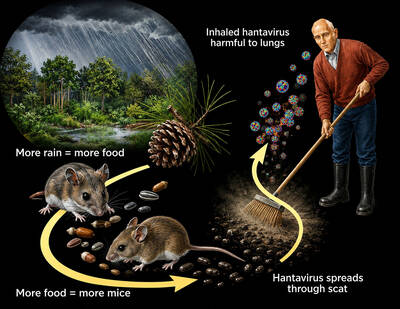
An outbreak aboard a cruise ship of a rare rodent-borne illness called hantavirus has left three passengers dead and sickened others, but global health officials say the risk to the general public remains low because the germ does not easily spread between people. “This is not the next COVID, but it is a serious infectious disease,” said Maria Van Kerkhove, director of epidemic and pandemic preparedness at the World Health Organization (WHO). “Most people will never be exposed to this.” The virus usually spreads when people inhale contaminated residue of rodent droppings. Hantaviruses have been around for centuries and are thought to
A: Apart from the Danjiang Bridge in New Taipei City, the MRT Sanying Line (Light Blue Line) will open in June. B: Is that the new line leading to Yingge District, the ceramic town? A: Yup, the line will connect the Yingge Ceramics Museum and the Old Streets in Sanxia and Yingge Districts. B: The eastward extension of the Tamsui-Xinyi Line (Red Line) that goes through Taipei’s Xinyi District will also open in June. A: Plus, Taoyuan’s Aerotropolis Line (Green Line) will partially open by the end of the year. In the future, it will connect the

1. 他病了三天。 ˇ He has been sick for three days. χ He has been sick since three days. 註︰這裡現在完成時態 have / has been 表示從過去某一時日到現在的一段時間存在的行為或狀態,與它連用的時間副詞應為 「for +若干時」,如 for a year, for three hours 等,意思是歷時多少。 2. 他自從星期三以來都很忙。 ˇ He has been busy since Wednesday. χ He has been busy from Wednesday. 註︰「自從……以來」,該用 since。說從某一天(某一時刻)到某一天(某一時刻)才用 from,如 from Monday till Friday。 3. 房間角落裡散放著一些零星物件。 ˇ There were some odds and ends lying in the corner of the room. χ There were some odds and ends lying at the corner of the room. 註︰「在房間角落裡」該用介詞 in。例如: He stood in the corner. There is a lamp in the corner of the room. at the corner 指房子外部的拐角。例如: A little boy

A growing green movement allows hotel guests to fund tree planting projects simply by opting out of daily room cleans. This approach turns an ordinary hotel stay into a direct contribution to nature. Founded in the Netherlands, the nonprofit “Hotels for Trees” operates on the principle that one skipped cleaning equals one new tree. It has planted more than 750,000 trees since 2021. Similarly, Sarnia Hotels in Guernsey donates £2 per refused clean. Since 2024, over 3,300 services have been cancelled, raising sufficient money to plant 1,100 native trees and hedgerows. Simplicity has been central to this success.


 RSS
RSS