


The Dutch introduced the Indian mango (Mangifera indica) to Taiwan in the 17th century. It is a green-skinned mango with thick fibers that get stuck in the teeth, but it boasts a rich aroma and a unique taste.
In 1954, Taiwan’s Council of Agriculture introduced several mango cultivars from Florida, USA, including the Irwin, Haden, and Keitt varieties. After seven years of testing and domestication, the Irwin variety was chosen for promotion. Years later, the sample saplings started to bear fruit. These mangoes were large, with thin, vibrant red peels and golden pulp. The Irwin mangoes were mouth-wateringly sweet and earned the nickname “apple mangoes.”
In the late 1960s, many Irwin mango trees in the Tainan area were exhibiting an alarming phenomenon—they would flower but not bear fruit. A pollinated Irwin mango weighs between 300 and 400 grams, but many mango flowers/blossoms weren’t being pollinated, leaving a majority of trees fruitless. The Council of Agriculture formed a task force to address the crisis, but even after a decade had passed, their efforts remained unsuccessful.
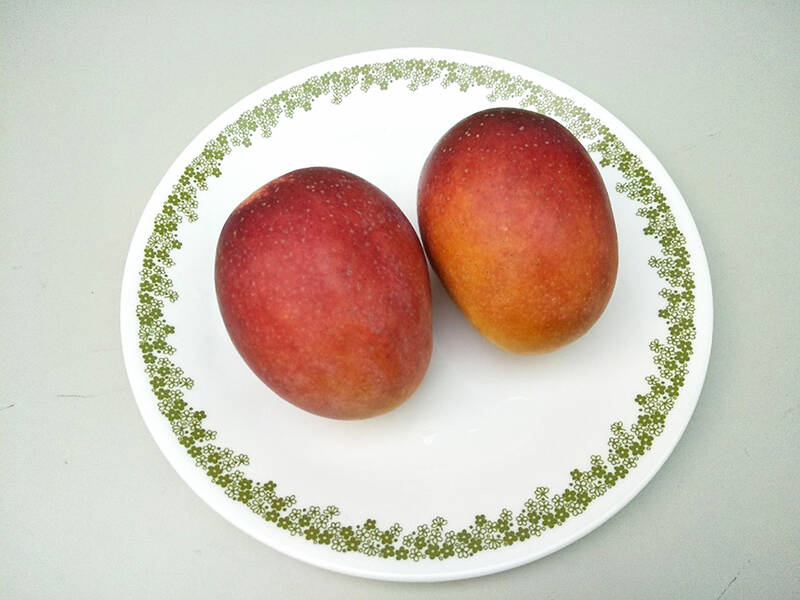
Photo: Bookman l 圖片:書林提供
One day, in 1987, Professor Lin Tzong-Shyan noticed a pig’s head discarded in a mango orchard. The rotting flesh had attracted hordes of blowflies, which could be seen buzzing around several nearby trees. Realizing that an abundance of fruit hung from these trees, Lin Tzong-Shyan began connecting the dots. Could blowflies be the answer?
During the mango flowering season of 1988, Lin Tzong-Shyan convinced a farmer named Wu Ching-Chin to conduct an experiment: to attract blowflies, a pile of rotten fish or poultry viscera was placed beneath every eighth mango tree. A few months later, Wu had a bountiful harvest of mangoes—several times greater than those of previous years. The problem that had confounded Taiwan’s Council of Agriculture for so long had finally been solved, and Taiwan’s mango output skyrocketed thereafter!
夏天是愛文芒果盛產的季節,台灣原有的土芒果 (Mangifera indica) 是17世紀荷蘭時期引進,台語稱為「檨仔」(su?inn),果小皮綠、肉少纖維多,但有特殊風味。
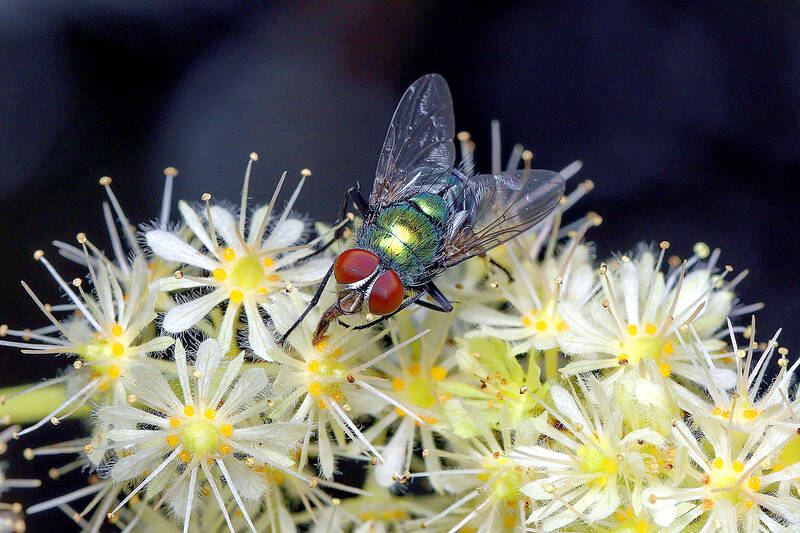
Photo: Bookman l 圖片:書林提供
1954年,農復會自美國佛羅里達州引進愛文 (Irwin)、海頓 (Haden)、肯特(Kent)、凱特 (Keitt) 等栽培種 (cultivar),經過7年試種馴化,選出最適合台灣的愛文種推廣。愛文芒果皮紅肉黃,香氣濃,外表像紅蘋果一樣,所以當時又稱「蘋果檨」。
但在1960年代末期,台南地區芒果樹大量出現開花不結果的現象,原本授粉成功的果實可達三四百公克,但若沒授粉,就無法結果,或只結如雞蛋大小的無子芒果。農政單位邀集果樹專家深入研究,經十餘年,依然未能解決。有農藝專家認為南部春季乾旱、水分不足,造成芒果不結果。台大園藝系林宗賢教授受命參與研究,進行試驗,結果加強灌水的果樹,無子芒果反而變多,推翻「水分不足造成芒果不結果」的假說。
1987年,有一回林教授在玉井鄉間看到居民將酬神建醮過後發臭的豬頭丟棄在芒果樹下,吸引了大群俗稱金蒼蠅的麗蠅 (blowfly),注意到這些飛舞的蒼蠅附近的芒果樹都結實累累,不禁聯想,這可能是解決「開花不結果」的救星。於是林教授說服果農吳清進配合實驗,1988年芒果開花期間,在每八棵芒果樹中間放一堆發臭魚雜、內臟,麗蠅嗅覺非常靈敏,果園一有腐肉味,它們就會聞風而至,順帶也為芒果授粉。幾個月後芒果採收,每公頃產量達為過去的許多倍,困擾十多年的芒果開花不結果問題,終於找到解決方法。在芒果開花期間誘引麗蠅,現已成為臺灣果園量產愛文芒果的秘密武器。
今天我們有香甜可口又平價的愛文芒果可吃,應當感謝玉井農民鄭罕池的無私,台大林宗賢教授發現的秘密武器—麗蠅。
文章由書林出版公司提供:
www.bookman.com.tw
蘇正隆 — 台灣翻譯學學會前理事長、師大翻譯研究所兼任副教授; 編著《走讀自然.花言樹語》,《英語的對與錯》,《世紀病毒:必讀防疫英文知識與詞彙》...等。國家教育研究院中英雙語詞彙審議委員;研究領域為翻譯、術語及詞典編譯,從事植物與人文導覽數十年,亦曾應邀遠赴國外大學做植物人文導覽。
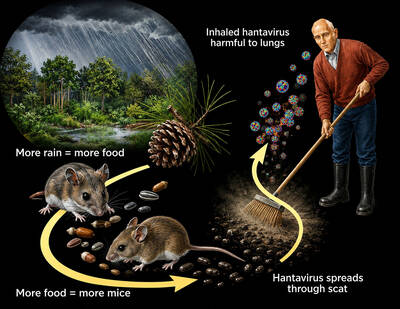
An outbreak aboard a cruise ship of a rare rodent-borne illness called hantavirus has left three passengers dead and sickened others, but global health officials say the risk to the general public remains low because the germ does not easily spread between people. “This is not the next COVID, but it is a serious infectious disease,” said Maria Van Kerkhove, director of epidemic and pandemic preparedness at the World Health Organization (WHO). “Most people will never be exposed to this.” The virus usually spreads when people inhale contaminated residue of rodent droppings. Hantaviruses have been around for centuries and are thought to
A: Apart from the Danjiang Bridge in New Taipei City, the MRT Sanying Line (Light Blue Line) will open in June. B: Is that the new line leading to Yingge District, the ceramic town? A: Yup, the line will connect the Yingge Ceramics Museum and the Old Streets in Sanxia and Yingge Districts. B: The eastward extension of the Tamsui-Xinyi Line (Red Line) that goes through Taipei’s Xinyi District will also open in June. A: Plus, Taoyuan’s Aerotropolis Line (Green Line) will partially open by the end of the year. In the future, it will connect the

1. 他病了三天。 ˇ He has been sick for three days. χ He has been sick since three days. 註︰這裡現在完成時態 have / has been 表示從過去某一時日到現在的一段時間存在的行為或狀態,與它連用的時間副詞應為 「for +若干時」,如 for a year, for three hours 等,意思是歷時多少。 2. 他自從星期三以來都很忙。 ˇ He has been busy since Wednesday. χ He has been busy from Wednesday. 註︰「自從……以來」,該用 since。說從某一天(某一時刻)到某一天(某一時刻)才用 from,如 from Monday till Friday。 3. 房間角落裡散放著一些零星物件。 ˇ There were some odds and ends lying in the corner of the room. χ There were some odds and ends lying at the corner of the room. 註︰「在房間角落裡」該用介詞 in。例如: He stood in the corner. There is a lamp in the corner of the room. at the corner 指房子外部的拐角。例如: A little boy
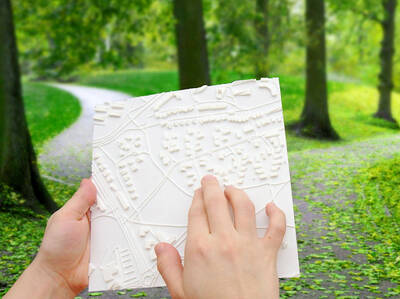
Have you ever wondered how people navigate the world when they can’t see a map? For individuals with visual impairments, conventional maps are nearly impossible to use. This is where tactile maps come in — essential tools that allow people to “see” the world through touch. A tactile map is specially designed with raised lines, textures, and symbols to represent geographical features such as roads, rivers, and buildings. Users explore it with their fingertips. However, these maps are not exclusively for people with visual disabilities. They serve as valuable multisensory learning tools that enhance spatial understanding for everyone, making


 RSS
RSS