


Food shortages have been experienced by people across the world throughout the centuries, but these challenges have driven people to cope, like the Taiwanese, who have found creative culinary uses for all parts of their animals, including blood. Pig’s blood cake, or rice blood cake, consists of sticky rice mixed with animal blood. After being steamed, the cakes are often cut into rectangles and skewered onto bamboo skewers so people can enjoy them while walking. It can also be braised or cooked in soup.
糧食不足是各國多少世紀以來的難題,但面對困境,台灣人學會善加利用牲畜的每個部位,包含血液。豬血糕又稱做米血糕,在糯米中混入豬血後,蒸熟後切成長方形,插上竹籤方便邊走邊吃,還可以滷豬血糕或煮湯。
shortage (n.) 缺少,匱乏
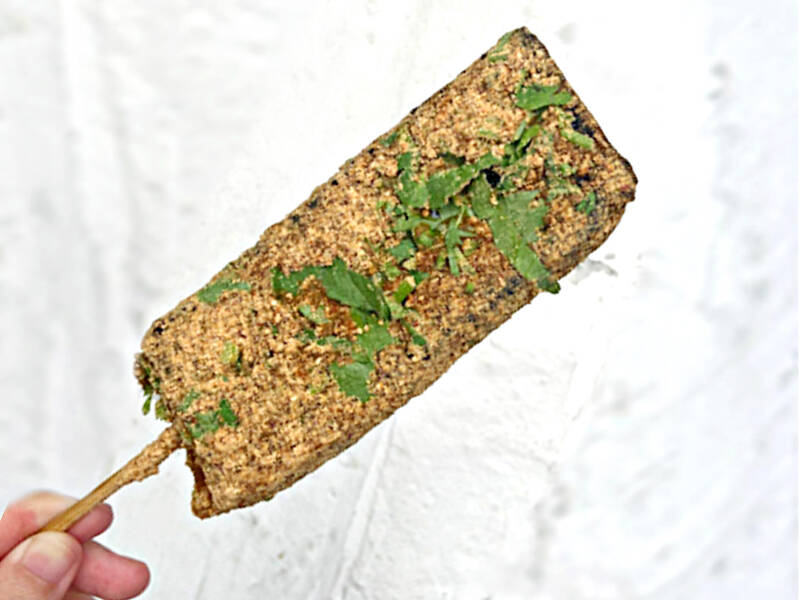
Photo courtesy of Bookman l 圖片:書林
rectangle (n.) 長方形
There are regional variations in how pig’s blood cake is eaten. In northern Taiwan, people coat the cakes with crushed peanuts and coriander, while in southern Taiwan, people dip them in a sauce (either soy sauce or chili sauce). The taste of pig’s blood cake is mild and unique, with a subtle rice aroma and the taste of pig blood, which some perceive as a slightly rusty iron taste. Its texture is firm yet chewy, with a bit of a bouncy sensation.
豬血糕的吃法南北各有不同。北部的豬血糕會裹一層花生粉和芫荽,南部人則偏好沾醬油或辣椒醬吃。豬血糕本身味道不重,帶有淡淡的糯米香氣和豬血味,但有的人認為像鐵鏽味,口感紮實帶有嚼勁,吃起來有點彈牙。
subtle (adj.) 細微的
rusty (adj.) 生銹的
Originally, what we now call pig’s blood cake was made with duck or chicken blood before pig blood was mainly used. In the past, poultry was raised in almost every household but was butchered mainly for the market, and occasionally for festivals and worship. Regretting having to discard the blood, people found a way to cook it by mixing the blood with rice and eating it with a sauce. This dish was considered a delicacy at that time but gradually evolved into a snack that children from the previous generation would buy on their way home from school, then a traditional night market snack that continues to this day.
我們所熟悉的豬血糕,其實原本是用鴨血、雞血做成。早年家家戶戶都有養雞鴨,但養來大多數是為了賣錢,逢年過節才會殺來吃。老百姓捨不得白白浪費掉血液,於是想到可以和米飯一起攪拌均勻,蒸熟後沾醬吃。對於當時的人來說豬血糕可是山珍海味,逐漸演變成上個世代孩童放學路上的點心,流傳成今日的經典夜市美食。
Gruesome as it may sound, pig’s blood cake embodies the thrifty spirit of the Taiwanese people. But don’t think that only Taiwanese people eat blood-based foods! Authentic delicacies made from animal blood can be found elsewhere in Asia, the Americas and Europe. In Ireland, people eat a breakfast dish called black pudding, which is made from pig blood, pork fat and oatmeal.
雖然豬血糕聽起來有些可怕,但蘊含了台灣人民節儉的精神。不過可別以為只有台灣人才吃血製食品,亞洲、美洲及歐洲都找得到以動物血做成的美食,如愛爾蘭人的早餐會吃以豬血、豬油和燕麥做成的黑布丁。
gruesome (adj.) 可怕的
embody (v.) 體現
Those who get light-headed at the sight of blood should probably avoid blood-based foods like pig’s blood cake. But just as life is filled with adventures, you only know whether you will like something once you try it. Encourage your friends who haven’t tried this dish before to take a bite; it is not as terrible as people imagine.
一看到血就頭暈的人,得注意避開像豬血糕這類的美食。不過就像人生的多彩與冒險,除非你親身嘗試,不然永遠不知道結果如何。可以鼓勵還未嘗試過的朋友嘗一嘗,味道不如有些人想像的那樣可怕!
文章由書林出版公司提供:
www.bookman.com.tw

A: In the 2026 Time 100 list, besides TSMC chairman C.C. Wei in the Pioneers category, Blackpink’s Jennie also stands out in the Artists group. B: What about the Titans and Icons? A: The Titans include legendary fashion designer Ralph Lauren, Google CEO Sundar Pichai, and Intel CEO Tan Lip-bu. The Icons include actor Wagner Moura, Olympic gold figure skater Alysa Liu and singer Victoria Beckham. B: What about the Leaders and Innovators? I bet US President Donald Trump and Chinese President Xi Jinping are on the list. A: You got it. Other Leaders include Japanese PM Sanae
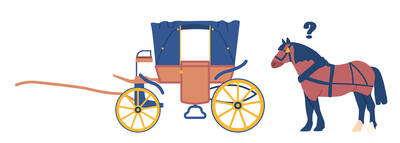
Put the Cart Before the Horse 本末倒置 Iris: I think I’m in love. Carl: What? Iris: We just have so much in common. We like all of the same things. Carl: Yes, but you’ve only chatted with him online. Iris: It doesn’t matter. I know we’ll end up getting married. Carl: I’m afraid you’re putting the cart before the horse. You should at least meet him first. Iris: OK, OK. I’ll do that. 艾瑞絲: 我想我戀愛了。 卡 爾: 什麼? 艾瑞絲: 我們就是有那麼多的共通點。我們喜歡的東西都一樣。 卡 爾: 是沒錯,不過妳和他只在網路上聊過天而已。 艾瑞絲: 那不重要。我知道我們最後一定會步入禮堂。 卡 爾: 妳恐怕是本末倒置了吧。妳至少應該先跟他見個面。 艾瑞絲: 好啦,好啦。我會的啦。 A tough cookie 強悍的人∕堅強的人 Tracy: I heard you went out with Iris last night. Justin: Yeah. We

1. 他非常討厭偽君子。 ˇ He has a deep hatred for hypocrites. χ He has a deep hatred to hypocrites. 註︰表示「對某人懷著愛、恨」等, 常用 have a love for/of, have a hatred for/of。 例如: We have a love for/of science. The working people have a hatred for/of all forms of exploitation. 2. 問題的答案其實不難找。 ˇ The answer to this question is not difficult to find. χ The answer of this question is not difficult to find. 註︰中文中的「的」在英語中不一定都用 of 來表示,有時須用 to。其他的例子如下: 我把房間的鑰匙弄丟了。 I lost the key to the room. 中間矗立著烈士紀念碑。 In the center stands the monument to the martyrs. 這部電影的續集你看過沒有? Have you seen the sequel to the movie? 3. 比起那家餐廳,他更喜歡這家。 ˇ He prefers this restaurant to that one. ˇ He likes
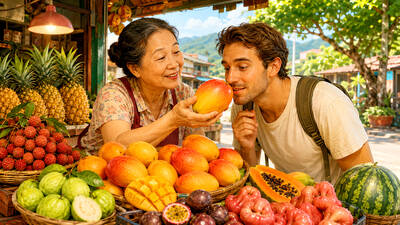
★ Bilingual Story is a fictionalized account. 雙語故事部分內容純屬虛構。 The mango looked perfect. It sat on the fruit stand like a small sunset, red on one side and gold on the other. “I’ll take this one,” said Daniel. The fruit seller shook her head. “Not that one.” Daniel was surprised. “Why not? It looks beautiful.” “Yes,” she said, “but beautiful is not always ready.” She picked up another mango and held it near his nose. “First, smell here.” Daniel smelled the top of the mango. It was sweet and warm. “Good mangoes have a smell,” she said. “Next, feel the weight.”


 RSS
RSS