


Elon Musk’s Neuralink Corp. has performed its first brain implant on a human — a major step toward the billionaire’s goal of one day enabling people to control computers with their minds.
Here’s all you need to know about Neuralink and the company’s first human trial:
What is Neuralink?
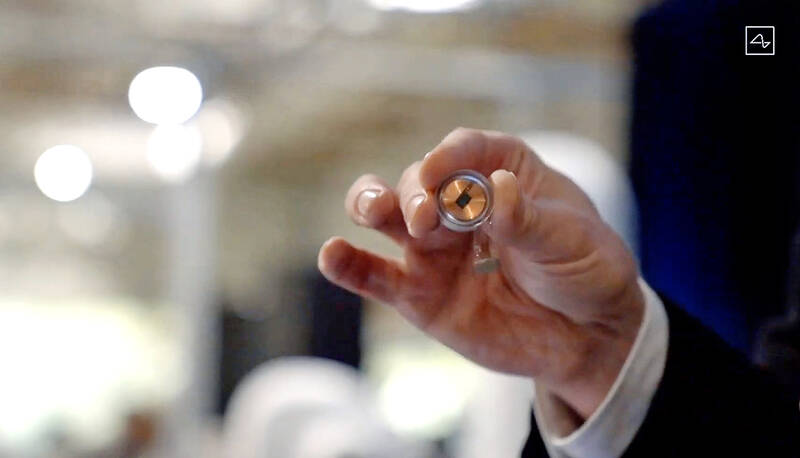
Photo: AFP 照片:法新社
Neuralink is a startup founded by Elon Musk in 2017. It’s trying to build a brain-computer interface that would help people with traumatic injuries operate phones and PCs using only their thoughts. To do that, it’s working on implanting electrodes into peoples’ brains.
Sounds scary. Has that been done before?
Yes. Neuralink builds on decades of technology aimed at implanting electrodes in human brains to interpret signals and treat conditions such as paralysis, epilepsy and Parkinson’s disease. One early device is known as the Utah array, which was first demonstrated in a human in 2004. Many competitors have entered the field, including Synchron and Precision Neuroscience.
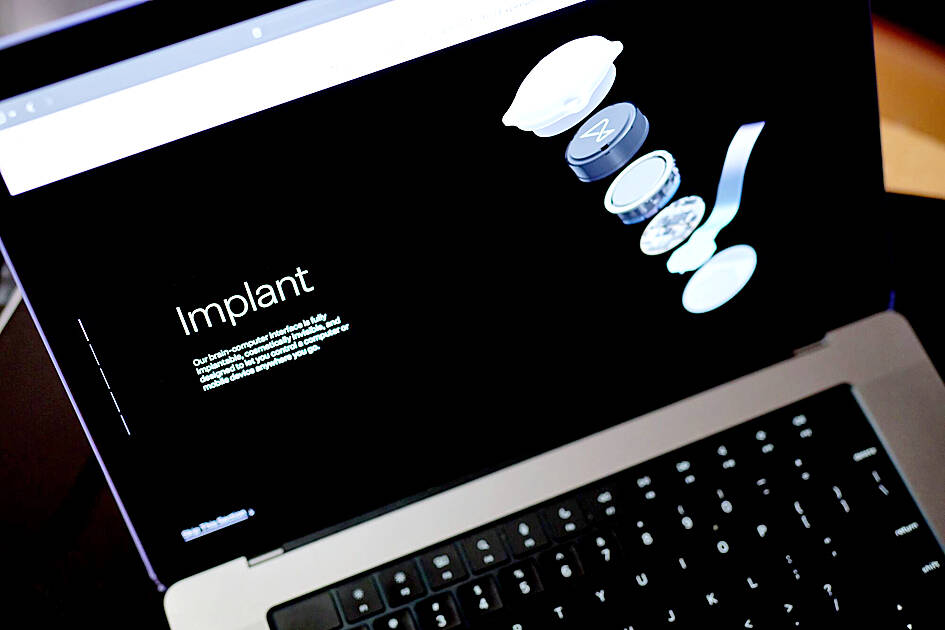
Photo: Bloomberg 照片:彭博社
Is it legal?
The US Food and Drug Administration gave Neuralink approval for clinical trials on humans in May last year, following a series of implant trials on various animals. The company was heavily criticized for its surgical work in animals, particularly primates, by groups such as the Physicians Committee for Responsible Medicine, which said Neuralink botched many of those surgeries.
What is different about the Neuralink device?
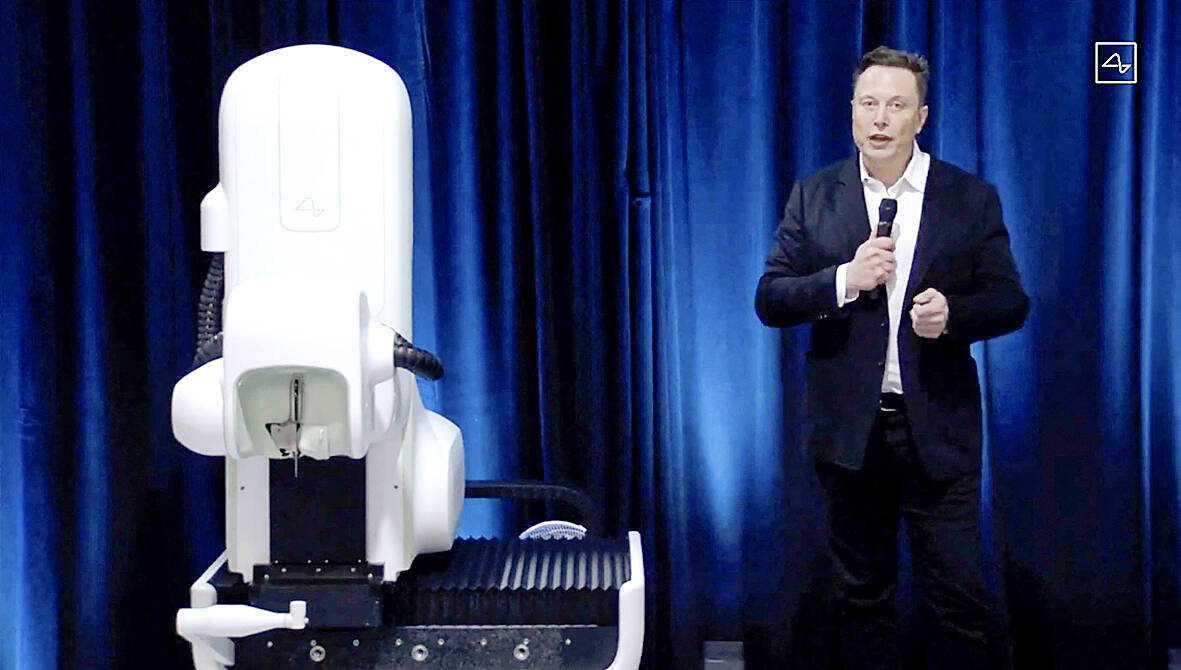
Photo: AFP 照片:法新社
The Neuralink device contains more than 1,000 electrodes, far more than other implants. It targets individual neurons, while many other devices in development target signals from groups of neurons. If it works, this should enable a higher degree of precision.
How does it work exactly?
The implant puts the chip and other electronics inside the user’s skull, with wireless communications sending out brain signal data to a Neuralink app, which decodes them into actions and intents. Charging is also done wirelessly. Neuralink has developed a bespoke surgical robot to perform the implant procedure.
What are Musk and Neuralink hoping to do with brain chips?
Neuralink wants to help paralyzed people, to begin with. Eventually, Musk says his device could help people with hearing and vision loss. The billionaire has said he hopes one day the implant could allow for futuristic goals such as helping humans merge with artificial intelligence.
What is the device called?
In a post on his social network on Jan. 29, Musk said the device would be called Telepathy.
What will happen during Neuralink’s first human brain trial?
This trial is intended to help the company nail down the right design for its device. Last year, Neuralink said it would perform 11 surgeries this year, although its predictions have been overly optimistic in the past.
How long will this study take?
Typically, this type of study enrolls 5-10 patients and lasts up to a year. The next step is a feasibility study, and then a pivotal study, which is roughly analogous to a Phase III study for a drug. If all goes well, it will likely take between five years and a decade before commercialization.
(Bloomberg)
伊隆.馬斯克的Neuralink公司已完成首例人腦植入晶片。這位億萬富翁希望人類有朝一日能夠用意念控制電腦,這是朝此目標邁進的重要一步。
關於Neuralink及該公司之首次人體試驗,所需知道的資訊如下:
什麼是Neuralink?
Neuralink這家新創公司是馬斯克於2017年所成立。該公司想要製造一種「腦機介面」,幫助受傷的人用意念來操作手機和電腦,因此正研究將電極植入人腦。
這聽來很可怕,以前做過嗎?
是的。研究將電極植入人腦,以解讀訊息並治療癱瘓、癲癇和帕金森氏症等疾病的技術,已有數十年的基礎,Neuralink即是建立在這之上。一種稱為「猶他陣列」的早期裝置,在2004年用於人體。許多競爭對手已進入該領域,包括神經科技公司Synchron及 Precision Neuroscience。
這合法嗎?
Neuralink對不同動物進行了一系列植入試驗,然後在去年5月獲美國食品藥物管理局批准進行人體臨床試驗。該公司因其對動物(尤其是靈長類動物)的手術而受到美國責任醫師協會等團體的嚴厲批評,該協會表示Neuralink的許多手術都很拙劣。
Neuralink的裝置有何不同?
許多其他開發中的裝置是以神經元組的訊息為標的,而Neuralink 則是以單一神經元為標的,其裝置內有一千多個電極,遠較他牌為多。若能有效運作,應可提高精準度。
它究竟如何運作?
包含晶片及其他電子設備的植入物被放進用戶之顱骨內,透過無線通訊將大腦訊息資料發送至Neuralink應用程式,以解碼成動作與意圖。充電也是以無線進行。Neuralink開發了一種客製化的手術機器人來執行植入手術。
馬斯克及Neuralink希望用大腦晶片做什麼?
Neuralink初步是希望幫助癱瘓的人。馬斯克表示他的裝置最終可幫助聽力與視力喪失的人。這位億萬富翁表示,他希望有一天這種植入物能實現未來的目標,例如幫助人類與人工智慧結合。
該裝置的名稱為何?
馬斯克1月29日在他的社群網站上發文稱,該裝置將名為 Telepathy(心靈感應)。
Neuralink之首次人腦試驗內容為何?
此次試驗旨在幫助該公司確認裝置設計的正確性。去年,Neuralink 表示今年將進行11例手術,雖然他們的預期一向過於樂觀。
這項試驗需時多久?
一般來說,此類試驗會招募5-10位患者,持續長達一年。下一步是可行性試驗,然後是樞紐試驗(pivital study),大致類似藥物的第三期研究。如果一切順利,可能需要5至10年的時間才能投入市場。
(台北時報林俐凱編譯)

A: The Danjiang Bridge in New Taipei City is to open on May 12, and the MRT Sanying Line (Light Blue Line) will also open in June. Isn’t that great? B: Is that the bridge connecting the city’s Tamsui and Bali Districts? What’s so special about this new landmark spanning the Tamsui River? A: The Danjiang Bridge will become the world’s longest-span single-mast asymmetric cable-stayed bridge — with a total river-crossing section of 920 meters and main span of 450 meters. B: The news says there are sidewalks and bike lanes on both sides. Watching the sunset from the
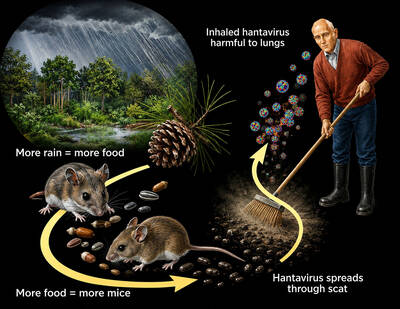
An outbreak aboard a cruise ship of a rare rodent-borne illness called hantavirus has left three passengers dead and sickened others, but global health officials say the risk to the general public remains low because the germ does not easily spread between people. “This is not the next COVID, but it is a serious infectious disease,” said Maria Van Kerkhove, director of epidemic and pandemic preparedness at the World Health Organization (WHO). “Most people will never be exposed to this.” The virus usually spreads when people inhale contaminated residue of rodent droppings. Hantaviruses have been around for centuries and are thought to

A: Apart from the Danjiang Bridge in New Taipei City, the MRT Sanying Line (Light Blue Line) will open in June. B: Is that the new line leading to Yingge District, the ceramic town? A: Yup, the line will connect the Yingge Ceramics Museum and the Old Streets in Sanxia and Yingge Districts. B: The eastward extension of the Tamsui-Xinyi Line (Red Line) that goes through Taipei’s Xinyi District will also open in June. A: Plus, Taoyuan’s Aerotropolis Line (Green Line) will partially open by the end of the year. In the future, it will connect the

1. 他病了三天。 ˇ He has been sick for three days. χ He has been sick since three days. 註︰這裡現在完成時態 have / has been 表示從過去某一時日到現在的一段時間存在的行為或狀態,與它連用的時間副詞應為 「for +若干時」,如 for a year, for three hours 等,意思是歷時多少。 2. 他自從星期三以來都很忙。 ˇ He has been busy since Wednesday. χ He has been busy from Wednesday. 註︰「自從……以來」,該用 since。說從某一天(某一時刻)到某一天(某一時刻)才用 from,如 from Monday till Friday。 3. 房間角落裡散放著一些零星物件。 ˇ There were some odds and ends lying in the corner of the room. χ There were some odds and ends lying at the corner of the room. 註︰「在房間角落裡」該用介詞 in。例如: He stood in the corner. There is a lamp in the corner of the room. at the corner 指房子外部的拐角。例如: A little boy


 RSS
RSS