


Archer: What do you want to buy?
Bob: I would love to buy a diary.
Archer: A diary? Who’s keeping a diary nowadays? Why don’t you keep your
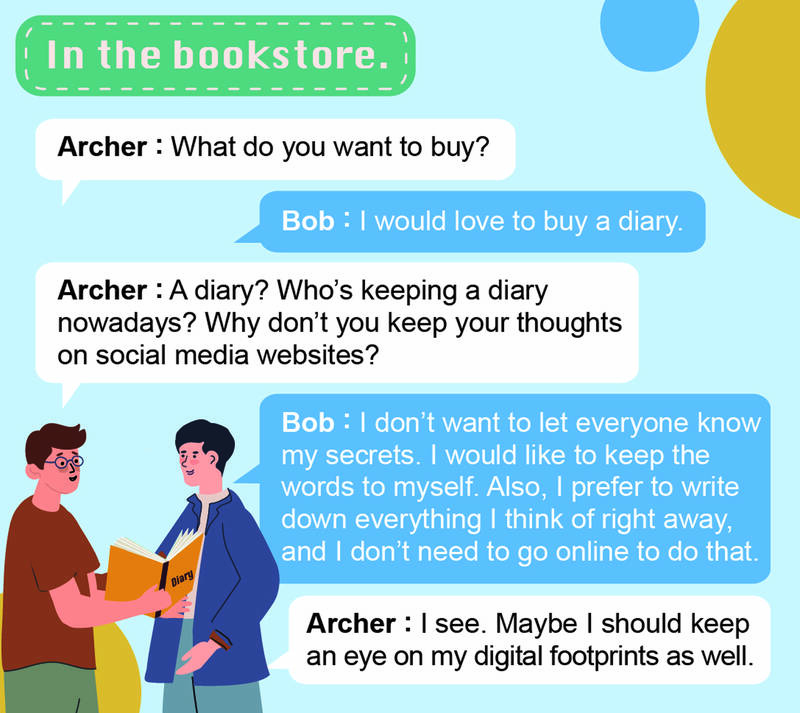
thoughts on social media websites?
Bob: I don’t want to let everyone know my secrets. I would like to keep the words to myself. Also, I prefer to write down everything I think of right away, and I don’t need to go online to do that.
Archer: I see. Maybe I should keep an eye on my digital footprints as well.
必備單字
1. diary n. 日記 (國中挑戰800字)
keep a diary 寫日記
2. secret n. 秘密 (國中挑戰800字)
實用字詞
1. would love/like to + VR 想要...
2. social media 社群媒體
3. keep … to oneself 保留...給自己
4. prefer to + VR 比較喜歡...
5. right away 立刻
6. go online 上網
7. keep an eye on… 留意...
8. digital footprints 數位足跡
9. as well = also 也...
閱讀技巧:
將長句分成短字詞,以利閱讀
I prefer to/ write down/ everything I think of/ right away,/ and I don’t need to/ go online/ to do that.
我比較喜歡/寫下/所有我想到的事情/立即地,/而且我不想要/上網/去做這件事。
動手做做看:將長句分成短字詞
I would love to go to the movies with my family this Saturday, so I will have to finish my homework before that.
解答
I would love to/ go to the movies with my family/ this Saturday,/ so I will have to/ finish my homework/ before that.
考題練習:
TOEIC Bridge測驗 X 國中會考題型
1. What does Archer mean by his “digital footprints?”
(A) His footwear.
(B) His words on social media Web sites.
(C) Written words in his diary.
2. According to the conversation, which is true?
(A) Archer wants to buy a diary.
(B) Bob doesn’t want others to see his thoughts.
(C) They both use Twitter.
(D) Archer is going to buy a diary as well.
解答:
1. (B)
2. (B)
文章由TOEIC Program Taiwan · Chun Shin提供:
www.facebook.com/ToeicProgramTaiwan
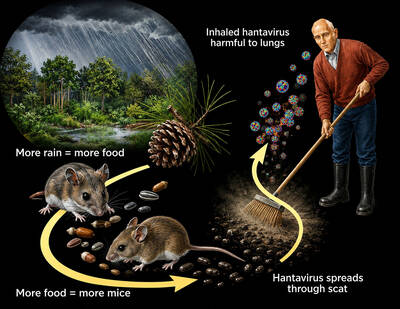
An outbreak aboard a cruise ship of a rare rodent-borne illness called hantavirus has left three passengers dead and sickened others, but global health officials say the risk to the general public remains low because the germ does not easily spread between people. “This is not the next COVID, but it is a serious infectious disease,” said Maria Van Kerkhove, director of epidemic and pandemic preparedness at the World Health Organization (WHO). “Most people will never be exposed to this.” The virus usually spreads when people inhale contaminated residue of rodent droppings. Hantaviruses have been around for centuries and are thought to

Have you ever wondered how people navigate the world when they can’t see a map? For individuals with visual impairments, conventional maps are nearly impossible to use. This is where tactile maps come in — essential tools that allow people to “see” the world through touch. A tactile map is specially designed with raised lines, textures, and symbols to represent geographical features such as roads, rivers, and buildings. Users explore it with their fingertips. However, these maps are not exclusively for people with visual disabilities. They serve as valuable multisensory learning tools that enhance spatial understanding for everyone, making
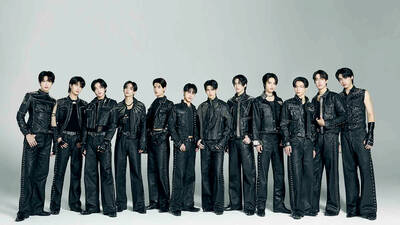
A: In early May, there were concerts by Icyball, Chyi Yu, Korea’s EXO and Japan’s Anisama, but I missed them all. What a shame. B: That’s OK. There are shows coming up by various artists, including Power Station, Accusefive, Japanese singer Mika Nakashima, Chinese-Icelandic jazzer Laufey, and even Singaporean diva Stefanie Sun. A: After a 12-year hiatus, Stefanie is finally returning to Taipei again. B: In late May, there will be more shows by Crowd Lu, WeiBird, Korea’s Donghae, 2AM, EXID, and Thailand’s BUS. A: The Thai boyband is so popular. It looks like “T-pop” is catching up with J-pop

對話 Dialogue 清清:這個週末就是母親節了,你們打算怎麼過? Qīngqing: Zhè ge zhōumò jiù shì mǔqīn jié le, nǐmen dǎsuàn zěnme guò? 華華:有啊,我們家通常會去餐廳吃飯,不過很難訂位。 Huáhua: Yǒu a, wǒmen jiā tōngcháng huì qù cāntīng chīfàn, búguò hěn nán dìngwèi. 清清:而且那天的餐廳都比較貴。 Qīngqing: Érqiě nà tiān de cāntīng dōu bǐjiào guì. 華華:所以也有人選擇在家吃,比較輕鬆。 Huáhua: Suǒyǐ yě yǒu rén xuǎnzé zài jiā chī, bǐjiào qīngsōng. 清清:聽起來不錯,在家也可以慢慢聊天。 Qīngqing: Tīng qǐlái búcuò, zài jiā yě kěyǐ màn man liáotiān. 華華:對啊,而且不用趕時間,氣氛也比較自在。 Huáhua: Duì a, érqiě bù yòng gǎn shíjiān, qìfēn yě bǐjiào zìzài. 清清:那你們會送禮物嗎? Qīngqing: Nà nǐmen huì sòng lǐwù ma? 華華:會,不過每次都不知道要送什麼。 Huáhua: Huì, búguò měi cì dōu bù zhīdào yào sòng shénme. 清清:我媽都說「不用買」,可是收到還是很開心。 Qīngqing: Wǒ mā dōu shuō “bú yòng mǎi”, kěshì shōudào háishì hěn kāixīn. 華華:真的,我覺得陪她一起吃飯、聊天最重要。 Huáhua: Zhēn de, wǒ juéde péi tā


 RSS
RSS