


Lantern Festival in Taiwan
During the Lunar New Year each year, various lantern festivals are held across Taiwan, including New Taipei’s Pingxi Sky Lantern Festival, Tainan’s Puji Lantern Festival and Kaohsiung’s Fo Guang Shan New Year Festival of Light and Peace. Some feature releasing sky lanterns, some lantern viewing and some even have splendid fireworks shows.
The Taiwan Lantern Festival has moved around the island and organized by different cities since 2001. Taipei is the host city of this year’s event, the first time in 23 years. Themed “Light up the Future” and designed to be lantern displays merged with the city, Taiwan Lantern Festival in Taipei is on from Feb. 2 to Feb. 19.
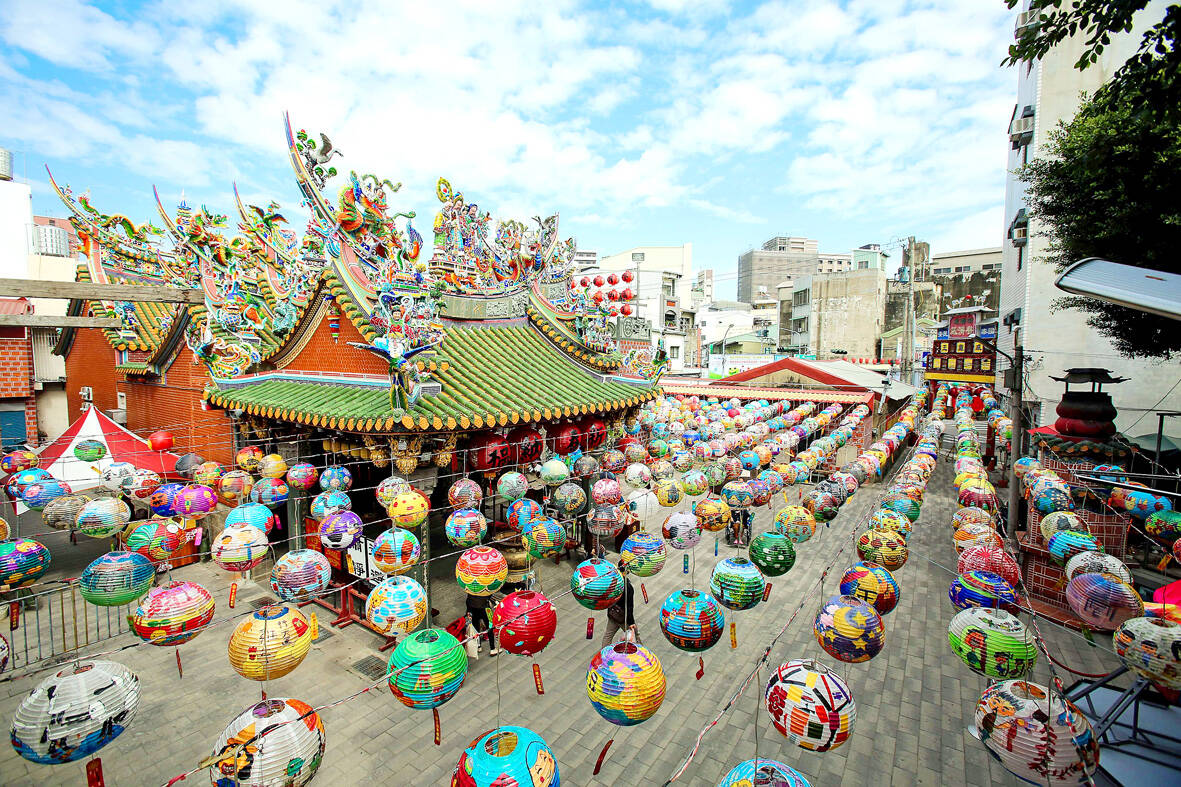
Photo courtesy of Tainan City Government Cultural Affairs Bureau 照片:台南市文化局提供
The Taipei Lantern Festival takes place in the area along Taipei MRT’s Zhongxiao Fuxing Station (BL15 /BR10) and Zhongxiao Dunhua Station (BL16), extending through Taipei 101 Station (R03). Consisting of one main lantern, six auxiliary lanterns and four exhibition areas, a total of more than 300 lantern works are displayed on high-rise buildings and in urban alleys, covering an area of 168 hectares, making it the largest venue for the Taiwan Lantern Festival over the years. As this year is the Year of the Rabbit, you will see many cute rabbit lights throughout the city.
Taiwan’s Lovers’ Day
This may come as a surprise to many, but the Lantern Festival is also a very romantic festival. Traditionally, girls and young women were not allowed to go out whenever they wanted to, and would need to be accompanied during festivals.
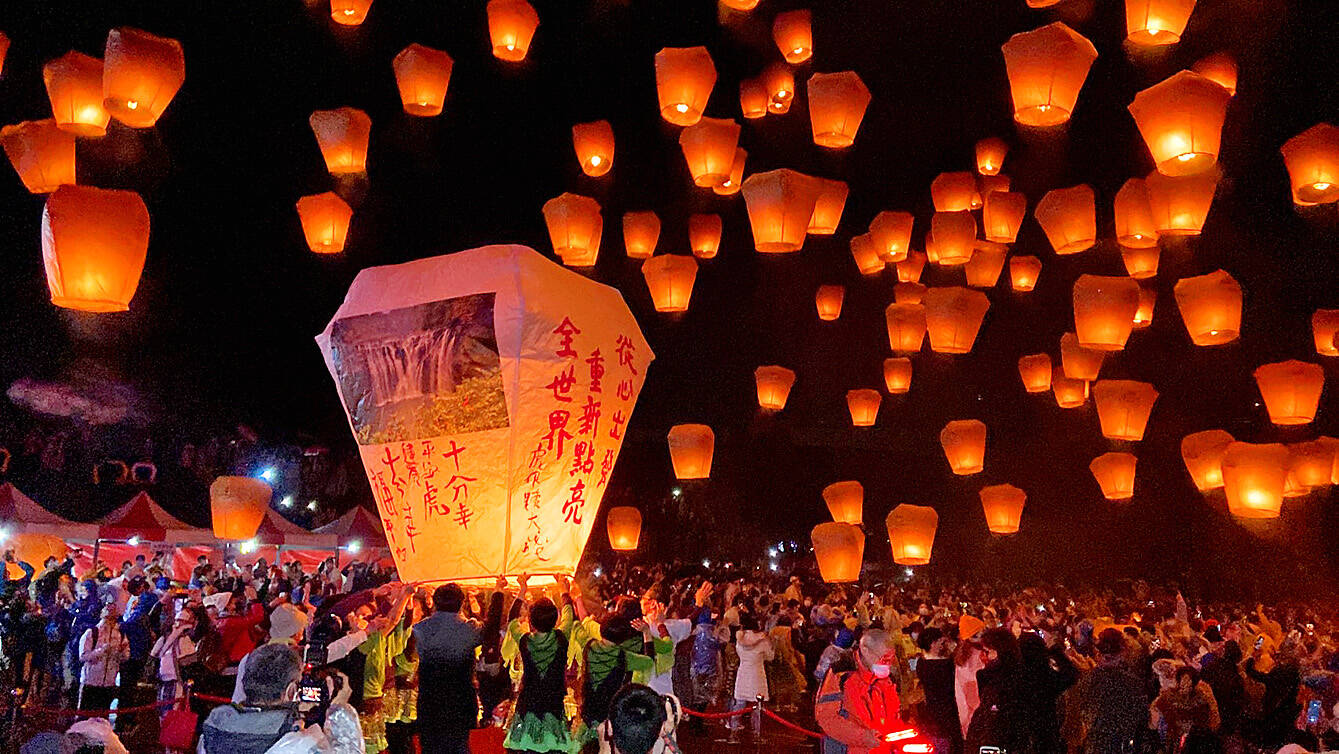
Photo: Lu Hsien-hsiu, Liberty Times 照片:自由時報記者盧賢秀
The Lantern Festival happens to be a good opportunity to go out to look around and to be seen — a perfect chance to meet people. This is why many romantic things happen during the Lantern Festival — such as events like casting the embroidery ball (a girl offers her message of affection to a man) and the Tale of the Lychee Mirror: the scholar Chen San from Quanzhou met Huang Wuniang from Chaozhou at the Lantern Festival by chance and fell in love at first sight but Wuniang was already engaged. After some twists and turns, the two finally got married. Therefore, one may say that the Lantern Festival is Taiwan’s “Lovers’ Day.”
According to records, private schools in ancient China would close for the Lunar New Year holiday until the 15th day of the first lunar month. The most important ritual on the first day of school was to “light up the light” — that is, students would bring a lantern prepared by their parents to the school, and ask the teacher to light it up, symbolizing a bright future. Over time, this became the custom of carrying lanterns during the Lantern Festival.
(Lin Lee-kai, Taipei Times)
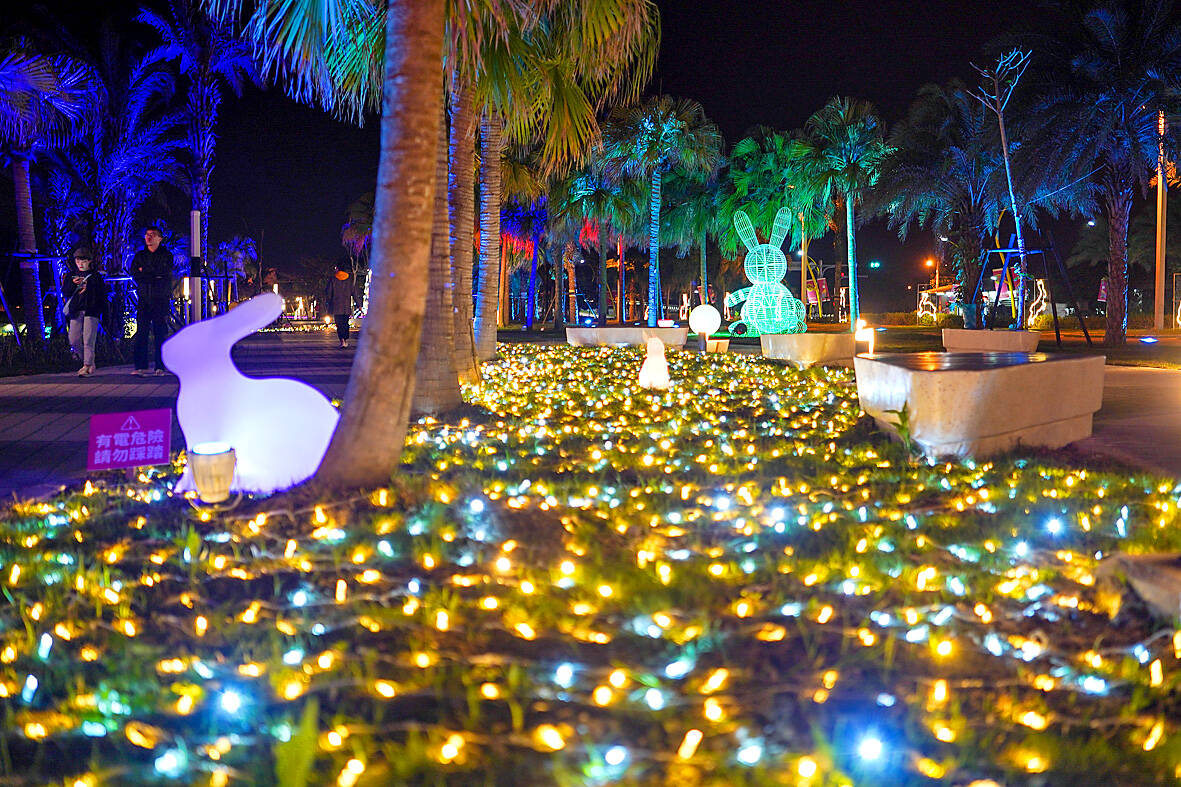
Photo courtesy of Hualien County Government 照片:花蓮縣政府提供
台灣燈會
每年過年期間,台灣各地都會舉辦各式燈會活動,例如新北平溪天燈節、台南普濟燈會、高雄佛光山平安燈會等;有些燈會可以放天燈、賞花燈,有些甚至還有燦爛的煙火秀。
台灣燈會從2001年起在各城市舉辦,睽違23年,今年回到台北。這次以「光源台北」為主題,打造一個「城市型燈會」,展出期間為2月5日至2月19日。
台北燈會一路從台北捷運的忠孝復興站、忠孝敦化站延伸至台北101站,有1座主燈、6座副燈、4大展區,總共展出300件以上的燈會作品,佈滿在高樓大廈、城市巷弄之間,面積多達168公頃,是歷年最大的燈會場域。由於今年是兔年,也有許多可愛的兔子燈飾穿梭在城市之中。
台灣的情人節
許多民眾可能不知道,元宵節也是一個很浪漫的節日,因傳統社會中,年輕女孩不能隨便外出,但過節時卻可以結伴出來遊玩,元宵節賞花燈活動又正好是一個很好的對看及認識的機會,因此許多浪漫的事便在元宵節發生,包括拋繡球的活動,以及陳三五娘的故事(來自泉州的陳三在燈會中邂逅潮州的黃五娘,一見鍾情,但五娘已有婚約,經過一番波折,二人終成眷屬)。因此,元宵節可說是台灣的情人節。
據古籍記載,中國古時的私塾春節年假後會一直放到農曆正月十五日才開學,而開學當天最重要工作就是「開燈」。所謂開燈就是由學生家長準備好一盞燈籠,由學生帶到私塾,請老師點燃起來,以象徵前途一片光明。後來就演變成元宵節提燈籠的習俗了。
(台北時報林俐凱整理)
A: Which TV drama series have been global hits so far this year? B: The US drama “Stranger Things 5,” South Korean drama “Can This Love Be Translated?” and Chinese megahit “Pursuit of Jade” are all popular lately. A: Isn’t “Pursuit of Jade” the costume idol drama about the romance between a charming marquis and a pig-slaughterer? Actor Zhang Linghe and actress Tian Xiwei are both so attractive. B: Plus, Netflix’s Korean-Japanese gay romance drama “Soul Mate” — starring Korea’s Ok Taec-yeon and Japan’s Hayato Isomura — is set to premiere in May. A: These hit international dramas
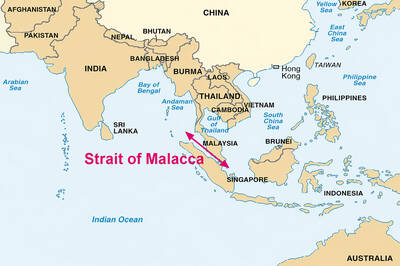
The closure of the Strait of Hormuz has forced policymakers in Asia to face questions over the security of other maritime chokepoints, including the Strait of Malacca, which is the world’s busiest waterway for international trade. WHAT IS THE MALACCA STRAIT? The 900km long Malacca Strait, bounded by Indonesia, Thailand, Malaysia and Singapore, provides the shortest sea route from East Asia to the Middle East and Europe. It carries nearly 22 percent of the world’s maritime trade, according to the Center for Strategic and International Studies (CSIS). This includes oil and gas shipments from the Middle East to the energy-hungry economies of China,
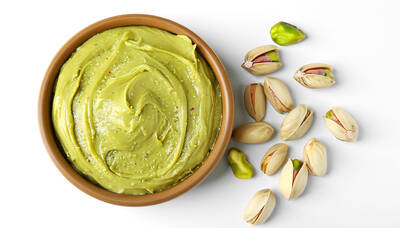
It seems like every year, new foods or drinks start trending and suddenly show up everywhere. A decade ago, avocado __1__ restaurant menus, while oat milk became the must-have addition to your coffee in cafes around five years back. The latest trend to hit this list is the pistachio. This flavorful green nut now features in everything from chocolate bars to Indian curries. While pistachios have long played a central role in certain regional cuisines, their recent global __2__ can be traced to Dubai. There, a specialty chocolate shop went __3__ on TikTok for one of its chocolate bars

One reason pistachios have taken the food world by storm compared to other nuts is their soft, green color. When ground down into a cream or butter, the green hue __6__ nicely with golden pastries or dark-brown chocolate, making it perfect for Instagram photos and TikTok videos. Their labor-intensive cultivation and __7__ also contribute to their image as a premium ingredient. Thus, buying a pistachio-based product often feels like a __8__ treat. Pistachios also stand out for their distinct flavor and health __9__. They have a subtle, sweet, earthy flavor that goes well with both sweet desserts and


 RSS
RSS