


Every Christmas, kids all over the US take pleasure in consuming the sweet, sticky, peppermint-flavored candy known as the candy cane. The candy cane is the US’ best-selling candy every December, making it an icon of the festive period. This kids’ favorite has been around for generations now, but just where do its origins lie?
The candy cane began life in the 1670s in a part of what is now Germany. Similar candies were popular across Europe at the time. They were just hard, straight sticks made of sugar. Supposedly, a German choirmaster gave these candies to his choirboys during services to stop them from misbehaving. However, the church protested that candy wasn’t appropriate, given that church was meant to be a solemn place. Rather than giving up, the choirmaster bent the candy sticks to make them resemble shepherds’ crooks, as Jesus is often compared to a shepherd who cares for his followers.
This way, they’d take on a religious meaning to satisfy the church. The hook also makes the candy convenient to hang on Christmas trees. This phenomenon was first documented in 1847, when a German-Swiss immigrant to the US decorated a tree with them.

photo courtesy of Wikimedia Commons / 照片:維基共享資源提供
Until the turn of the 20th century, candy canes were only available in white and without flavorings. However, after this point, more flavors started to become available. Peppermint candy canes with red stripes soon became the most popular choice. In the 1950s, a machine was developed in the US to mass-produce the candy. This allowed them to be distributed for consumption all over the world.
According to some, the candy cane’s appearance has religious interpretations. In addition to its shape, the red stripe represents the blood of Christ, while the white stripe is for his purity. The candy’s solid structure is the solid foundation of the Church. Whether or not you follow Christianity, candy canes are a nice treat at Christmas time.
每年聖誕節,美國各地的孩子都喜歡吃這種既甜又黏還帶有薄荷味,被稱為拐杖糖的糖果。拐杖糖是美國每年12月最熱銷的糖果,使其成為節日期間的象徵。這項孩子們的最愛已經存在了好幾世代,但它的起源究竟在哪裡呢?
拐杖糖於西元1670年代在現今德國的某個地區開始出現。當時,類似的糖果在歐洲很受歡迎。它們就是堅硬的直條棍狀糖。據說,一位德國唱詩班指揮在禮拜儀式期間,給他的唱詩班男孩這種糖,以防止他們行為失禮。然而,教會抗議糖果不合時宜,有鑑於教會應當是一個莊嚴的場所。但指揮沒有放棄,而是將糖果棍折彎,使它們看起來像牧羊人的曲柄手杖,因為耶穌經常被比喻為一名關心他追隨者的牧羊人。
如此一來,糖果即具備宗教意義能滿足教會。糖果的掛鉤處還使它便於被掛在聖誕樹上。這種現象在西元1847年首次被記載,當時一名德國瑞士籍的美國移民用它們裝飾了一棵聖誕樹。
直到西元20世紀初,拐杖糖只有白色且未添加調味劑。然而,在此之後,更多口味開始出現。帶有紅色條紋的薄荷口味拐杖糖很快成為最受歡迎的選擇。在西元1950年代,美國開發了一種機器來量產這種糖果。這使它們能夠批發到世界各地提供消費。
根據一些說法,拐杖糖的外觀蘊含宗教意義。除了它的形狀,紅色條紋代表耶穌的聖血,而白色條紋則代表他的純潔。糖果堅實的結構是基督教教會的厚實根基。無論你是否信奉基督教,拐杖糖都是聖誕節期間的一種不錯的享受。
MORE INFORMATION
peppermint n. 薄荷
festive adj. 節日的;喜慶的
choirmaster n. 唱詩班指揮
choirboy n. 唱詩班男童
crook n.(牧羊人或主教用的)曲柄手杖
flavoring n. 調味品;調味料
KEY VOCABULARY
1. supposedly avj. 據說;大概
If you take this medicine, you’ll supposedly feel better, though some doctors disagree that it’ll help.
如果你服用這種藥,你大概會感覺好一點,儘管有些醫生不認同那有幫助。
2. protest v. 抗議;反對
For the third day in a row, people have been protesting against the new law in front of the government building.
人們連續三天在政府大樓前抗議新法。
3. solemn adj. 莊嚴的;嚴肅的
Everyone in the room went quiet as the solemn ceremony began.
房裡的每個人在莊嚴的儀式開始時都安靜下來。
4. resemble vt. 像;與…相似
After the devastating earthquake, Robert’s hometown resembled a war zone.
在這場毀滅性的地震後,羅伯特的家鄉看起來就像一個戰區。
5. take on 具備;呈現
My house took on a totally new look after I redecorated it and painted the outside a different color.
我的房子在我重新整修並在外牆粉刷不同顏色後,呈現煥然一新的樣貌。
6. immigrant n.(外來)移民
Some companies hire immigrants because they do jobs that local workers don’t prefer.
有些公司僱用外來移民,因為他們會做當地勞工不喜歡的工作。
7. mass-produce vt.(使用機器)量產
These cameras aren’t worth as much as the older, hand-built models because they’re mass-produced.
這些相機的價值不及老式的手工製造型號,因為它們是批量生產的。
8. purity adj. 純潔;純粹
The color white is often seen as a symbol of purity in Western cultures.
在西方文化中,白色通常被視為純潔的象徵。
9. foundation n. 基礎;根基
Treating our employees well is the foundation of our business. We know that
without happy employees, we won’t make much money.
善待員工是我們事業的基礎。我們知道,沒有快樂的員工,我們就賺不到很多錢。
學習音檔: https://magazine.english4u.net/Magdata/menu/9bd26
《空中美語》雜誌APP免費下載: https://www.english4u.net/apps/index.aspx
免費收聽當月《空中美語》雜誌課文朗讀及解析 !
文章由AMC空中美語授權使用: https://www.english4u.net


In 2023, an 80-year-old woman in Taipei suffocated her paralyzed son after over five decades of caring for him. Turning herself in immediately, she confessed that worsening health and anxiety about who would care for him after her death had driven her to act. The court, acknowledging her difficult situation, sentenced her to two-and-a-half years in prison while recommending a presidential pardon. This rare judicial recommendation drew a complicated social response. Supporters argue that the mother’s half-century of caregiving renders her deserving of compassion instead of incarceration, believing that allowing her to live her final years in dignity and
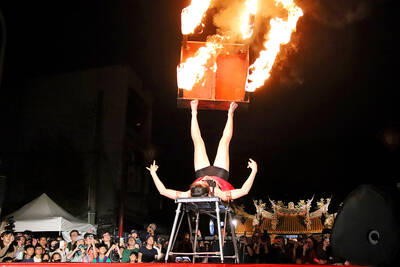
A: Over 130,000 college graduates are about to enter the workforce upon graduation. B: According to a survey, the top 10 most desired careers among Taiwanese are: independent content creator, civil servant, information engineer, financial professional, medical worker, content planner, flight attendant, news anchor, designer and fitness trainer. A: What are the “dream jobs” for young Gen Zers? B: The top three for men are YouTuber, pro gamer and engineer. For women, they are writer, social media editor and YouTuber. A: Every profession has its champion. Just look at Taiwanese fire dancer Yang Li-wei — who was on fire

★ Bilingual Story is a fictionalized account. 雙語故事部分內容純屬虛構。 The mango looked perfect. It sat on the fruit stand like a small sunset, red on one side and gold on the other. “I’ll take this one,” said Daniel. The fruit seller shook her head. “Not that one.” Daniel was surprised. “Why not? It looks beautiful.” “Yes,” she said, “but beautiful is not always ready.” She picked up another mango and held it near his nose. “First, smell here.” Daniel smelled the top of the mango. It was sweet and warm. “Good mangoes have a smell,” she said. “Next, feel the weight.”

A: While AI is reshaping the world, “Money Talks News” revealed seven career fields that are “AI-proof.” First is the healthcare field, like nursing jobs, personal care aides, and social work specialists. B: This type of job is indeed in high demand. So what’s next? A: Up next are skill-based positions, like electricians, mechanics, and construction workers. Then there’s the field of education, like teachers, tutors, and education specialists. Fourth is the mental health field, like jobs in counseling, therapy, and social work. B: I didn’t expect teaching to be safe from AI. What else is


 RSS
RSS