


If you’re someone interested in the world of modern technology, you’ve probably heard of and have a basic knowledge of NFTs. However, among the general public, the world of NFTs remains something of a mystery. Today, we attempt to explain in the most basic possible terms what NFTs are and why they’re so popular.
Let’s deal with the simplest question first: What does “NFT” stand for? The answer is “non-fungible token.” Basically, an NFT is a type of digital certificate that ensures ownership of a digital item. Any unique piece of digital art, whether a JPG, a GIF, a wav, an MP3, or any other file type, can be stored as an NFT using “blockchain” technology—the same type of technology used to store cryptocurrencies such as Bitcoin.
However, an NFT differs from a unit of a cryptocurrency in that its data are unique and cannot be altered. This uniqueness proves a person’s ownership of an NFT. In this sense, NFTs are much like physical artworks; they hold value and can be bought and sold. Moreover, while an NFT item can be reproduced infinitely, there’s only one original NFT of that digital item and a corresponding owner.

Photo courtesy of Shutterstock 照片:Shutterstock提供
The world’s first NFT, a video clip that was eventually sold by its creator for US$4, was created back in 2014. However, NFTs did not start growing significantly in popularity until 2020. Then, in 2021, NFT trading skyrocketed, with the total trade figure exceeding US$17 billion that year.
NFTs are no stranger to controversy. They have been criticized for the high carbon footprint that comes with the blockchain technology they use and also for their involvement in a number of art-related scams. Nevertheless, recent NFT trading activity suggests that they are here to stay as a powerful player in the global economy.
如果你是一個對現代科技世界有興趣的人,那你或許聽過NFT,也可能對它有基本的認識。然而,在普羅大眾之間,NFT的世界仍多少有些神祕。今天,我們就試著以最基本的話來解釋NFT是什麼,以及它們為何如此受歡迎。

Photo courtesy of Shutterstock 照片:Shutterstock提供
我們先來處理最簡單的問題:「NFT」代表的是什麼?答案是「non-fungible token(非同質化代幣)」。基本上,NFT是一種數位憑證,確保某個數位物品的所有權。任何特別的數位藝術──不論是JPG檔、GIF檔、WAV檔、MP3檔或任何其他類型的檔案,都能夠使用「區塊鏈」來將其儲存為NFT,而區塊鏈和用來儲存如比特幣等加密貨幣的技術是同類型的科技。
然而,NFT與加密貨幣不同的地方在於,其資料是獨有的,且無法被修改。這種獨有性證明了一個人對某個NFT的所有權。在這個層面上,NFT就更像是實體的藝術作品;它們有價值、可以被買賣。再者,雖然一個NFT物件可以被無限複製,但該數位物件的原始 NFT只有一份,且只有一位相應的擁有者。
世上首個NFT於2014年創造,是一支其創造者最終以四美元價格售出的影片。然而,NFT一直到2020年才大幅爆紅。接著於2021年,NFT交易量大增,當年交易總金額超過一百七十億美元。
NFT的爭議也沒少過。一直以來,它們都以所使用的區塊鏈科技所帶來的高碳足跡、以及它們涉及數起和藝術相關的詐騙而飽受批評。然而,近期NFT交易活動顯示出,它們會以身為全球經濟中的重要角色而持續著。
What Did You Learn?
1. Why is Bitcoin mentioned in the passage?
(A) It is an example of an NFT.
(B) It explains how NFTs are created.
(C) It is what is used to purchase NFTs.
(D) It shares the same technology with NFTs.
2. Which of the following statements is NOT true about NFTs?
(A) Ownership of NFTs is recorded on the Internet.
(B) NFTs only exist in the digital world and can’t be changed.
(C) Digital data that can be stored as NFTs are limited to works of art.
(D) Anyone can make a copy of an NFT image, but there is only one official owner.
3. Which of the following is closest in meaning to the word “skyrocketed” in the fourth paragraph?
(A) Was copied repeatedly.
(B) Increased very rapidly.
(C) Became well known.
(D) Traveled into outer space.
4. Which of the following statements regarding NFTs can be inferred from the last paragraph?
(A) They have a huge impact on the environment.
(B) They will likely fall out of favor soon.
(C) They bring more good than bad.
(D) They can be used to stop crime.
答案:1. (D) 2. (C) 3. (B) 4. (A)
Words in Use
1. controversial a. 爭議性的,有爭議的
The construction of nuclear power plants has been controversial for a long time.
建造核能發電廠長久以來都有爭議。
2. certificate n. 證明文件,證書
People will receive a yellow medical certificate after being vaccinated.
人們在接受疫苗施打後,會拿到一張黃色的醫療證明。
3. ownership n. 所有權
The family members are fighting each other for the ownership of the company.
這家人競相爭奪公司的所有權。
4. alter vt. 改變
Alan altered his vacation plans so his brother could travel with him.
艾倫改變了他的度假計畫,這樣他弟就可以和他一起旅行。
5. uniqueness n. 獨特性
You should learn to accept your own uniqueness.
你應該要學著接受自己獨特的地方。
Practical Phrases
1. something of a / an + N 多少有點,頗有幾分
After receiving the award, Mike found himself something of a celebrity.
在獲得該獎後,麥克發現自己多少有點像名人。
2. In this sense, S + V 就這種意義來說,
The man saved the family from the house on fire. In this sense, he deserves a medal.
那名男子從著火的房子中救出了那一家人。就此意義上來說,他值得獲頒一枚勳章。
3. be no stranger to N 對…不陌生/司空見慣
Mary is no stranger to hard times because she came from a life of poverty.
瑪麗出身清寒,所以對苦日子早已司空見慣。
4. be here to stay (某物)大幅流行/廣泛使用
Smartphones are here to stay because they improve people’s lives.
智慧型手機因改善了人們的生活而被廣泛使用。
聽文章朗讀及講解: https://ivy.pse.is/455bfu
本文出自常春藤解析英語雜誌: www.ivy.com.tw

A: Which TV drama series have been global hits so far this year? B: The US drama “Stranger Things 5,” South Korean drama “Can This Love Be Translated?” and Chinese megahit “Pursuit of Jade” are all popular lately. A: Isn’t “Pursuit of Jade” the costume idol drama about the romance between a charming marquis and a pig-slaughterer? Actor Zhang Linghe and actress Tian Xiwei are both so attractive. B: Plus, Netflix’s Korean-Japanese gay romance drama “Soul Mate” — starring Korea’s Ok Taec-yeon and Japan’s Hayato Isomura — is set to premiere in May. A: These hit international dramas
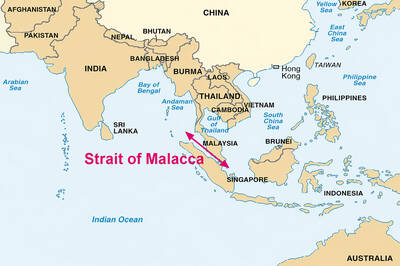
The closure of the Strait of Hormuz has forced policymakers in Asia to face questions over the security of other maritime chokepoints, including the Strait of Malacca, which is the world’s busiest waterway for international trade. WHAT IS THE MALACCA STRAIT? The 900km long Malacca Strait, bounded by Indonesia, Thailand, Malaysia and Singapore, provides the shortest sea route from East Asia to the Middle East and Europe. It carries nearly 22 percent of the world’s maritime trade, according to the Center for Strategic and International Studies (CSIS). This includes oil and gas shipments from the Middle East to the energy-hungry economies of China,
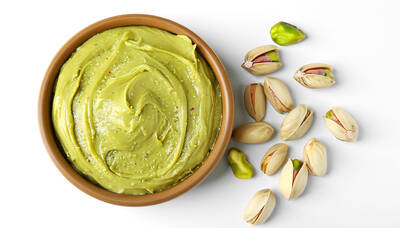
It seems like every year, new foods or drinks start trending and suddenly show up everywhere. A decade ago, avocado __1__ restaurant menus, while oat milk became the must-have addition to your coffee in cafes around five years back. The latest trend to hit this list is the pistachio. This flavorful green nut now features in everything from chocolate bars to Indian curries. While pistachios have long played a central role in certain regional cuisines, their recent global __2__ can be traced to Dubai. There, a specialty chocolate shop went __3__ on TikTok for one of its chocolate bars

One reason pistachios have taken the food world by storm compared to other nuts is their soft, green color. When ground down into a cream or butter, the green hue __6__ nicely with golden pastries or dark-brown chocolate, making it perfect for Instagram photos and TikTok videos. Their labor-intensive cultivation and __7__ also contribute to their image as a premium ingredient. Thus, buying a pistachio-based product often feels like a __8__ treat. Pistachios also stand out for their distinct flavor and health __9__. They have a subtle, sweet, earthy flavor that goes well with both sweet desserts and


 RSS
RSS