


The blow caused to the airline industry by the COVID-19 pandemic has been especially felt by budget airlines, which mostly operate narrow-bodied passenger jets and have therefore been unable to develop a sideline in air freight during the pandemic. According to one academic’s analysis, when the outbreak stabilizes, businesses are targeting a trend in so-called “revenge travel.” However, she also hopes that, rather than the pre-pandemic price wars between budget airlines, the consolidation that has taken place during the pandemic will restore healthy competition in the industry.
According to associate professor Melody Dai of National Cheng Kung University’s Department of Transportation and Communication Management Science, costs per flight have not changed during the pandemic, but if carriers are required to implement social-distancing seating plans, leaving empty seats between passengers, this would eat into airlines’ proft margins, causing a fresh headache for the industry. Dai says she hopes that budget airlines will manage to survive, since they help stimulate Taiwan’s domestic tourism sector as well as the wider economy.
Dai says that choosing to operate flights during the pandemic is a test of airlines’ ability to sustain losses, but the crisis may also prove to be a turnaround for the industry. Dai says there are many variables to the pandemic. She says that once the outbreak stabilizes, if the demand for “revenge travel” exceeds supply, this could resolve the pre-pandemic situation of supply exceeding demand, which led to price wars among budget airlines. The consolidation that the pandemic has triggered within the airline industry could bring about a return to healthy competition, says Dai.
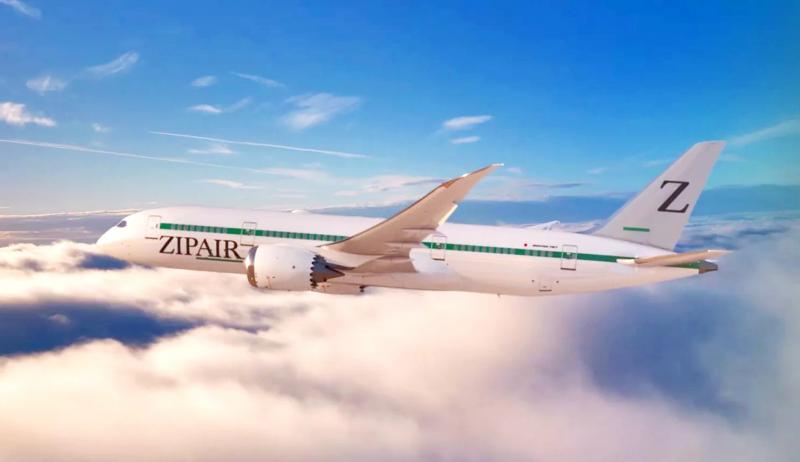
Photo: screen grab from the Zipair Web site 照片取自 ZIPAIR 官網
One industry insider stated that, despite the lockdowns and reduced number of travelers and flights during the pandemic, the industry is bullish about post-pandemic prospects for both freight and passenger travel in the flourishing Asian region. The insider added that a trend in “revenge travel” could cause shorthaul routes to become particulary busy.
(Liberty Times, translated by Edward Jones)
疫情衝擊航空界,其中廉航受限於機隊多為窄體客機,無法發展貨運,受疫情衝擊更大。學者分析,業者瞄準疫情穩定後的「報復性出遊」,但也希望疫情前廉航削價競爭的情況,能因疫情重整,回歸良性競爭。
成大交通管理學系副教授戴佐敏說,每航班成本不變、但座位未來若須採間隔座導致收入減少,確實是疫後的難題,希望廉航仍有生存空間,對促進觀光與經濟有正面幫助。
戴佐敏認為,選擇在疫情期間開航,考驗航空公司「虧本」的能力,不過危機也有可能是轉機,疫情仍有變數,疫情穩定後的「報復性出遊」若需求大於供給,疫情前廉航供過於求、削價競爭的情況,這次可能因疫情重整,回歸良性競爭。
業者指出,雖然國境仍然封鎖,疫情期間每週班次不多,旅客也非常少,但看好疫情後亞洲旺盛的物流、人流,預估疫情趨緩後將出現「報復性出遊」,亞洲短程航線將會更繁忙。
(自由時報記者陳心瑜)
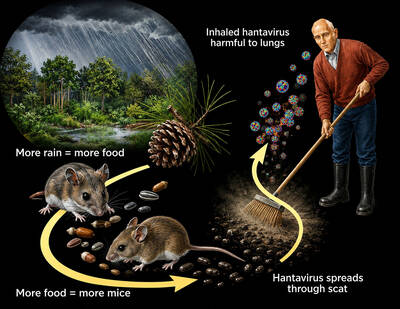
An outbreak aboard a cruise ship of a rare rodent-borne illness called hantavirus has left three passengers dead and sickened others, but global health officials say the risk to the general public remains low because the germ does not easily spread between people. “This is not the next COVID, but it is a serious infectious disease,” said Maria Van Kerkhove, director of epidemic and pandemic preparedness at the World Health Organization (WHO). “Most people will never be exposed to this.” The virus usually spreads when people inhale contaminated residue of rodent droppings. Hantaviruses have been around for centuries and are thought to

Have you ever wondered how people navigate the world when they can’t see a map? For individuals with visual impairments, conventional maps are nearly impossible to use. This is where tactile maps come in — essential tools that allow people to “see” the world through touch. A tactile map is specially designed with raised lines, textures, and symbols to represent geographical features such as roads, rivers, and buildings. Users explore it with their fingertips. However, these maps are not exclusively for people with visual disabilities. They serve as valuable multisensory learning tools that enhance spatial understanding for everyone, making

1. 他病了三天。 ˇ He has been sick for three days. χ He has been sick since three days. 註︰這裡現在完成時態 have / has been 表示從過去某一時日到現在的一段時間存在的行為或狀態,與它連用的時間副詞應為 「for +若干時」,如 for a year, for three hours 等,意思是歷時多少。 2. 他自從星期三以來都很忙。 ˇ He has been busy since Wednesday. χ He has been busy from Wednesday. 註︰「自從……以來」,該用 since。說從某一天(某一時刻)到某一天(某一時刻)才用 from,如 from Monday till Friday。 3. 房間角落裡散放著一些零星物件。 ˇ There were some odds and ends lying in the corner of the room. χ There were some odds and ends lying at the corner of the room. 註︰「在房間角落裡」該用介詞 in。例如: He stood in the corner. There is a lamp in the corner of the room. at the corner 指房子外部的拐角。例如: A little boy

A growing green movement allows hotel guests to fund tree planting projects simply by opting out of daily room cleans. This approach turns an ordinary hotel stay into a direct contribution to nature. Founded in the Netherlands, the nonprofit “Hotels for Trees” operates on the principle that one skipped cleaning equals one new tree. It has planted more than 750,000 trees since 2021. Similarly, Sarnia Hotels in Guernsey donates £2 per refused clean. Since 2024, over 3,300 services have been cancelled, raising sufficient money to plant 1,100 native trees and hedgerows. Simplicity has been central to this success.


 RSS
RSS