


Spring and summertime in Taiwan is gestation time for many different species of bats. Bats like to choose secluded areas with access to plenty of food in which to perch during gestation. Taipei Zoo is home to many Japanese house bats — a common sight in big cities — but signs of the much rarer Formosan woolly horseshoe bat can also be found in many places within the zoo. Researchers at the zoo were recently fortunate enough to observe first-hand an infant Formosan woolly horseshoe bat’s development as it went through the process of learning to look after itself independently.
According to the zoo, using an identification ring on its wing, researchers discovered that a particular Formosan woolly horseshoe returns to the same cave within a display area of the zoo every year during springtime to gestate. Mother bats hold their newborn pup in front of their chest and wrap both their wings around it to protect it. They will occasionally allow their pup to hold on by itself and have a go at spreading its wings. During the growth phase, an infant bat will stay close to its mother’s side to learn how to forage for food and pick up general life skills. This continues until the bat is able to look after itself independently; only then will the mother leave the cave.
The zoo said that on one occasion researchers observed that when the mother bat they were monitoring returned to the cave and tried to hug her two-month-old infant, the baby bat began to respond vigorously and emit social interaction sounds, showing that it was beginning to reject its mother and was preparing for independence. The researchers were surprised and delighted to be afforded the rare opportunity to record the interaction between a mother bat and her infant, and the discovery has provided important new observations about the Formosan woolly horseshoe bat.
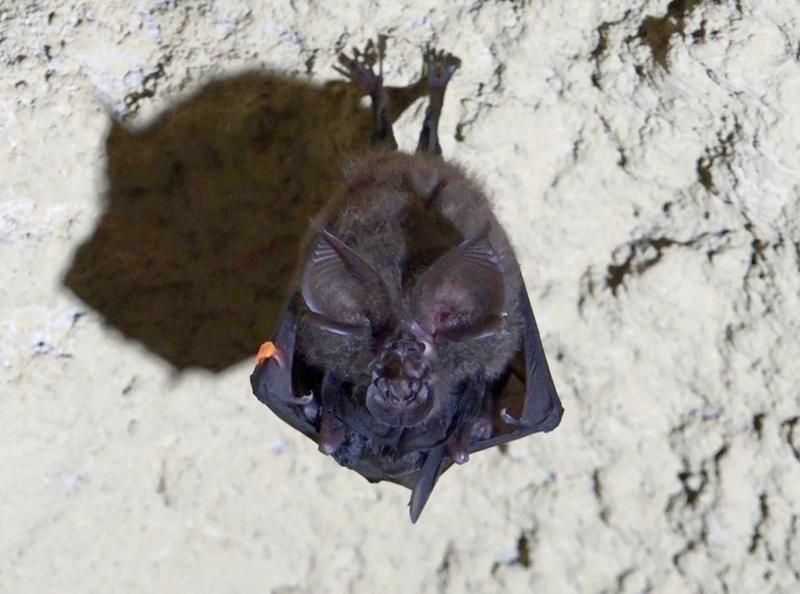
Photo courtesy of Taipei Zoo 照片:台北市立動物園提供
Taipei Zoo says that it is currently the mating season for bats, so if you look up at the nighttime skies above cities, you will likely catch a glimpse of bat silhouettes soaring through the sky. If a member of the public comes across a lone infant bat and is unsure what to do, the zoo recommends returning to the spot where one found it at dusk and placing it on a wall on top of a paper towel or a piece of cloth. After a few hours, its mother will return to pick it up and take it home.
(Liberty Times, translated by Edward Jones)
春夏之際是台灣許多種類蝙蝠的育幼期,會選擇食物充足、棲息環境隱密的地方進行育幼。在台北市立動物園有許多都市常見的東亞家蝠,連全台灣紀錄甚少的「台灣大蹄鼻蝠」,在園內多處都可以發現蹤跡,研究人員更幸運紀錄到「台灣大蹄鼻蝠」寶寶學習獨立的行為。
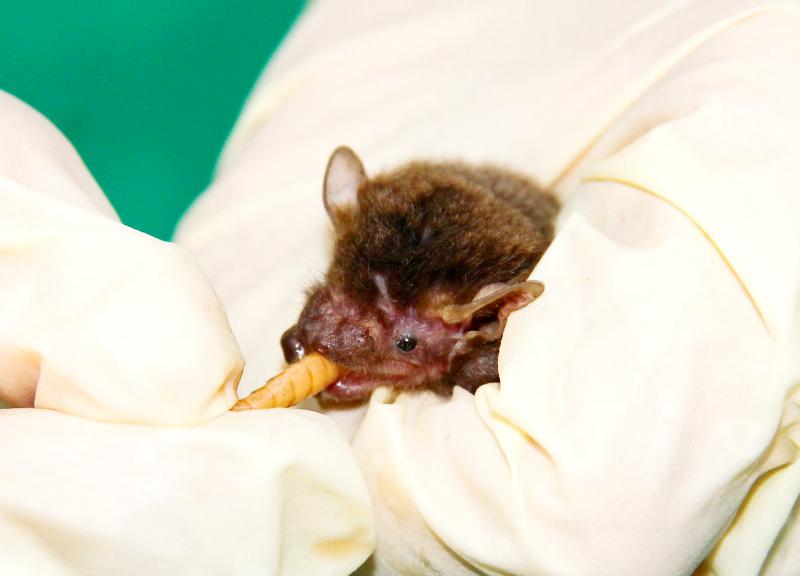
Photo courtesy of Taipei Zoo 照片:台北市立動物園提供
園方指出,研究人員根據翼環辨識,發現有一隻「台灣大蹄鼻蝠」固定在每年春天,會回來動物園展區內的洞穴裡育幼。蝙蝠媽媽育幼時會把蝙蝠寶寶抱在胸前、用雙翼護著牠,偶爾讓蝙蝠寶寶抓著自己嘗試展翼,蝙蝠寶寶成長過程中,會待在媽媽身邊學習覓食和生活技能,直到蝙蝠寶寶獨立後,蝙蝠媽媽才會離開洞穴。
園方透露,有次研究人員觀察到「台灣大蹄鼻蝠」媽媽回洞穴要抱兩個月齡的寶寶時,寶寶反應激烈發出社交叫聲,顯示蝙蝠寶寶出現排斥蝙蝠媽媽的行為,準備開始獨立,意外紀錄到如此難得親子互動行為,讓研究人員興奮不已,幫「台灣大蹄鼻蝠」育幼行為添上一筆重要紀錄。
目前正值蝙蝠的繁殖季,園方表示,都市天空每晚都有蝙蝠們的身影,偶爾民眾撿到蝙蝠寶寶會不知如何處理,其實只要在傍晚時分將蝙蝠寶寶帶回原地野放,先在牆壁貼紙巾或布,再將蝙蝠寶寶放在上面,幾個小時後,蝙蝠媽媽就會將牠帶回去。
(自由時報記者蔡亞樺)

The US-Israeli war with Iran, which began on Feb. 28, has killed thousands of people, destabilized the Middle East and rocked global energy markets by effectively closing the strait. WHAT IS THE STRAIT OF HORMUZ? Lying between Oman and Iran and linking the Gulf north of it with the Gulf of Oman to the south and the Arabian Sea beyond, the strait is 33km wide at its narrowest point, with a shipping lane just 3km wide in either direction. Perhaps the world’s most important energy shipping channel, the waterway is about 167km long. Following through on an old threat, Tehran effectively closed the strait

A: Which TV drama series have been global hits so far this year? B: The US drama “Stranger Things 5,” South Korean drama “Can This Love Be Translated?” and Chinese megahit “Pursuit of Jade” are all popular lately. A: Isn’t “Pursuit of Jade” the costume idol drama about the romance between a charming marquis and a pig-slaughterer? Actor Zhang Linghe and actress Tian Xiwei are both so attractive. B: Plus, Netflix’s Korean-Japanese gay romance drama “Soul Mate” — starring Korea’s Ok Taec-yeon and Japan’s Hayato Isomura — is set to premiere in May. A: These hit international dramas

Have you ever found yourself desperately feeding coins into a claw machine just because you’ve already spent so much trying to win that stuffed animal? Or maybe you’ve continued watching a boring movie simply because you already paid for the ticket? If so, you’ve experienced the “sunk cost fallacy.” A sunk cost refers to time, money or effort that has already been spent and cannot be recovered. This psychological trap is surprisingly common. You might keep playing a video game you no longer enjoy because you’ve invested countless hours in building your character, or maintain a toxic friendship because you’ve known
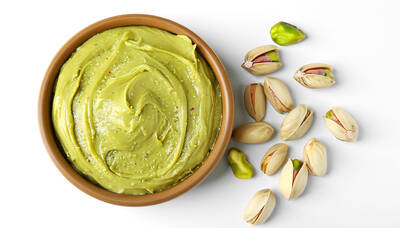
It seems like every year, new foods or drinks start trending and suddenly show up everywhere. A decade ago, avocado __1__ restaurant menus, while oat milk became the must-have addition to your coffee in cafes around five years back. The latest trend to hit this list is the pistachio. This flavorful green nut now features in everything from chocolate bars to Indian curries. While pistachios have long played a central role in certain regional cuisines, their recent global __2__ can be traced to Dubai. There, a specialty chocolate shop went __3__ on TikTok for one of its chocolate bars


 RSS
RSS