


Facebook Inc has blocked Australian users from sharing and viewing news content on its popular social media platform, escalating a dispute with the government over paying media publishers for content.
While Big Tech and media outlets have battled over the right to news content in other jurisdictions, Australia’s looming law represents the most expansive reform and is being closely watched around the world.
The so-called Media Bargaining Code has been designed by the government and competition regulator to address a power imbalance between the social media giants and publishers when negotiating payment for news content used on the tech firms’ sites. The proposed legislation has reached a crunch point, with widespread support in parliament, where it is expected to be voted into law within days.

Photo: EPA-EFE 照片:歐新社
In recent years, traditional media companies operating in Australia have suffered huge hits to income streams, due to dwindling subscriptions and advertising. For every A$100 spent on online advertising in Australia, excluding classifieds, nearly one-third goes to Google and Facebook, the competition regulator has said.
Facebook said that the law “fundamentally misunderstands” the relationship between itself and publishers and it faced a stark choice of attempting to comply with it or ban news content. It said its platform generates billions of free referrals to Australian publishers worth significant sums to the media companies.
Alphabet Inc-owned Google, however, has backed down from a threat to withdraw its main search engine from Australia if the laws go ahead, and has instead struck deals with some of the country’s major commercial publishers. They include a global deal with News Corp for an unnamed sum in one of the most extensive deals of its kind with Big Tech.
(Reuters)
備受歡迎的社群媒體臉書,將其澳洲平台上的新聞內容封鎖,不讓澳洲用戶查看及分享新聞內容。政府要求社群平台刊登新聞內容須付費給新聞發行業者,臉書此舉加劇了與政府間之爭端。
科技巨頭和媒體業者已在其他司法管轄區互相爭奪使用新聞內容的權利,但澳洲這項山雨欲來的法律代表著層面最廣的改革,全世界都在密切關注。
澳洲政府及競爭監管機構規畫了所謂的「媒體議價法令」,以解決社群媒體巨頭與新聞發行業者談判時權力不平衡的問題,促使科技公司為其網站所使用之新聞內容付費。該立法提案已到了關鍵時刻,得到國會的廣泛支持,預計將在未來幾天內表決通過成為法律。
近年來,由於訂戶及廣告量的萎縮,澳洲的傳統媒體公司收入大減。競爭監管機構表示,在澳洲,每一百澳幣的網路廣告費中(不包括分類廣告),有近三分之一是落入谷歌及臉書的口袋。
臉書表示,該法律「從根本上誤解了」它與新聞發行業者間之關係,讓臉書面臨困難的選擇——不知該力圖遵循該法律,抑或封鎖新聞內容。臉書表示,其平台為澳洲新聞發行業者免費帶來數十億個推薦連結,這對媒體公司而言是一筆很大的收益。
然而,Alphabet旗下的谷歌已不再威脅說,若該法案通過,便要撤出它在澳洲的主要搜尋引擎,而是與澳洲一些主要商業出版商談好了條件。其中包括與跨國新聞集團News Corp達成的一項全球性的交易,金額不詳,這是此類與科技巨頭所達成規模最大的交易之一。
(台北時報林俐凱編譯)
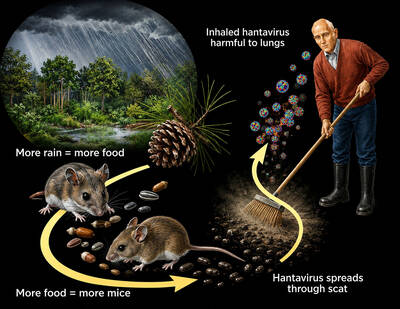
An outbreak aboard a cruise ship of a rare rodent-borne illness called hantavirus has left three passengers dead and sickened others, but global health officials say the risk to the general public remains low because the germ does not easily spread between people. “This is not the next COVID, but it is a serious infectious disease,” said Maria Van Kerkhove, director of epidemic and pandemic preparedness at the World Health Organization (WHO). “Most people will never be exposed to this.” The virus usually spreads when people inhale contaminated residue of rodent droppings. Hantaviruses have been around for centuries and are thought to

Have you ever wondered how people navigate the world when they can’t see a map? For individuals with visual impairments, conventional maps are nearly impossible to use. This is where tactile maps come in — essential tools that allow people to “see” the world through touch. A tactile map is specially designed with raised lines, textures, and symbols to represent geographical features such as roads, rivers, and buildings. Users explore it with their fingertips. However, these maps are not exclusively for people with visual disabilities. They serve as valuable multisensory learning tools that enhance spatial understanding for everyone, making

1. 他病了三天。 ˇ He has been sick for three days. χ He has been sick since three days. 註︰這裡現在完成時態 have / has been 表示從過去某一時日到現在的一段時間存在的行為或狀態,與它連用的時間副詞應為 「for +若干時」,如 for a year, for three hours 等,意思是歷時多少。 2. 他自從星期三以來都很忙。 ˇ He has been busy since Wednesday. χ He has been busy from Wednesday. 註︰「自從……以來」,該用 since。說從某一天(某一時刻)到某一天(某一時刻)才用 from,如 from Monday till Friday。 3. 房間角落裡散放著一些零星物件。 ˇ There were some odds and ends lying in the corner of the room. χ There were some odds and ends lying at the corner of the room. 註︰「在房間角落裡」該用介詞 in。例如: He stood in the corner. There is a lamp in the corner of the room. at the corner 指房子外部的拐角。例如: A little boy

A growing green movement allows hotel guests to fund tree planting projects simply by opting out of daily room cleans. This approach turns an ordinary hotel stay into a direct contribution to nature. Founded in the Netherlands, the nonprofit “Hotels for Trees” operates on the principle that one skipped cleaning equals one new tree. It has planted more than 750,000 trees since 2021. Similarly, Sarnia Hotels in Guernsey donates £2 per refused clean. Since 2024, over 3,300 services have been cancelled, raising sufficient money to plant 1,100 native trees and hedgerows. Simplicity has been central to this success.


 RSS
RSS