


A: Excuse me, I’ve lost my EasyCard. I think I left it on the train. Now I can’t swipe out of the station.
C: Would you like to pay the excess fare?
A: I also have an iPass card, can I use this to pay the exit fare?
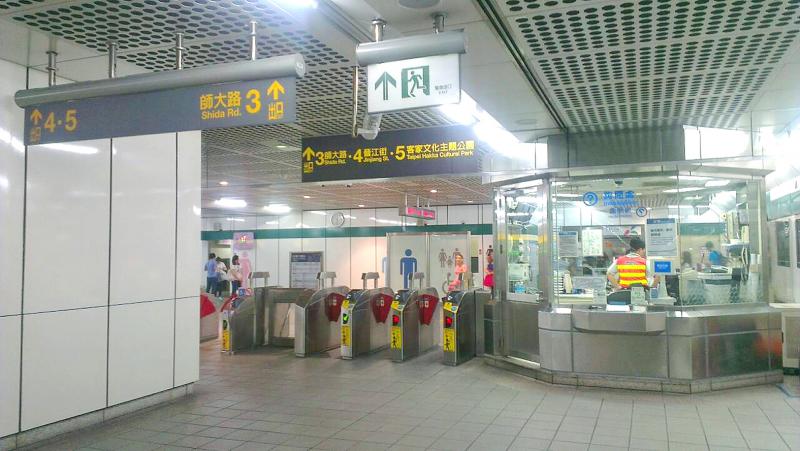
Photo: Chen En-huei, Liberty Times 照片:自由時報記者陳恩惠
C: You can, but you won’t be able to get a refund on the initial fare.
A: That’s fine. We’re a bit pushed for time. I’ll worry about that after I get out of the station.
C: OK, it’s done. You still have NT$72 left on your iPass card.
A: Thank you! Oh, one more thing… If I did leave the card on the train, how can I go about getting it back? It’s a credit card linked to my EasyCard, and will top-up automatically, so I’m in trouble if someone else uses it.
C: I’ll give you this form. It has the customer service number of the Metro Lost and Found on it. Give them a call in a while and ask them if anyone has handed it in.
A: 不好意思,我的悠遊卡不見了,可能掉在車上,所以沒辦法刷卡出站。
C: 那你要補票嗎?
A: 我這邊另外有一張一卡通,可以用這張再刷一次扣款嗎?
C: 可以,可是重複扣的車資沒辦法退還喔!
A: 沒關係,我們趕時間,先趕快出站再說。
C: 處理好了,這張一卡通餘額還有七十二元。
A: 謝謝!那再請問,我那張卡片如果是掉在車上,要怎麼找回來?那是悠遊卡聯名的信用卡,可以自動加值,所以如果被別人拿去用就慘了!
C: 這張單子給你,上面有捷運遺失物中心的服務電話,你待會可以打電話問有沒有人撿到送去。
(Translated by Paul Cooper, Taipei Times/台北時報林俐凱)
English 英文:
Chinese 中文:

A: Which TV drama series have been global hits so far this year? B: The US drama “Stranger Things 5,” South Korean drama “Can This Love Be Translated?” and Chinese megahit “Pursuit of Jade” are all popular lately. A: Isn’t “Pursuit of Jade” the costume idol drama about the romance between a charming marquis and a pig-slaughterer? Actor Zhang Linghe and actress Tian Xiwei are both so attractive. B: Plus, Netflix’s Korean-Japanese gay romance drama “Soul Mate” — starring Korea’s Ok Taec-yeon and Japan’s Hayato Isomura — is set to premiere in May. A: These hit international dramas
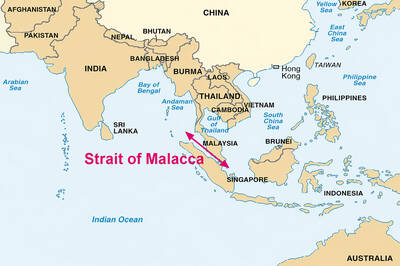
The closure of the Strait of Hormuz has forced policymakers in Asia to face questions over the security of other maritime chokepoints, including the Strait of Malacca, which is the world’s busiest waterway for international trade. WHAT IS THE MALACCA STRAIT? The 900km long Malacca Strait, bounded by Indonesia, Thailand, Malaysia and Singapore, provides the shortest sea route from East Asia to the Middle East and Europe. It carries nearly 22 percent of the world’s maritime trade, according to the Center for Strategic and International Studies (CSIS). This includes oil and gas shipments from the Middle East to the energy-hungry economies of China,
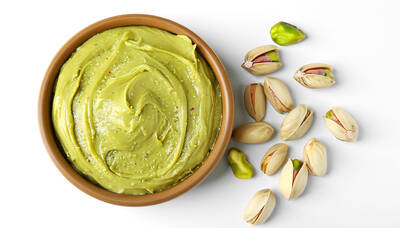
It seems like every year, new foods or drinks start trending and suddenly show up everywhere. A decade ago, avocado __1__ restaurant menus, while oat milk became the must-have addition to your coffee in cafes around five years back. The latest trend to hit this list is the pistachio. This flavorful green nut now features in everything from chocolate bars to Indian curries. While pistachios have long played a central role in certain regional cuisines, their recent global __2__ can be traced to Dubai. There, a specialty chocolate shop went __3__ on TikTok for one of its chocolate bars

One reason pistachios have taken the food world by storm compared to other nuts is their soft, green color. When ground down into a cream or butter, the green hue __6__ nicely with golden pastries or dark-brown chocolate, making it perfect for Instagram photos and TikTok videos. Their labor-intensive cultivation and __7__ also contribute to their image as a premium ingredient. Thus, buying a pistachio-based product often feels like a __8__ treat. Pistachios also stand out for their distinct flavor and health __9__. They have a subtle, sweet, earthy flavor that goes well with both sweet desserts and


 RSS
RSS