


The Baer’s pochard is a species of duck that is listed as critically endangered by the International Union for Conservation of Nature and Natural Resources. It is rarely seen in Taiwan, but a few days ago one was reported to have been sighted in Hsinchu County. Lin Wen-chung, a veteran birdwatcher who lives in Tainan, made a special trip to Hsinchu to take some photos of the rarely seen Baer’s pochard.
Baer’s pochards are mainly distributed in the Asian region. Their main breeding grounds are in China, where it is estimated that there are fewer than 1,000 of them in the world. However, Lin said that British birdwatcher Steve maintains that because Baer’s pochards’ breeding grounds overlap with those of the ferruginous duck, they sometimes interbreed, with the result that there are only about 100 pure Baer’s pochards left in the whole world, and the species’ prospects give cause for concern.
Lin said he made a trip to Yilan County on Jan. 16 to see some bar-headed geese and Ryukyu minivets, and the next day he traveled on to a wetland in Hsinchu, where he managed to see the Baer’s pochard. On this occasion the duck was only 20m to 30m away, compared to previous sightings, which were at a distance of 200m to 300m.

Photo courtesy of Lin Wen-chung 照片:林文崇提供
Lin said that when Baer’s pochards are not wearing their breeding plumage, they are very hard to distinguish from ferruginous ducks, due to their very similarly colored feathers, so many people confuse them. On this occasion, however, the close range made it possible to confirm that this was indeed a Baer’s pochard. During five hours of observation, Lin only saw the duck dive one or two times. It spent most of the time hidden away and sleeping among tall grass and weeds. It did its foraging around patches of water lettuce, rather than diving for food like the commonly seen tufted duck.
Lin said that Baer’s pochards are about 45cm long. They belong to the Anatidae family and are a rare winter migratory bird in Taiwan. Baer’s pochards look like ordinary ducks, so it is not easy to raise funds for them like other, more spectacular endangered bird species, which makes conservation work harder to promote.
(Translated by Julian Clegg, Taipei Times)
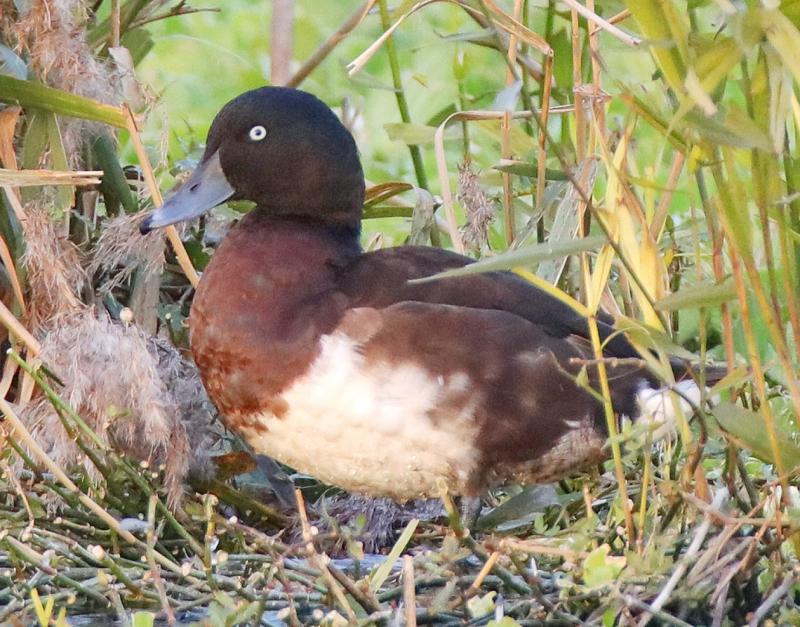
Photo courtesy of Lin Wen-chung 照片:林文崇提供
被國際自然保育聯盟列為「極度瀕危」的青頭潛鴨,在台灣難得一見,日前傳出現蹤新竹縣。台南資深鳥友林文崇特別遠征新竹並拍到難得一見的青頭潛鴨。
青頭潛鴨主要分佈在亞洲地區,中國為其主要繁殖地,當地估計全球數量不到一千隻。不過,林文崇說,英國鳥人史帝夫認為青頭潛鴨因為繁殖地和白眼潛鴨重疊,會雜交,以致純種的青頭潛鴨全世界僅剩一百隻左右,而且前途堪慮。
林文崇說,他於一月十六日專程到宜蘭縣看斑頭雁、琉球山椒鳥。次日再特地到新竹一處水域,順利看到青頭潛鴨,而且距離只有二十到三十公尺,與過去在台灣出現時動輒兩百到三百公尺之遠,可說天壤之別。
林文崇說,青頭潛鴨非繁殖羽期間,與白眼潛鴨因羽色非常相似而難以辨識,很多人也常搞混。由於這次距離近,因此可以清楚確認是青頭潛鴨無誤。在他五個小時的觀察中,只看到牠一兩次潛水。平時牠都躲在草叢中睡覺,覓食時是在水芙蓉周邊,不像常見的鳳頭潛鴨潛水覓食。
林文崇說,青頭潛鴨體長約四十五公分,屬於雁鴨科,在台灣是稀有的冬候鳥。青頭潛鴨看起來就像一般的鴨子一樣,因此不像其他瀕危的明星鳥種容易募到款,所以在保育工作的推動上更加困難。
(自由時報)

A: Which TV drama series have been global hits so far this year? B: The US drama “Stranger Things 5,” South Korean drama “Can This Love Be Translated?” and Chinese megahit “Pursuit of Jade” are all popular lately. A: Isn’t “Pursuit of Jade” the costume idol drama about the romance between a charming marquis and a pig-slaughterer? Actor Zhang Linghe and actress Tian Xiwei are both so attractive. B: Plus, Netflix’s Korean-Japanese gay romance drama “Soul Mate” — starring Korea’s Ok Taec-yeon and Japan’s Hayato Isomura — is set to premiere in May. A: These hit international dramas
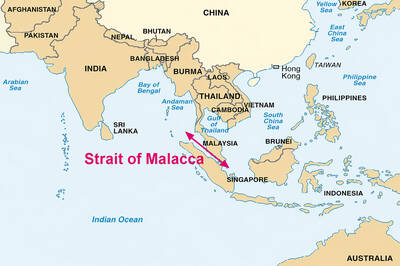
The closure of the Strait of Hormuz has forced policymakers in Asia to face questions over the security of other maritime chokepoints, including the Strait of Malacca, which is the world’s busiest waterway for international trade. WHAT IS THE MALACCA STRAIT? The 900km long Malacca Strait, bounded by Indonesia, Thailand, Malaysia and Singapore, provides the shortest sea route from East Asia to the Middle East and Europe. It carries nearly 22 percent of the world’s maritime trade, according to the Center for Strategic and International Studies (CSIS). This includes oil and gas shipments from the Middle East to the energy-hungry economies of China,
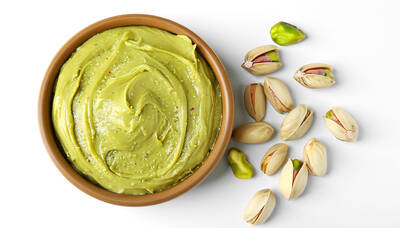
It seems like every year, new foods or drinks start trending and suddenly show up everywhere. A decade ago, avocado __1__ restaurant menus, while oat milk became the must-have addition to your coffee in cafes around five years back. The latest trend to hit this list is the pistachio. This flavorful green nut now features in everything from chocolate bars to Indian curries. While pistachios have long played a central role in certain regional cuisines, their recent global __2__ can be traced to Dubai. There, a specialty chocolate shop went __3__ on TikTok for one of its chocolate bars

One reason pistachios have taken the food world by storm compared to other nuts is their soft, green color. When ground down into a cream or butter, the green hue __6__ nicely with golden pastries or dark-brown chocolate, making it perfect for Instagram photos and TikTok videos. Their labor-intensive cultivation and __7__ also contribute to their image as a premium ingredient. Thus, buying a pistachio-based product often feels like a __8__ treat. Pistachios also stand out for their distinct flavor and health __9__. They have a subtle, sweet, earthy flavor that goes well with both sweet desserts and


 RSS
RSS