


The artist Christo, known for wrapping buildings including Berlin’s Reichstag, and also swathing areas of coast and entire islands in fabric, has died aged 84, on May 31.
Born Christo Vladimirov Javacheff in Communist Bulgaria, Christo studied in Sofia and then defected to the West in 1957, stowing away on a train from Prague to Vienna. Two years later he met Frenchwoman Jeanne-Claude Denat de Guillebon, born on the same day as him, who would become his artistic partner and wife until her death in 2009.
The couple embarked on their career of large-scale public artworks in 1961, when they covered barrels at the Port of Cologne. Barrels would feature heavily in their artworks, owing to their low cost and sculptural appearance, along with an implied political connotation always downplayed by the artists. “I make things that have no function — except maybe to make pleasure,” Christo told the Guardian in 2018.
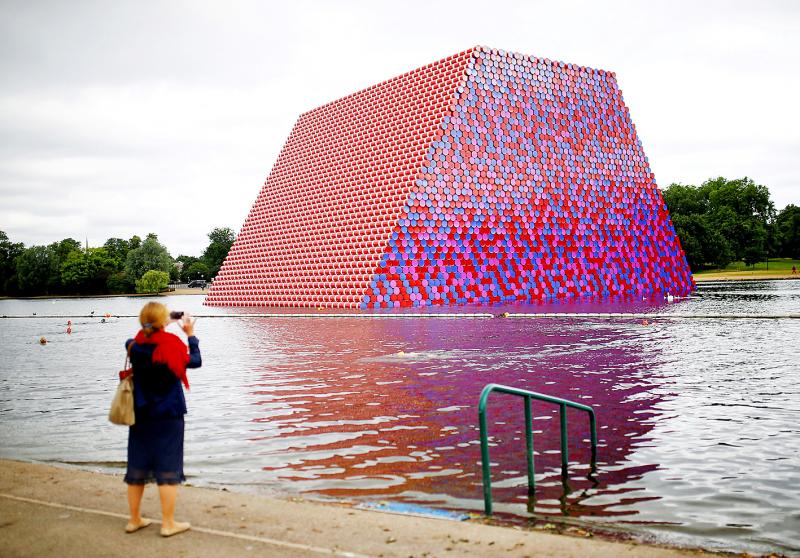
Photo: Reuters
照片:路透
The following year, they barricaded a street in Paris with oil barrels. Called Rideau de Fer (Iron Curtain), it put them on the map in the art world, and they went on to be represented by the famous Castelli gallery in New York. The couple went on to create large-scale works that often involved swathing vast natural monuments in fabric, aligning them to the American land artists of the early 70s, who created vast artworks in the desert.
In 1969, Christo and Jeanne-Claude (as Christo billed their works after his wife’s death) embarked on Wrapped Coast, which involved shrouding the coast and cliffs of Little Bay in Sydney, Australia, in grey fabric, to create what was the largest single artwork of the time.
In 1972 they made Valley Curtain, erecting an 14,000m orange curtain across Rifle Gap, a canyon in Colorado, though a storm destroyed it only a day after it was hung. All Christo and Jean-Claude’s artworks were designed to be temporary. “Artists — and above all architects — seek permanence,” he said. “I don’t. I like leaving nothing. That takes courage.”
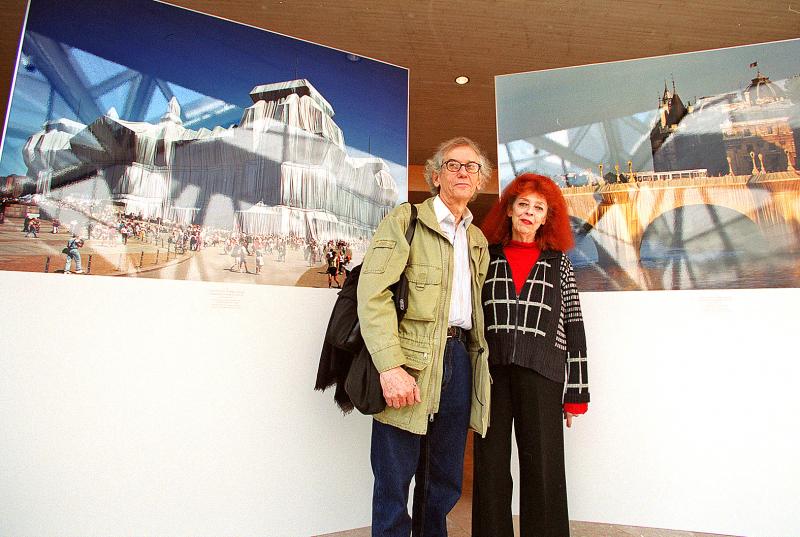
Photo: AFP
照片:法新社
His work was funded mainly by selling preparatory drawings — he always refused any sponsorship. “We have always been good at negotiating. And we needed to be, otherwise these projects would never have been realized. But we have always been very good at getting banks to supply lines of credit.”
By the 80s, Christo and Jean-Claude’s ambitions and reputation had grown to the extent that they were able to pull off projects including surrounding 11 islands in Miami’s Biscayne Bay with bright-pink floating polypropylene fabric, and wrapping Pont Neuf, the oldest bridge in Paris, after the then-mayor Jacques Chirac gave his permission. Yet the artists’ most spectacular achievement arguably came in 1995, when they pulled off Wrapped Reichstag, covering the German parliament building in Berlin in aluminium fabric, less than six years after the fall of the Berlin wall.
“It was one of the most beautiful things I have ever seen,” Christo told the Guardian. “A hundred rock climbers abseiling down the facade of the Reichstag, slowly unfurling this huge silvery curtain. There were no cranes or machinery, just people descending in a kind of aerial ballet. It was 1995 and huge crowds came to watch. Then, when it was finished, they came up to stroke the fabric.”
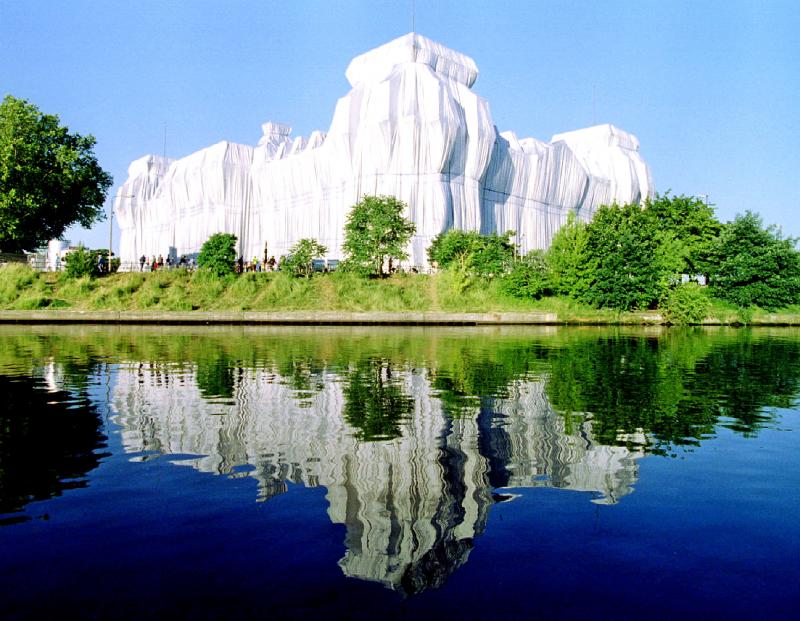
Photo: Reuters
照片:路透
Further projects included the Gates, which saw structures with billowing saffron vinyl erected throughout New York’s Central Park, and The Floating Piers at Italy’s Lake Iseo. In the summer of 2018, Christo floated a stack of 7,506 barrels on the Serpentine in London’s Hyde Park. The work, called Mastaba, delighted and baffled viewers. “It will belong to everyone until it’s gone,” the artist told the Guardian. “It will be a landmark for a few months.”
A planned work, L’Arc de Triomphe, Wrapped, will be made posthumously, in accordance with both artists’ wishes, in Paris in September next year.
(The Guardian)
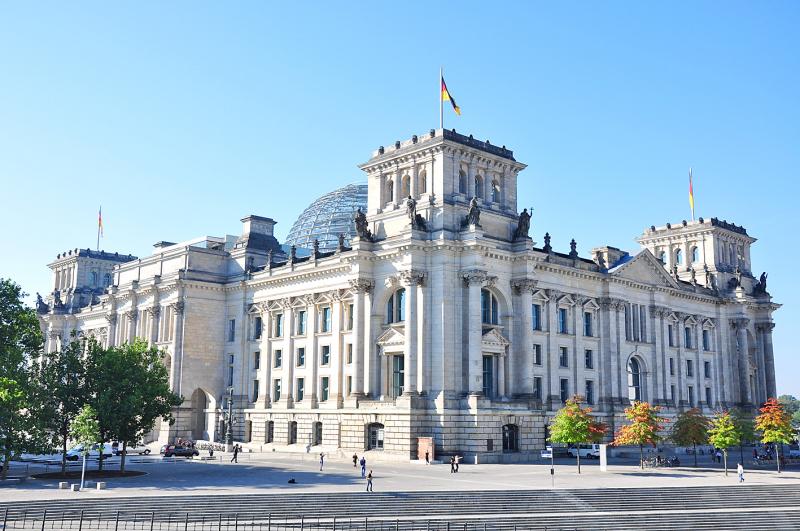
Photo: Wikimedia Commons
照片:維基共享資源
以包裹德國柏林國會大廈等建築、包覆海岸及整座島嶼而聞名的藝術家克里斯多,已於五月三十一日辭世,享壽八十四歲。
克里斯多生於共產主義時期的保加利亞,全名為克里斯多‧弗拉基米羅夫‧耶拉瑟夫,他在索非亞唸書,後來在一九五七年投奔西方,藏身於火車中由布拉格來到維也納。兩年後,他遇見跟他同年同月同日生的法國女子珍妮─克勞德‧德納‧德‧吉耶朋,後來成為他的創作夥伴與妻子,直到她二○○九年離世。
這對伴侶在一九六一年在德國科隆港碼頭堆滿石油桶,由此展開裝置大型公共藝術之生涯。石油桶在他們的藝術中佔有重要地位,因其價格低廉、外觀具雕塑感,以及其隱含政治內涵──雖然這始終被他們淡化。克里斯多在二○一八年對《衛報》表示:「我做的東西沒有任何功能──除了或許是為了製造娛樂」。
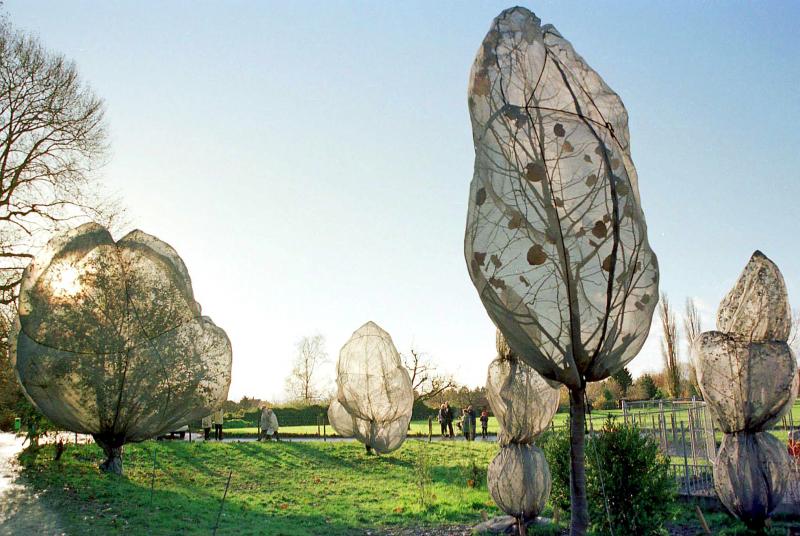
Photo: EPA-EFE
照片:歐新社
次年,他們在巴黎一街道上堆放了石油桶,將其命名為「Rideau de Fer」(鐵幕)。此作品讓他們在藝術界開始佔有一席之地,之後紐約著名的卡斯特利畫廊成為其代理商。他們繼續創作大型作品,常是以布料包覆巨大的天然紀念物,這讓他們跟七○年代初在沙漠中創作出巨大作品的美國地景藝術家們志同道合。
一九六九年,克里斯多與珍妮─克勞德(克里斯多在妻子去世後如此為作品署名)開始創作「包裹的海岸」,將澳洲雪梨小灣的海岸及懸崖用灰色布料覆蓋住,創造了當時世界最大的一件藝術作品。
他們一九七二年的作品「山谷簾幕」,在美國科羅拉多州的萊佛峽谷上架起了一道一萬四千公尺長的橙色帷幕,雖然在第二天就被暴風雨摧毀了。克里斯多與珍妮─克勞德的所有作品都是暫時性的。他說:「藝術家──尤其是建築師──追求永恆」,「我並不追求永恆。我什麼都不想留下。這需要勇氣」。
他創作所需的資金主要是透過出售計畫草圖來獲得──他始終拒絕任何贊助。「我們一直很會談判,也不得不如此,否則這些計畫永遠無法實現。但我們一直非常善於讓銀行提供信貸額度」。
到了八○年代,克里斯多和珍妮─克勞德的野心和聲譽已經讓他們能夠完成諸項計畫,包括用浮於水面的亮粉紅色聚丙烯布將邁阿密比斯坎灣的十一個島嶼圍繞起來,以及在時任巴黎市長的雅克‧席哈克批准後,將巴黎最古老的橋「新橋」包裹起來。然而,他們最引人注目的成就可說是一九九五年的「包裹德國國會大廈」,將位於柏林的這幢建築以鋁纖維覆蓋住。當時柏林牆倒塌還不到六年。
克里斯多告訴《衛報》說:「那是我見過最美麗的事物之一」。「一百名攀岩者沿著國會大廈外牆往下垂降,慢慢展開這片巨大的銀色簾幕。我們不用起重機或機械,只有人們以空中芭蕾的姿態從天而降。那是一九九五年,一大群人來觀看。覆蓋完成後,大家都上來撫觸布料」。
之後的計畫還包括「門」──在整個紐約中央公園內架起隨風翻騰的橙黃色乙烯布,以及義大利伊塞奧湖的浮堤。二○一八年夏季,克里斯多在倫敦海德公園的九曲河上堆起了七千五百零六個浮桶。這項名為「馬斯塔巴」的作品使觀眾感到既開心又困惑。他說:「它屬於所有人,直到消失為止」。「這是會存在數個月的地標」。
兩位藝術家已策劃的作品《被包裹的凱旋門》,明年九月將依其遺願在巴黎完成。
(台北時報林俐凱編譯)
FOLLOW UP
讀後練習
Questions
1. Why do you think the artists Christo and Jeanne-Claude, unlike many other artists, refused any sponsorship? How did they raise the money needed to produce their works?
2. Most artists aim to create art works that have eternal value, and most architects would like their works to be monuments that live on through history. How do Christo and Jeanne-Claude’s works differ?
3. Name an artist and/or an art work you like or dislike, and explain why.
(Lin Lee-kai, Taipei Times)
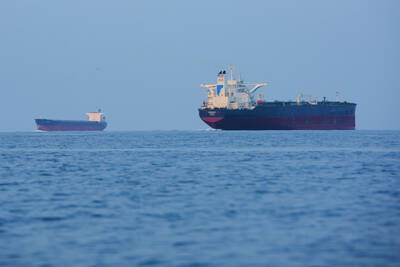
The US-Israeli war with Iran, which began on Feb. 28, has killed thousands of people, destabilized the Middle East and rocked global energy markets by effectively closing the strait. WHAT IS THE STRAIT OF HORMUZ? Lying between Oman and Iran and linking the Gulf north of it with the Gulf of Oman to the south and the Arabian Sea beyond, the strait is 33km wide at its narrowest point, with a shipping lane just 3km wide in either direction. Perhaps the world’s most important energy shipping channel, the waterway is about 167km long. Following through on an old threat, Tehran effectively closed the strait

A: Which TV drama series have been global hits so far this year? B: The US drama “Stranger Things 5,” South Korean drama “Can This Love Be Translated?” and Chinese megahit “Pursuit of Jade” are all popular lately. A: Isn’t “Pursuit of Jade” the costume idol drama about the romance between a charming marquis and a pig-slaughterer? Actor Zhang Linghe and actress Tian Xiwei are both so attractive. B: Plus, Netflix’s Korean-Japanese gay romance drama “Soul Mate” — starring Korea’s Ok Taec-yeon and Japan’s Hayato Isomura — is set to premiere in May. A: These hit international dramas
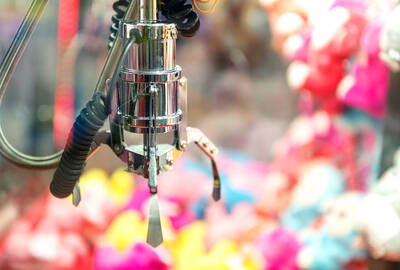
Have you ever found yourself desperately feeding coins into a claw machine just because you’ve already spent so much trying to win that stuffed animal? Or maybe you’ve continued watching a boring movie simply because you already paid for the ticket? If so, you’ve experienced the “sunk cost fallacy.” A sunk cost refers to time, money or effort that has already been spent and cannot be recovered. This psychological trap is surprisingly common. You might keep playing a video game you no longer enjoy because you’ve invested countless hours in building your character, or maintain a toxic friendship because you’ve known
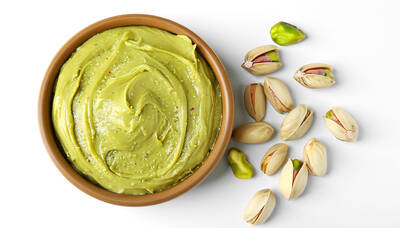
It seems like every year, new foods or drinks start trending and suddenly show up everywhere. A decade ago, avocado __1__ restaurant menus, while oat milk became the must-have addition to your coffee in cafes around five years back. The latest trend to hit this list is the pistachio. This flavorful green nut now features in everything from chocolate bars to Indian curries. While pistachios have long played a central role in certain regional cuisines, their recent global __2__ can be traced to Dubai. There, a specialty chocolate shop went __3__ on TikTok for one of its chocolate bars


 RSS
RSS