


Ticketmaster, a US ticket sales system under Live Nation Entertainment, announced plans last week to expand into Asia by acquiring Taiwan’s Tixcraft Inc. and launching Ticketmaster Singapore, increasing its presence to 32 countries around the world. Ticketmaster is a global ticketing giant with over 500 million tickets processed yearly.
“By bringing Ticketmaster’s technology and service to Taiwan and tapping into the company’s huge global network, we will revolutionize the ticketing experience for fans, venues, sports clubs and event organizers in Taiwan,” said KT Chiu, chief executive officer of Tixcraft who founded the Taiwanese ticketing platform in 2014.
However, some Taiwanese users are concerned about certain features of Ticketmaster, including the “resale” function that allows buyers to sell tickets at higher prices — such tickets are seen as “scalper tickets” in Taiwan. In order to assuage concerns, Live Nation Entertainment has said that functions inappropriate for Taiwan may be removed from the Taiwanese system.

Photo courtesy of Big Hit Entertainment
照片︰Big Hit Entertainment提供
(Eddy Chang, Taipei Times)
理想國演藝公司旗下的Ticketmaster售票系統,上週宣布拓展亞洲版圖,收購台灣的拓元售票系統,並在新加坡推出Ticketmaster Singapore,將其業務擴增至全球三十二個國家。Ticketmaster可說是售票系統的領導品牌,每年處理超過五億張各式票券。
拓元執行長邱光宗說:「把Ticketmaster的技術和服務引進台灣,運用公司廣布全球的龐大網路,我們將全面翻轉台灣粉絲、場館、體育俱樂部和活動主辦單位的票務體驗。」這個本土售票平台是他在二○一四年所創立。
不過有些台灣使用者,對Ticketmaster的功能感到憂心,例如「再次販售」的功能允許買家以高價轉賣自己的票券——而這就像是台灣俗稱的「黃牛票」。為了澄清疑慮,理想國回應不適合台灣風土民情的系統功能,將可能會視情況刪減。
(台北時報張聖恩〉
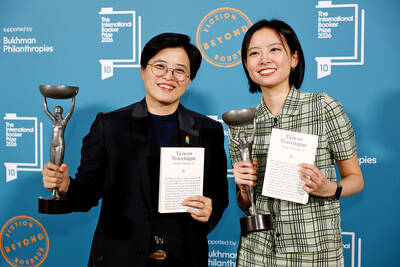
Taiwan Travelogue, the novel by Taiwanese author Yang Shuang-zi and translated into English by Lin King, won the prestigious International Booker Prize in London on May 19. It marks the first time a Taiwanese literary work has received the International Booker Prize, setting a historic milestone both for Taiwanese literature and for the award itself. Prior to this achievement, Taiwan had only once appeared on the Booker radar, when Taiwanese author Wu Ming-yi was longlisted for the Booker Prize in 2018 with The Stolen Bicycle. The International Booker Prize honors works of fiction translated into English and published in the UK or Ireland.
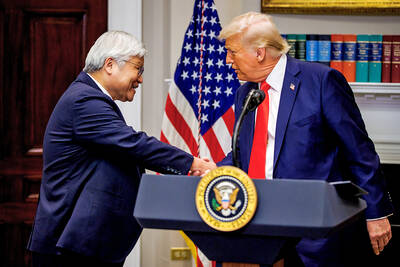
A: Time magazine recently released its list of “The 100 Most Influential People of 2026.” It’s categorized into six groups: Artists, Pioneers, Titans, Icons, Leaders and Innovators. B: TSMC chairman C.C. Wei made the list this year. Which category is he in? A: Wei is actually among the Pioneers, with figures including Disney CEO Josh D’Amaro and MrBeast — the first YouTuber ever to surpass 400 million subscribers. B: Led by Wei, Taiwan’s “silicon shield” TSMC is the sixth-largest company in the world. A: As Nvidia founder Jensen Huang wrote in his introduction, “C.C. Wei is truly one of the
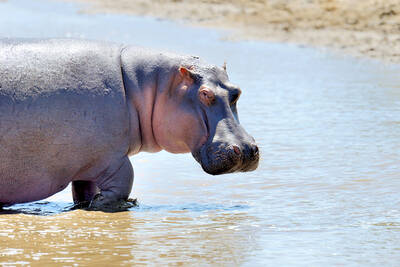
The animal kingdom is full of surprises that challenge our understanding of biology. From remarkable feeding mechanisms to extreme defense strategies, some creatures possess traits so unusual that they seem like pure fiction. Here are four fascinating examples that show nature’s endless creativity. The humble snail may appear simple, but its mouth tells a different story. Snails possess a ribbon-like tongue called a radula, densely covered with anywhere from 1,000 to 12,000 tiny teeth. This structure works like a cheese grater, allowing them to scrape and grind food with surprising efficiency. Far from being passive creatures, snails are actually

A: In the 2026 Time 100 list, besides TSMC chairman C.C. Wei in the Pioneers category, Blackpink’s Jennie also stands out in the Artists group. B: What about the Titans and Icons? A: The Titans include legendary fashion designer Ralph Lauren, Google CEO Sundar Pichai, and Intel CEO Tan Lip-bu. The Icons include actor Wagner Moura, Olympic gold figure skater Alysa Liu and singer Victoria Beckham. B: What about the Leaders and Innovators? I bet US President Donald Trump and Chinese President Xi Jinping are on the list. A: You got it. Other Leaders include Japanese PM Sanae


 RSS
RSS