


Every year, in the two-week run up to the Lunar New Year break, businesses along Taipei’s Dihua Street hold a special Lunar New Year specialties market.
The store-lined roads, with outside stalls laden with New Year dried fruits, candies, spiced drinks and meat jerkies, are packed with people anxious to stock up for the holiday.
The weather was cold on Wednesday, but mercifully sunny to take the bite from the cold, and the air was full of anticipation and festive spirit.
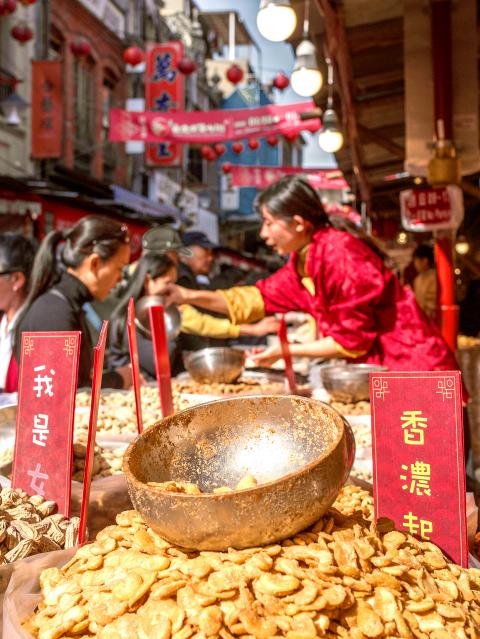
Photo: Paul Cooper, Taipei Times
照片:台北時報記者古德謙
The sellers themselves, wearing matching Lunar New Year jackets and tops in each individual stall, were all in a jovial mood, smiling and joking with the customers as they handed out free samples and took their money.
The shoppers were dressed up warm, some in casual clothes, some in their best suits for the occasion; there were monks and foreigners and photographers and mothers bringing their children, as well as pet owners, carrying their dogs on their shoulders or pushing them along in pet pushchairs. There was one guy walking his pet pig — he’d had it for five months, he said — which had its snout pressed to the ground, hoovering the tarmac for fallen sweets, treats or dried meats.
(Paul Cooper, Taipei Times)
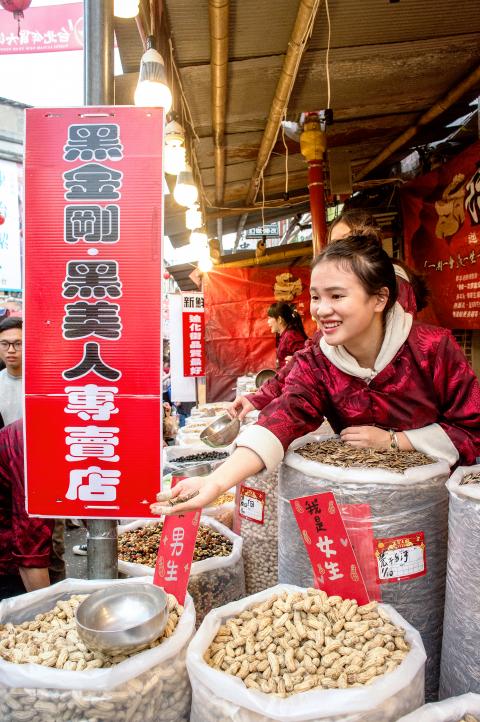
Photo: Paul Cooper, Taipei Times
照片:台北時報記者古德謙
每年春節假期前兩週左右,台北迪化街的商家都會辦理年貨市集。
商店林立的年貨大街擠滿趕辦年貨的人,店鋪前擺出的攤子滿是蜜餞、糖果、薑茶和肉乾等年貨。
週三天氣很冷,但幸好出了太陽,驅走了一些寒意,空氣中充滿著年節的味道與對過年的期盼。
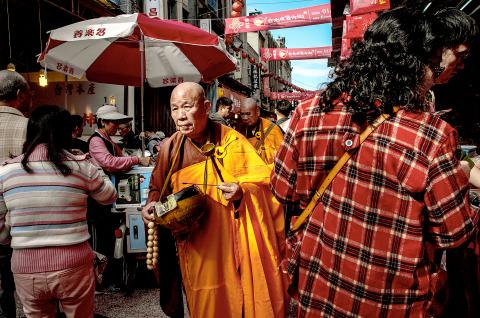
Photo: Paul Cooper, Taipei Times
照片:台北時報記者古德謙
每攤的售貨員都穿著自家店統一的春節外套及上衣,喜氣洋洋,發試吃品和收錢的時候,都跟顧客有說有笑。
採買的顧客穿著保暖的衣服,有些只是居家服,也有人穿得很慎重。人群中有僧侶、外國人、攝影師、帶著孩子的母親,以及把狗扛在肩上或用寵物推車推著的飼主。還有一個人牽著寵物豬──他說他已經養了五個月──那隻豬把鼻子貼在地上,把掉在路面上的糖果、零食或肉乾吸起來吃。
(台北時報林俐凱譯)
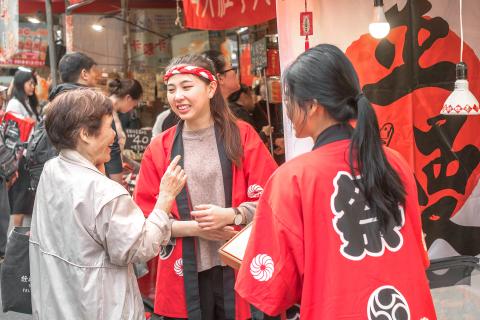
Photo: Paul Cooper, Taipei Times
照片:台北時報記者古德謙
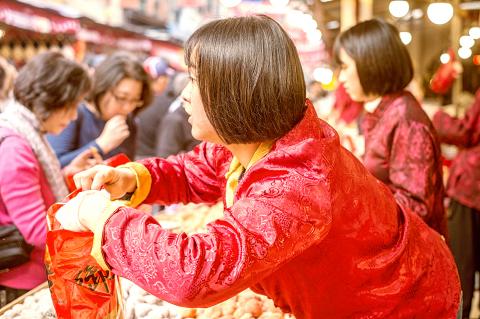
Photo: Paul Cooper, Taipei Times
照片:台北時報記者古德謙
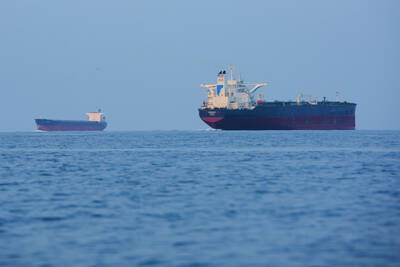
The US-Israeli war with Iran, which began on Feb. 28, has killed thousands of people, destabilized the Middle East and rocked global energy markets by effectively closing the strait. WHAT IS THE STRAIT OF HORMUZ? Lying between Oman and Iran and linking the Gulf north of it with the Gulf of Oman to the south and the Arabian Sea beyond, the strait is 33km wide at its narrowest point, with a shipping lane just 3km wide in either direction. Perhaps the world’s most important energy shipping channel, the waterway is about 167km long. Following through on an old threat, Tehran effectively closed the strait

A: Which TV drama series have been global hits so far this year? B: The US drama “Stranger Things 5,” South Korean drama “Can This Love Be Translated?” and Chinese megahit “Pursuit of Jade” are all popular lately. A: Isn’t “Pursuit of Jade” the costume idol drama about the romance between a charming marquis and a pig-slaughterer? Actor Zhang Linghe and actress Tian Xiwei are both so attractive. B: Plus, Netflix’s Korean-Japanese gay romance drama “Soul Mate” — starring Korea’s Ok Taec-yeon and Japan’s Hayato Isomura — is set to premiere in May. A: These hit international dramas
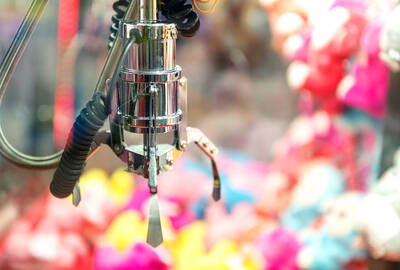
Have you ever found yourself desperately feeding coins into a claw machine just because you’ve already spent so much trying to win that stuffed animal? Or maybe you’ve continued watching a boring movie simply because you already paid for the ticket? If so, you’ve experienced the “sunk cost fallacy.” A sunk cost refers to time, money or effort that has already been spent and cannot be recovered. This psychological trap is surprisingly common. You might keep playing a video game you no longer enjoy because you’ve invested countless hours in building your character, or maintain a toxic friendship because you’ve known
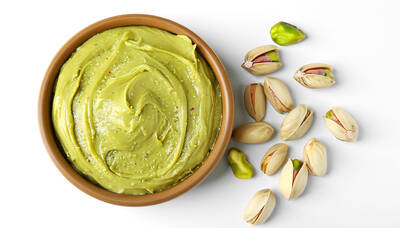
It seems like every year, new foods or drinks start trending and suddenly show up everywhere. A decade ago, avocado __1__ restaurant menus, while oat milk became the must-have addition to your coffee in cafes around five years back. The latest trend to hit this list is the pistachio. This flavorful green nut now features in everything from chocolate bars to Indian curries. While pistachios have long played a central role in certain regional cuisines, their recent global __2__ can be traced to Dubai. There, a specialty chocolate shop went __3__ on TikTok for one of its chocolate bars


 RSS
RSS