


Chinese Practice
禍從口出;言多必失
(huo4 cong2 kou3 chu1; yan2 duo1 bi4 shi1)
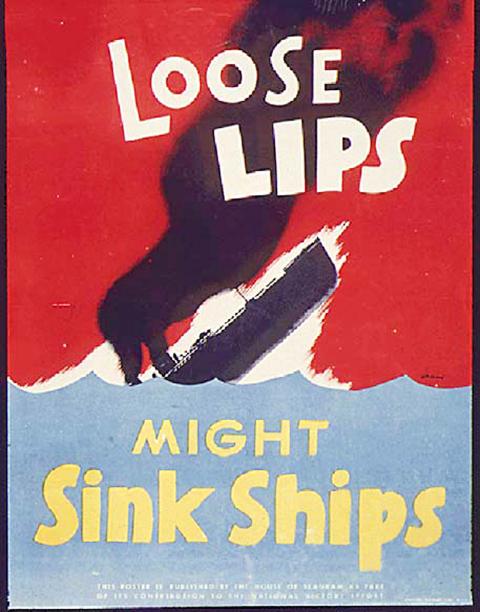
Photo: Wikimedia Commons
照片:維基共享資源
trouble issues from the mouth; say too much, bound to slip
魯德亞德‧吉卜林(一八六五~一九三六)的《走私者之歌》這部詩中,並未提到「走私者」(smuggler)這個詞。吉卜林此詩所採用的是父母對孩子說話的第一人稱觀點,因此以「Gentlemen」(紳士)一詞來代稱「smuggler」。如此一來,他把走私者──嚴格來說他們畢竟是罪犯──的地位提高了,同時也隱去其名。
因此,在第一節中,吉卜林寫道:
「如果你半夜醒來,聽到馬蹄聲,
別拉開窗簾,或往街上看。
少打聽就聽不到假話。
紳士經過的時候,親愛的你就往牆邊看。」
此詩之背景為十八世紀的英格蘭,當時來往歐洲大陸的非法貿易猖獗。為了躲避當局(也就是詩中所說的「King George’s men」(喬治國王的人馬))耳目,走私行動都是在夜色掩護下進行。因為這是違法活動,所以把走私者身份洩漏給士兵是很危險的,許多走私者其實可能就是當地人。父母告戒孩子不要好奇去看,正如此詩所說的:「them that ask no questions isn’t told a lie」(不問問題的人也就聽不到謊言)。
「不想被騙就別去問」這概念在當時很常見。另一個見諸出版品的例子是一七七三年愛爾蘭小說家、劇作家及詩人奧利弗‧戈德史密斯(一七二八~一七七四)的劇作《屈身求愛》(She Stoops to Conquer)。該劇本中有此句:「Ask me no questions and I’ll tell you no fibs」(你不問我問題,我就不會跟你亂說)。其中的「fib」可能是「fable」(無稽之談)的衍生詞,意為「胡說」,是「a lie」(謊言)的另一說法。「ask no questions and you’ll be told no lies」(你少打聽就聽不到假話)這說法現今仍然通用。這句話其實是種警告,表示你拒絕如實回答某問題,所以你先聲明,若有人要問你這問題,會是徒勞無功的。
美國戰時情報局在一九四二年發起一個口號「Loose Lips Might Sink Ships」(說溜嘴可能會讓船沉了),旨在防止民眾洩露機密訊息給敵方線人。(有點像台灣在國共對峙時期的標語「小心,匪諜就在你身邊」)另一類似的標語是「Careless Talk Costs Lives」(無心之言會出人命)。這兩句話現今仍是用來提醒人,對於所知道的重要資訊,必須小心謹慎。「Loose Lips Might Sink Ships」多是以縮短的形式「loose lips sink ships」出現。
閒談可能會造成災難,這概念可用成語「禍從口出」來表達。此語出自晉朝歷史學家、詩人及政治家傅玄(西元二一七~二七八年)。傅玄的〈口銘〉一文,有「病從口入,禍從口出」這對句。此句前半段「病從口入」也變成另一成語,它的意思更直接──即為「病源透過嘴巴進入」這字面意義。
「禍從口出」的另一種說法是「言多必失」,字面意思是「話說多了就必定會犯錯」,意指若你話說得太多,遲早會犯錯。
(台北時報林俐凱譯)
你跟他們不熟,講話還是不要太直接,小心禍從口出。
(You don’t know them that well, so it’s perhaps better to watch what you say. You don’t want to put your foot in it.)
有些政治人物話不敢說太多,因為言多必失,怕被抓住把柄而成為被政敵攻擊的目標。
(Some politicians tend to say as little as possible, as the more you say, the more chance there is that you will slip up, and give your political enemies ammunition to use against you.)
英文練習
ask no questions and you’ll be told no lies;
loose lips sink ships
The poem Smuggler’s Song by Rudyard Kipling (1865–1936) does not mention the word “smuggler” in the text. Instead, Kipling — writing in first person voice from the perspective of a parent speaking to their child — uses the word “Gentlemen.” In so doing, he gives the smugglers — who are, after all, technically criminals — heightened status, whilst also keeping them anonymous. Thus, in the first stanza, he writes:
If you wake at midnight, and hear a horse’s feet,
Don’t go drawing back the blind, or looking in the street.
Them that ask no questions isn’t told a lie.
Watch the wall my darling while the Gentlemen go by.
The poem refers to 18th century England, when illegal trade to and from continental Europe was rife. To avoid the authorities
(“King George’s men” in the poem), smugglers would operate at night under cover of darkness. Due to the nature of their activity, it would be dangerous to betray smugglers to the soldiers. Indeed, many of them were probably members of the local community. The parent tells their child to avert their eyes and suppress their curiosity: as the poem says, “them that ask no questions isn’t told a lie.”
The expression that one shouldn’t ask questions if one doesn’t want to be lied to was quite common at the time. Another example in print is found in the 1773 book She Stoops to Conquer by the Irish novelist, playwright and poet Oliver Goldsmith (1728–1774), where we find, “Ask me no questions and I’ll tell you no fibs.” Fib, possibly a derivative of “fable” and meaning “nonsense,” is another word for a lie. The phrase “ask no questions and you’ll be told no lies” is still in use. It’s essentially a warning that you refuse to answer a given question truthfully, so there’s no point in asking it in the first place.
In 1942 in the US, the slogan “Loose Lips Might Sink Ships” was used in campaigns by the US Office of War Information to discourage people from giving away confidential information to possible enemy informants (similar to how the slogan “Beware of communist spies in your midst” was used at the height of tensions between Taiwan and Communist China). Another such slogan was “Careless Talk Costs Lives,” and both are still used as a caution to use discretion when in possession of important information. The former is usually shortened to “loose lips sink ships.”
The idea that loose talk can lead to disaster can be expressed with the Chinese idiom 禍從口出 (trouble issues from the mouth), from the text kouming by the Jin Dynasty historian, poet, and politician Fu Xuan (217–278), who wrote 病從口入,禍從口出. The first part of that couplet 病從口入 (Illness enters by the mouth) gives us another idiom, this time used in the more literal sense of “germs enter through the mouth.”
Another option for 禍從口出 is 言多必失, literally “say too much, bound to slip,” meaning if you say too much, you’re bound to slip up at some point.(Paul Cooper, Taipei Times)
I’m not at liberty to tell you that, so don’t ask. Ask no questions and you’ll be told no lies.
(我沒辦法告訴你,所以你別問。你少打聽就不會聽到假話。)
I’m telling you this in confidence, so please keep it to yourself. Remember: loose lips sink ships.
(我這只是私下跟你說,所以請你保密。禍從口出,你要謹記在心。)

Many of us face common health challenges: tired eyes from long screen use, the search for anti-aging support and the need for weight control without resorting to restrictive diets. While no single food is a miracle cure, berries offer targeted, evidence-based nutritional support that’s easy and delicious to add to your daily routine. For overall immunity and healthy skin, vitamin C is essential. Strawberries provide roughly 10 percent more vitamin C than oranges, while blackcurrants deliver three to four times as much. These tasty fruits also contain abundant polyphenols, which help the body manage oxidative stress, support overall

Concertgoers know the rush all too well — the moment the first notes play, your heart races, and nothing else seems to matter. For many, the excitement doesn’t end when the lights come back on. Some fans try to relive the performance by listening to the same songs for days afterward. __1__ A few days after an amazing show, they begin to feel unexpectedly low. Psychologists have coined a term for this phenomenon: “post-concert depression,” or “PCD.” PCD is primarily related to hormone levels. When you’re at a concert, the excitement causes your brain to release feel-good chemicals like
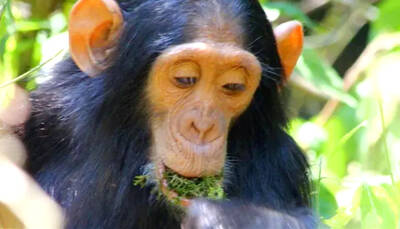
A new study suggests that chimpanzees can weigh evidence and make rational judgments. In the experiment, researchers placed two boxes in front of the chimpanzees. One box was set up to give strong evidence, such as letting the chimpanzees actually see food inside. The other was designed to provide weak evidence, like producing a rattling sound when it was shaken. The chimps consistently chose the box with strong evidence, even when the weaker clue appeared first. This indicated that they were not fooled by the order of presentation. In another trial where no strong evidence was available, the chimps
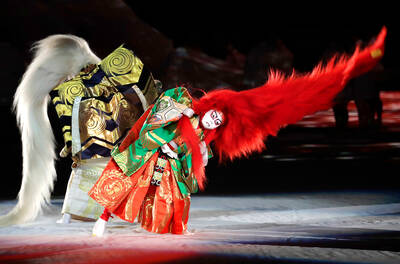
Handing down a name over generations is a central part of the Japanese traditional theater art of Kabuki, and that ceremony gets celebrated at theaters and special events every few years. Now, the ritual is taking place with the eighth Kikugoro, who is having that honor passed down from his 83-year-old father, the seventh Kikugoro, who in turn got that name from his father. “Taking on the name is about taking on the spirit and responsibility that’s created and getting passed down over generations by those who came before us,” the younger Kikugoro, Kazuyasu Terajima, told reporters recently. Another famous family name in


 RSS
RSS