


Chinese practice
見獵心喜
excited by memories of the thrill of the hunt

Photo: Wikimedia Commons
照片:維基共享資源
(jian4 lie4 xin1 xi3)
以下是成語「見獵心喜」出現在文句中的實例:「英國脫歐公投結果揭曉後,英鎊重貶百分之十一,使英國時尚精品價格大幅下降,讓大批消費者見獵心喜」。另一例為:「正當中美神經緊繃之際,台灣最不需要的就是……讓北京見獵心喜,將升高台海緊張當作一張王牌。」以下這個問句是一篇文章的標題:「見獵心喜的時刻將至,您準備好撿便宜了嗎?」
這些文句都在表達利用某種時機,來將自己的利益極大化,甚至到了損人利己剝削他人的程度。這樣的用法類似英文片語「to smell blood」(嗅到血)──它可用來表示偵測到他人的弱點,從而利用此弱點來獲取優勢或勝利。據說鯊魚會被水中的血腥味吸引,而尋得獵物;雞看到血會變得狂暴,會猛啄身上有血的雞;包括狗在內的動物常會發現其他同類動物的弱點,並針對它來攻擊。在英文中,如果說我們「嗅到獵物的鮮血」,就意味我們會接近目標,然後痛下殺手。
然而,「smell blood」、「見獵心喜」所包含的這種令人不安的黑暗、殘酷和剝削的意義,完全沒有出現在成語字典中對「見獵心喜」的定義。成語字典中對「見獵心喜」的解釋是舊習難忘,看見有人在做自己所愛好的事,便心情愉悅而躍躍欲試。
成語「見獵心喜」典出宋代理學家及哲學家周敦頤(西元一○一七~一○七三年)的《周子遺事》。正是由於周敦頤的影響,表示陰、陽的太極圖才廣為人知。《周子遺事》記載了一則軼事:周敦頤提到,他的學生程顥跟他說,他熱愛射箭和狩獵,但隨著年紀漸長、責任漸多,已無暇重拾這些年少時的愛好。周敦頤告訴程顥說,這些年少時所熱愛的興趣只不過是隱藏起來了,但永遠不會熄滅,總有一天會重新浮現。十二年後,程顥就「在田閒見獵者,不覺有喜心」(在田野中看到有人狩獵,讓他莫名覺得很高興)。這句話便是成語「見獵心喜」的出處,其意義完全是正面的,指的是熱情和喜悅的反應。
「見獵心喜」的原意是正面的,但它現今的用法實非如此美好與理想化,其「誤用」也已積非成是;然而,成語字典尚未與時俱進,將現今的用法收錄進來。無論「見獵心喜」是用來表達正面或負面的意義,都表達了一種預期、一種興奮的衝動,即便是出於不同的意圖。
(台北時報林俐凱譯)
下午經過禮堂,看見裡面空無一人,那架鋼琴就擺在台上,小華見獵心喜,一時技癢,便躍躍欲試。
(Hsiao Hua passed the auditorium in the afternoon and saw nobody was inside. When she saw the piano on the stage, she felt a strong urge to play it.)
發生了這麼嚴重的公安意外,在野黨見獵心喜,發動攻勢猛烈批評。
(When the terrible accident occurred the opposition smelled blood and launched a ferocious attack on the government.)
英文練習
smell blood
This is an authentic example of the idiom 見獵心喜 in use: “Following the outcome of the UK Brexit referendum, the British pound has fallen by 11 percent, resulting in a considerable drop in the price of British designer brand goods and, seeing this, many consumers are looking to take advantage (大批消費者見獵心喜) of the situation.” And another: ”Now that US-China relations are getting tense, Taiwan should not do anything to allow Beijing to see this as an opportunity (讓北京見獵心喜) and use cross-strait tensions as an ace up its sleeve. ” The following question was the title to an article: “The hour for taking advantage (見獵心喜) is here: Are you ready to seize the opportunity?”
Common to these examples is the anticipation of taking advantage of a situation to maximize one’s own benefit, even to the extent of the exploitation of another. In that way, it is similar in use to the English phrase “to smell blood,” which can be taken to mean to detect a weakness or vulnerability in another, and to be thus encouraged to exploit this weakness to secure advantage or victory. It is said that sharks are attracted to their prey by the smell of blood in water; that chickens will be driven to a frenzy by the sight of blood and violently peck the chicken with blood on it. Animals, including dogs, will often detect weakness and vulnerability in another of their species and act aggressively to it. In English, when we smell the blood of our prey, we move in for the kill.
Yet, this disturbingly dark, merciless and exploitative aspect to the idioms “smell blood” and 見獵心喜 is entirely absent in the dictionary definition for the latter, which says that it refers to the feeling of rekindled enthusiasm for an old pursuit when you see others perform it, such that you want to start doing it again.
The idiom comes originally from the Song Dynasty book zhouzi yishi (Master Zhou’s Reflections) by the neo-Confucian philosopher Zhou Dunyi (1017–1073AD), the man who popularized the yin-yang symbol. In one anecdote in the book, Zhou relates how his student Cheng Hao tells him of his love of archery and hunting, but how that youthful interest had been lost when he took on more responsibilities in adult life. Zhou told him that such enthusiasm for a pursuit could only be concealed, never extinguished, and would one day bubble back to the surface. Twelve years later, Cheng Hao 在田閒見獵者,不覺有喜心 (saw somebody hunting, and this delighted him, taking him quite unawares). From these two phrases we get the idiom 見獵心喜, to mean an entirely positive reaction of enthusiasm and delight.
The original meaning was positive; the modern usage is certainly less idealistic, and it seems dictionary definitions have yet to reflect this change. Both usages of the Chinese idiom, however, speak of an anticipation and a rush of excitement, even though the underlying intent differs somewhat.
(Paul Cooper, Taipei Times)
The boxer was knocked for six by a punishing blow to the head, and his opponent smelled blood and went in for the kill.
(當頭一記重拳,打得拳擊手暈頭轉向,對手見獵心喜,乘勝追擊,使出撒手鐧予以重擊。)
It’s important to exude confidence in all walks of life. If your rivals smell blood, or detect any weakness, they will try to exploit it.
(無論從事什麼行業,展現自信是很重要的。如果讓對手看到弱點、認為有機可乘,他們就會見縫插針。)

The US-Israeli war with Iran, which began on Feb. 28, has killed thousands of people, destabilized the Middle East and rocked global energy markets by effectively closing the strait. WHAT IS THE STRAIT OF HORMUZ? Lying between Oman and Iran and linking the Gulf north of it with the Gulf of Oman to the south and the Arabian Sea beyond, the strait is 33km wide at its narrowest point, with a shipping lane just 3km wide in either direction. Perhaps the world’s most important energy shipping channel, the waterway is about 167km long. Following through on an old threat, Tehran effectively closed the strait

A: Which TV drama series have been global hits so far this year? B: The US drama “Stranger Things 5,” South Korean drama “Can This Love Be Translated?” and Chinese megahit “Pursuit of Jade” are all popular lately. A: Isn’t “Pursuit of Jade” the costume idol drama about the romance between a charming marquis and a pig-slaughterer? Actor Zhang Linghe and actress Tian Xiwei are both so attractive. B: Plus, Netflix’s Korean-Japanese gay romance drama “Soul Mate” — starring Korea’s Ok Taec-yeon and Japan’s Hayato Isomura — is set to premiere in May. A: These hit international dramas
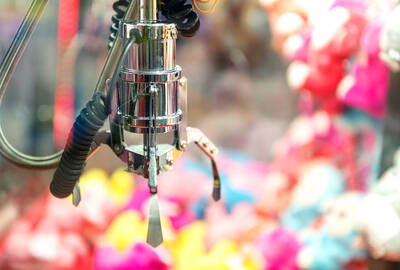
Have you ever found yourself desperately feeding coins into a claw machine just because you’ve already spent so much trying to win that stuffed animal? Or maybe you’ve continued watching a boring movie simply because you already paid for the ticket? If so, you’ve experienced the “sunk cost fallacy.” A sunk cost refers to time, money or effort that has already been spent and cannot be recovered. This psychological trap is surprisingly common. You might keep playing a video game you no longer enjoy because you’ve invested countless hours in building your character, or maintain a toxic friendship because you’ve known
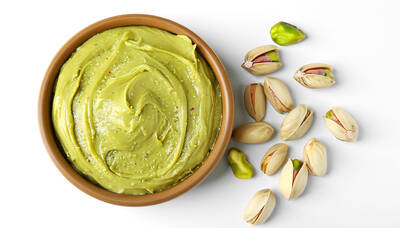
It seems like every year, new foods or drinks start trending and suddenly show up everywhere. A decade ago, avocado __1__ restaurant menus, while oat milk became the must-have addition to your coffee in cafes around five years back. The latest trend to hit this list is the pistachio. This flavorful green nut now features in everything from chocolate bars to Indian curries. While pistachios have long played a central role in certain regional cuisines, their recent global __2__ can be traced to Dubai. There, a specialty chocolate shop went __3__ on TikTok for one of its chocolate bars


 RSS
RSS