


A highly social giant panda out for a stroll surprised and delighted residents of a town in the southwestern Chinese province of Sichuan.
The panda was first spotted wandering among houses in Wenchuan county last Thursday, seemingly in search of food. She strolled beside a vegetable garden, trotted across a dirt road and climbed a tree, seemingly unfazed by the attention she drew from a large group of onlookers. Researchers at the China Conservation and Research Center for the Giant Panda confirmed that the panda was Zhenzhen, an 11-year-old female raised in captivity and recently released into the wild as part of a special breeding project. After allowing her several hours to explore, researchers returned Zhenzhen to the Wolong Shenshuping Panda Base by mid-afternoon. “When she’s in an amorous mood, we let her out of the enclosure, hoping that she will mate with wild pandas,” Wu Daifu, director of the Hetaoping panda training base, said in a telephone interview with China Central Television.
Zhenzhen was set free in the Tiantaishan Area of the Wolong National Nature Reserve on March 5. Freed pandas sometimes wander into settlements near the reserve, Wu said. Back at the panda base, Zhenzhen will be looked after by staff members optimistic that she may already be pregnant. “We are not exactly sure whether Zhenzhen had mated with wild pandas, so we just assume she already did and we will take great care of her, hoping she will surprise us,” Wu said. China’s captive breeding program is credited with bringing giant pandas back from the brink of extinction. The rare animals are China’s unofficial national mascot and live mainly in Sichuan’s bamboo-covered mountains.
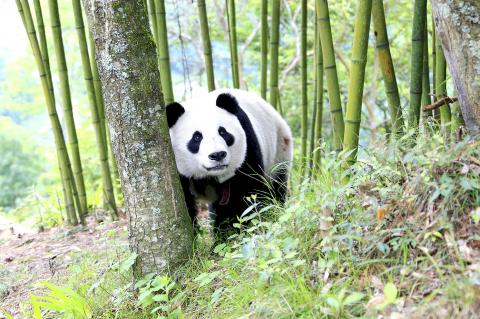
Photo: AP
照片:美聯社
More than 1,800 are estimated to exist in the wild, where they are threatened chiefly with habitat loss, and around 420 others live in captivity in zoos and reserves, the majority within China.
(AP)
一隻不怕生的貓熊出外閒逛,給中國西南部四川省一個鎮上的居民帶來驚喜。
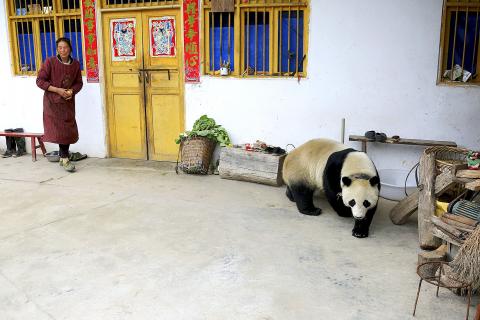
Photo: AP
照片:美聯社
這隻貓熊最早是在上週四被發現在汶川縣的房舍之間徘徊,像是在尋找食物。牠在菜園旁散步,在泥土路上跑來跑去,又爬到樹上,對牠所吸引來的大批圍觀者似乎不為所動。中國大熊貓保護研究中心的研究人員證實,這是十一歲的母貓熊珍珍,是被圈養長大的,最近在一個育種特別計畫中被野放。研究人員讓珍珍四處探索了幾小時,然後在下午把珍珍送回臥龍神樹坪貓熊基地。「牠發情時,我們就讓牠離開圈地,希望牠會和野生貓熊交配」,核桃坪貓熊野化訓練基地主任吳代福在接受中國中央電視台電話採訪時說。
珍珍是三月五日在臥龍國家級自然保護區的天台山區被野放。吳代福說,被野放的貓熊有時會闖進保護區附近的人類聚落。珍珍回到貓熊基地後,會由工作人員照料,工作人員滿懷希望珍珍可能已經懷孕。吳代福說,「我們不確定珍珍是否已和野生貓熊交配,所以我們只能假設牠有,我們會好好照顧牠,希望牠會給我們帶來驚喜。」中國的貓熊圈養繁殖計畫,成功地將貓熊從瀕臨滅絕的狀態中搶救回來。貓熊數量稀少,是中國非官方的吉祥物,主要生活在四川布滿竹林的山中。
據估計,野生貓熊有超過一千八百隻,所面臨的主要威脅是棲息地的喪失;另外,約有四百二十隻貓熊是被圈養在動物園和保護區,多位於中國境內。
(台北時報林俐凱編譯)

A: The Danjiang Bridge in New Taipei City is to open on May 12, and the MRT Sanying Line (Light Blue Line) will also open in June. Isn’t that great? B: Is that the bridge connecting the city’s Tamsui and Bali Districts? What’s so special about this new landmark spanning the Tamsui River? A: The Danjiang Bridge will become the world’s longest-span single-mast asymmetric cable-stayed bridge — with a total river-crossing section of 920 meters and main span of 450 meters. B: The news says there are sidewalks and bike lanes on both sides. Watching the sunset from the
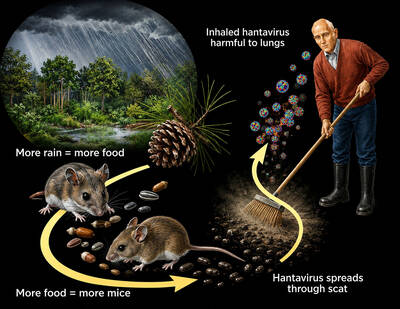
An outbreak aboard a cruise ship of a rare rodent-borne illness called hantavirus has left three passengers dead and sickened others, but global health officials say the risk to the general public remains low because the germ does not easily spread between people. “This is not the next COVID, but it is a serious infectious disease,” said Maria Van Kerkhove, director of epidemic and pandemic preparedness at the World Health Organization (WHO). “Most people will never be exposed to this.” The virus usually spreads when people inhale contaminated residue of rodent droppings. Hantaviruses have been around for centuries and are thought to
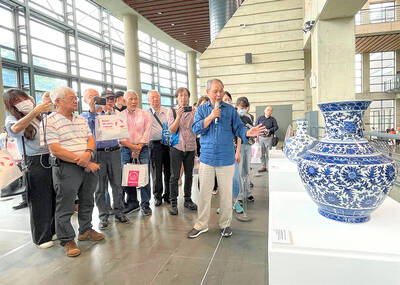
A: Apart from the Danjiang Bridge in New Taipei City, the MRT Sanying Line (Light Blue Line) will open in June. B: Is that the new line leading to Yingge District, the ceramic town? A: Yup, the line will connect the Yingge Ceramics Museum and the Old Streets in Sanxia and Yingge Districts. B: The eastward extension of the Tamsui-Xinyi Line (Red Line) that goes through Taipei’s Xinyi District will also open in June. A: Plus, Taoyuan’s Aerotropolis Line (Green Line) will partially open by the end of the year. In the future, it will connect the

1. 他病了三天。 ˇ He has been sick for three days. χ He has been sick since three days. 註︰這裡現在完成時態 have / has been 表示從過去某一時日到現在的一段時間存在的行為或狀態,與它連用的時間副詞應為 「for +若干時」,如 for a year, for three hours 等,意思是歷時多少。 2. 他自從星期三以來都很忙。 ˇ He has been busy since Wednesday. χ He has been busy from Wednesday. 註︰「自從……以來」,該用 since。說從某一天(某一時刻)到某一天(某一時刻)才用 from,如 from Monday till Friday。 3. 房間角落裡散放著一些零星物件。 ˇ There were some odds and ends lying in the corner of the room. χ There were some odds and ends lying at the corner of the room. 註︰「在房間角落裡」該用介詞 in。例如: He stood in the corner. There is a lamp in the corner of the room. at the corner 指房子外部的拐角。例如: A little boy


 RSS
RSS