


Taiwan is becoming the next battleground for the world’s top offshore wind developers as they seek a foothold in Asia for a technology that has been expanding fast in Europe.
Taiwan announced results last Monday of its first major offshore wind farm auction that aims to add 3.8 gigawatts (GW) of capacity to its existing network of just 8 megawatts (MW).
The island’s offshore wind market is expected to expand to 5.5GW by 2025, and the government aims to invest US$23 billion on onshore and offshore wind projects by 2025.
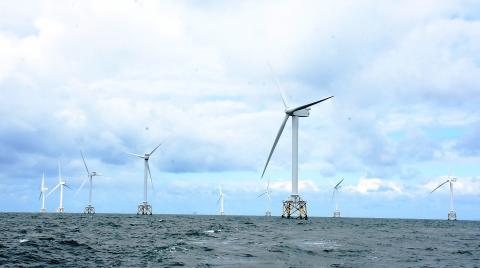
Photo Courtesy of Changhua County Government
照片:彰化縣政府提供
Taiwan is making a big push to attract investments in renewable technology as it phases out nuclear power by 2025, after the 2011 Fukushima disaster in Japan highlighted the risks of using nuclear energy in a region prone to earthquakes.
European players win bulk of Taiwan offshore wind auction
For developers in Europe, where expanding offshore wind projects, particularly in the North Sea have driven down costs, Taiwan is seen as a route into Asian markets, such as Japan and South Korea, where the technology is still barely used.
Denmark’s Orsted and Germany’s wpd were last Monday’s biggest winners, securing contracts to install 900MW and 1GW of capacity, respectively.
“We see Taiwan as a stepping stone into Asia-Pacific,” said Matthias Bausenwein, the regional general manager for Orsted, the world’s largest owner of offshore **wind power** sites that was previously known as DONG Energy.
Strong wind speeds make island an attractive market
Taiwan’s auction drew bids from the world’s biggest international players, attracted by the island’s strong winds, a stable regulatory framework and the offer of 20-year power purchase agreements with a feed-in-tariff above European benchmarks.
“We have aggressive targets in Taiwan and, with things going on in China, South Korea and other markets, that amounts to it becoming the fastest-growing region globally,” said Bausenwein.
Falling costs
Offshore wind power is costlier than onshore projects or solar power, and still only accounts for about 3.5 percent of global wind energy capacity.
But Europe has been leading the way in using the technology, adding 3GW last year and taking total offshore capacity to 19GW, according to the Global Wind Energy Council.
Costs have plunged as a result. In Britain, the world’s biggest market, the cost of wind power fell below new nuclear generation for the first time last year.
Companies seek to develop local turbine suppliers
European firms want local suppliers to avoid the cost of shipping bulky equipment used in the turbines from Europe.
“The requirements for local content are increasing step by step,” said Andreas Nauen, offshore chief executive for Siemens Gamesa, adding some European equipment would initially be used. Siemens Gamesa is working to develop the Port of Taichung as a regional hub and has signed agreements with some local partners that could provide gear locally.
MHI Vestas, a venture between Japan’s Mitsubishi Heavy Industries and Danish turbine maker Vestas, is also considering developing local manufacturing. “We want to produce locally because we want to be competitive,” the joint venture’s chief executive, Philippe Kavafyan, told Reuters.
(Reuters)
風電技術已在歐洲快速擴展,世界頂尖離岸(/海上)風電開發商正尋求立足亞洲的據點,使台灣成為這些開發商下一個戰場。
台灣上週一公布了離岸風電場首次大規模遴選的結果,其目標是為現階段僅有的八MW(八百萬瓦,一MW為一千瓩〔千瓦〕)的供電網路增加三‧八GW(三十八億瓦,一GW為一百萬瓩〔千瓦〕)的容量。
台灣的離岸風電市場預計會在二○二五年前增至五‧五GW,政府計劃在二○二五年前投資兩百三十億美元在陸域和離岸風電工程。
台灣正大力吸引再生能源技術的投資,預計要在二○二五年前逐步淘汰核電。二○一一年的日本福島事故,凸顯了在地震頻仍地區使用核能的風險。
歐洲商在台灣離岸風電遴選中大勝
離岸風電在亞洲仍很少見,但在歐洲,尤其是北海一帶的擴展,已使其成本降低。歐洲的開發商視台灣為跳板,以進入亞洲市場,例如日本及南韓等。
丹麥商沃旭能源和德國商達德能源是上週一遴選的最大贏家,分別獲得九百MW 和一GW容量的合約。
「我們視台灣為進軍亞太地區的墊腳石」,沃旭能源亞太地區總經理馬提亞斯‧包森文說。前身為丹能集團的沃旭能源,擁有世界最大的離岸風力發電場。
強勁的風速讓台灣具市場吸引力
台灣島上強勁的風力、穩定的監管制度,以及躉購電價高於歐洲基準的二十年電力收購協議,使台灣的遴選吸引了全球最大的風電開發商競標。
包森文表示:「我們在台灣有雄心勃勃的目標,且隨著中國、南韓和其他市場的發展,意味這裡將成為全球發展最快的地區。」
成本下降
離岸風力發電的成本比陸域風力或太陽能發電的成本高,且仍只佔全球風能發電量的百分之三‧五。
根據全球風能協會的統計,歐洲的離岸風力發電技術一直處於領先地位,在去年就增加了三GW,使離岸風電的全球總容量達到了十九GW。
結果是成本的急劇下降。在全球最大的風電市場英國,去年風力發電的成本首次低於新核電。
廠商計劃開發台灣本地風機供應商
歐洲廠商希望在台灣當地尋找供應商,以避免從歐洲輸入龐大的風力渦輪機用設備所產生的運輸成本。
西門子歌美颯再生能源公司離岸風電事業執行長安德里亞斯‧瑙恩表示,他們剛開始會使用一些歐洲製造的設備,「對本地產品的需求會逐步增加」。西門子歌美颯正努力將台中港發展成其區域中心,並與台灣當地的合作夥伴簽署了協議,可在當地提供機具。
三菱重工維特斯——日本三菱重工及丹麥渦輪機製造商維斯塔斯的合資公司,也正評估開發台灣當地的工業。「我們希望在當地製造,因為我們希望具有競爭力」,三菱重工維特斯執行長菲利浦‧柯法洋告訴路透社說。
(台北時報林俐凱編譯)

In 2023, an 80-year-old woman in Taipei suffocated her paralyzed son after over five decades of caring for him. Turning herself in immediately, she confessed that worsening health and anxiety about who would care for him after her death had driven her to act. The court, acknowledging her difficult situation, sentenced her to two-and-a-half years in prison while recommending a presidential pardon. This rare judicial recommendation drew a complicated social response. Supporters argue that the mother’s half-century of caregiving renders her deserving of compassion instead of incarceration, believing that allowing her to live her final years in dignity and

★ Bilingual Story is a fictionalized account. 雙語故事部分內容純屬虛構。 The mango looked perfect. It sat on the fruit stand like a small sunset, red on one side and gold on the other. “I’ll take this one,” said Daniel. The fruit seller shook her head. “Not that one.” Daniel was surprised. “Why not? It looks beautiful.” “Yes,” she said, “but beautiful is not always ready.” She picked up another mango and held it near his nose. “First, smell here.” Daniel smelled the top of the mango. It was sweet and warm. “Good mangoes have a smell,” she said. “Next, feel the weight.”
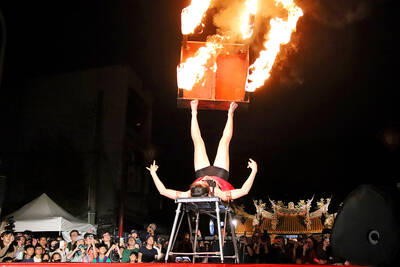
A: Over 130,000 college graduates are about to enter the workforce upon graduation. B: According to a survey, the top 10 most desired careers among Taiwanese are: independent content creator, civil servant, information engineer, financial professional, medical worker, content planner, flight attendant, news anchor, designer and fitness trainer. A: What are the “dream jobs” for young Gen Zers? B: The top three for men are YouTuber, pro gamer and engineer. For women, they are writer, social media editor and YouTuber. A: Every profession has its champion. Just look at Taiwanese fire dancer Yang Li-wei — who was on fire

1. 他非常討厭偽君子。 ˇ He has a deep hatred for hypocrites. χ He has a deep hatred to hypocrites. 註︰表示「對某人懷著愛、恨」等, 常用 have a love for/of, have a hatred for/of。 例如: We have a love for/of science. The working people have a hatred for/of all forms of exploitation. 2. 問題的答案其實不難找。 ˇ The answer to this question is not difficult to find. χ The answer of this question is not difficult to find. 註︰中文中的「的」在英語中不一定都用 of 來表示,有時須用 to。其他的例子如下: 我把房間的鑰匙弄丟了。 I lost the key to the room. 中間矗立著烈士紀念碑。 In the center stands the monument to the martyrs. 這部電影的續集你看過沒有? Have you seen the sequel to the movie? 3. 比起那家餐廳,他更喜歡這家。 ˇ He prefers this restaurant to that one. ˇ He likes


 RSS
RSS